Driving Test Manitoba: Free Class 5 Knowledge Test Practice 1
- The test is based on questions taken from the Manitoba Driver’s Handbook.
- You will be asked about traffic laws, safe driving practices and recognition of road signs.
- The test is a series of multiple choice questions.
Need the handbook?
Download the official Manitoba Driver’s Handbook PDF for free.
Reminder: To obtain your Manitoba learner’s licence, you will need to pass a class 5 knowledge test.
At a four-way stop, if two vehicles arrive together, who has the right-of-way?
The vehicle on the left.
The faster vehicle.
The vehicle on the right.
The larger vehicle.
When two vehicles arrive simultaneously at a four-way stop, the driver on the left must yield to the driver on the right.
You signal to change lanes, but see a vehicle in your blind spot. You must:
Move over slowly.
Remain in your lane until safe.
Accelerate quickly to merge.
Expect the other driver to slow down.
Even after signaling, you must stay in your lane if someone is in your blind spot. Wait for a safe gap before moving.
What should you do after parallel parking?
Leave extra space from the curb.
Keep the wheels turned outward.
Leave the engine running.
Ensure the vehicle is properly secured.
After parking, drivers should secure the vehicle properly to prevent it from moving unexpectedly.
What does this sign indicate?
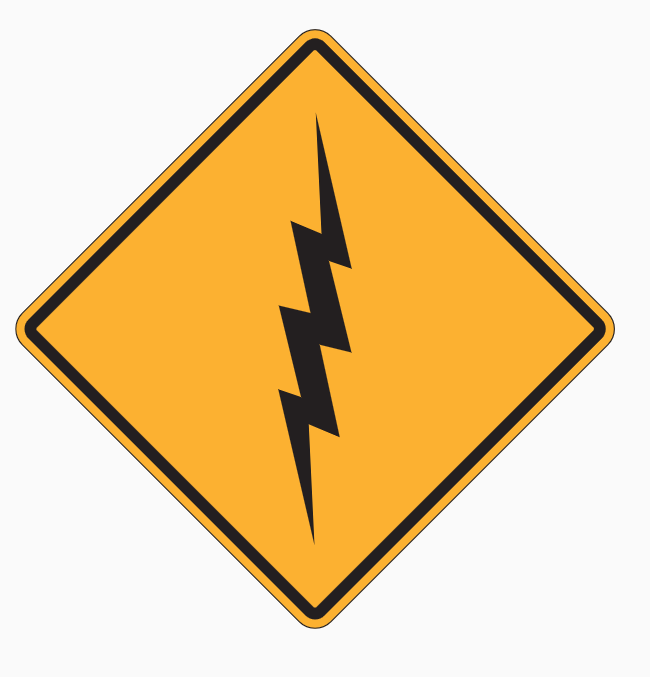
Overhead wires.
Slippery road.
Bump ahead.
Uneven road.
This sign warns drivers of low-hanging overhead electrical wires. Drivers of tall vehicles should be extra cautious to avoid contact with the wires.
What does this sign mean?
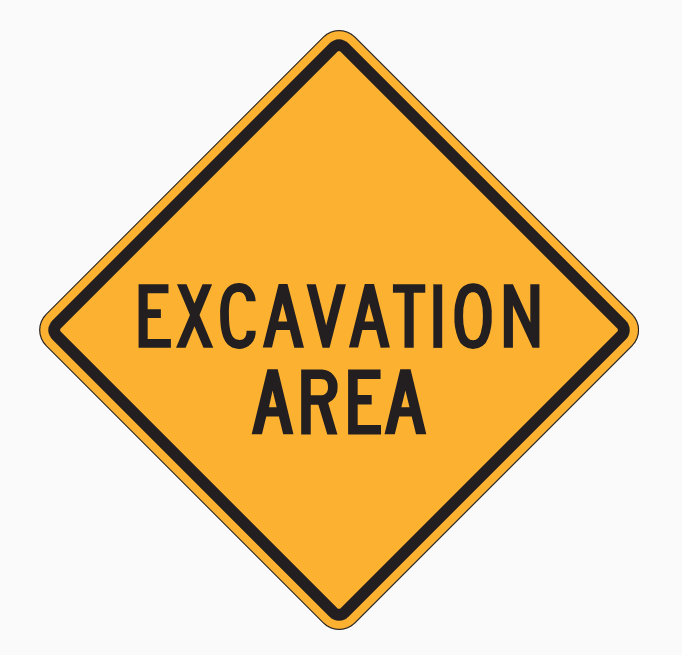
Road ahead is fully closed.
New pavement begins ahead.
Shoulder paving work ahead.
Part of the roadway has been removed.
This construction sign warns that a section of the road has been excavated or removed, requiring extra caution through the area.
If your tire suddenly blows out while driving, you should first:
Brake hard immediately.
Turn sharply toward the shoulder.
Grip the steering wheel firmly.
Accelerate to stabilize the vehicle.
During a blowout, braking hard can cause you to lose control and skid. You must grip the wheel firmly to stay straight and slow down gradually.
The safest way to wear a shoulder belt is:
Across the chest and shoulder.
Under the arm.
Behind the back.
Loosely across the neck.
A shoulder belt should fit across the chest and shoulder to provide proper protection in a collision.
What does this sign represent?
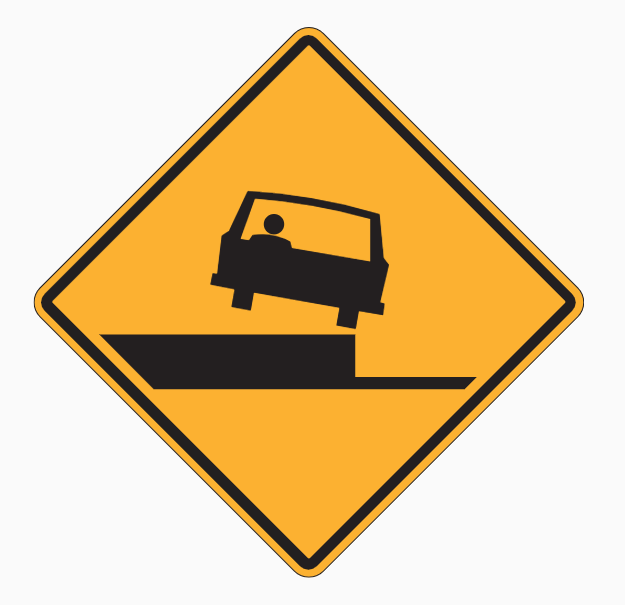
Pavement edge drop-off.
Pavement edge drop-on.
Road ahead is widening.
Soft shoulders ahead.
This sign warns that the pavement edge is lower than the shoulder, which can make it difficult to safely return to the roadway.
Drivers should avoid staying beside large trucks because:
Trucks change lanes more often.
Trucks have large blind spots.
Trucks stop faster than cars.
Trucks use narrower lanes.
Trucks have massive blind spots (No-Zones) where the driver cannot see you, making it dangerous to stay beside them.
When changing lanes, what should you do first?
Increase speed immediately.
Check mirrors and blind spots.
Turn the steering wheel quickly.
Sound the horn continuously.
Drivers should check mirrors and blind spots first to make sure the lane change can be made safely.
What does this sign mean?
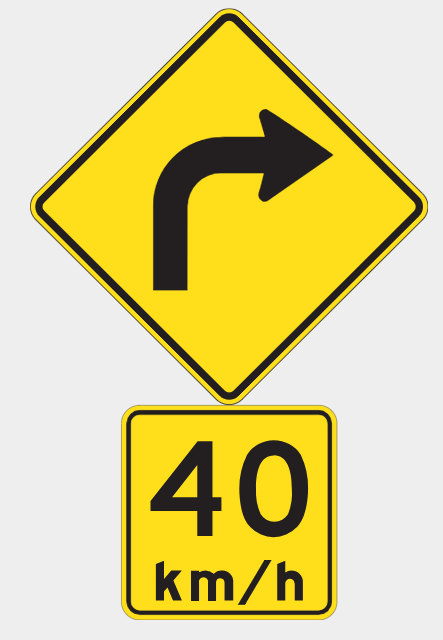
Right turn only, minimum speed 40 km/h.
Winding road ahead, advisory speed 40 km/h.
Sharp right curve ahead, maximum speed 40 km/h.
Sharp right curve ahead, minimum speed 40 km/h.
This sign warns of a sharp curve ahead and shows the recommended maximum safe speed. Driving faster than 40 km/h in this curve could be dangerous.
When parking downhill with a curb, your front wheels should be turned:
Toward the curb.
Away from the curb.
Straight ahead.
Toward the centre line.
Turning your wheels toward the curb ensures that if your brakes fail, the vehicle will roll into the curb and stop rather than into traffic.
If you miss your exit on a highway, you should:
Reverse carefully on the shoulder.
Stop and wait for a gap.
Continue to the next exit.
Make a quick U-turn.
Never reverse or make a U-turn on a highway. It is extremely dangerous. Simply drive to the next exit and find a safe route back.
What does this sign represent?
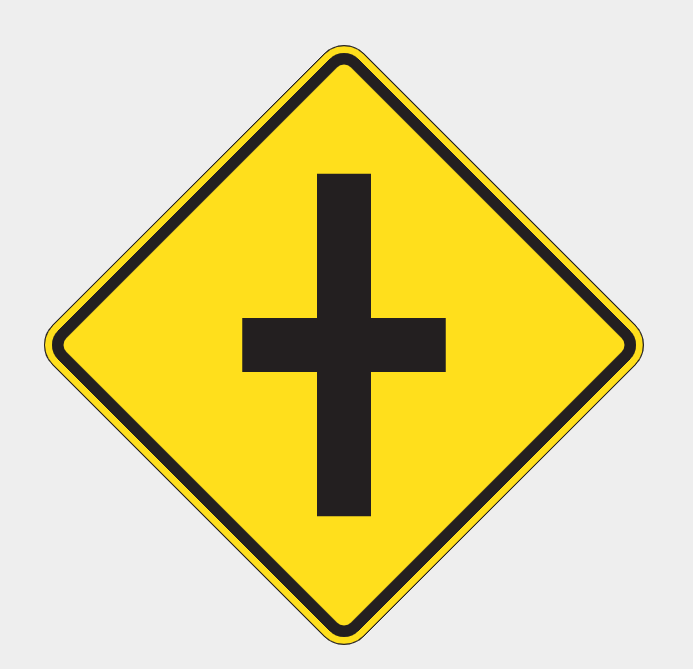
Hidden intersection ahead.
Crossroads ahead.
Hospital ahead.
Double T-Junction ahead.
This sign warns drivers that an obscured intersection is ahead where cross traffic may not be clearly visible.
When backing out of a parking space between two large vehicles, you should:
Check for vehicles and pedestrians.
Reverse quickly to avoid traffic.
Use only your rearview mirror.
Honk continuously while backing.
When visibility is blocked by large vehicles, you must back out slowly and check carefully for approaching traffic and pedestrians.
At an uncontrolled intersection, another vehicle arrives before you. You should:
Speed up to cross first.
Proceed as there are no signs.
Honk and then proceed.
Yield to the other vehicle.
Even at uncontrolled intersections, the vehicle that arrives first has the right-of-way and you must yield to them.
When driving through a school zone, you should:
Maintain normal road speed.
Pass slower vehicles quickly.
Use your horn near crossings.
Reduce speed and watch for children.
Drivers must slow down and stay extra alert for children who may unexpectedly dart into the street.
What does this sign indicate?
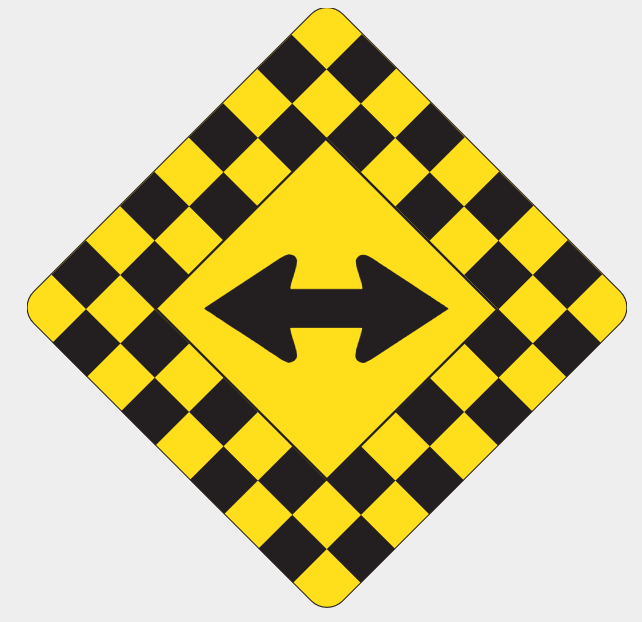
Road ends, exit right only.
Road ends, exit left only.
Road ends, enter right or left.
Road ends, exit right or left.
This sign is placed at a T-junction. It means the road you are on ends, and you must turn either right or left to continue.
When approaching a pedestrian with a white cane at a crosswalk, you must:
Sound your horn to alert them.
Pass quickly if they are slow.
Drive around them carefully.
Yield and proceed with caution.
A white cane indicates the pedestrian is visually impaired. You must yield the right-of-way and give them extra time and space to cross.
When driving at night, high beams must be dimmed:
Only during rain.
Only in residential areas.
When approaching another vehicle.
At every intersection.
You must switch to low beams when meeting an oncoming vehicle or following another vehicle to avoid blinding other drivers.
What does this sign mean?
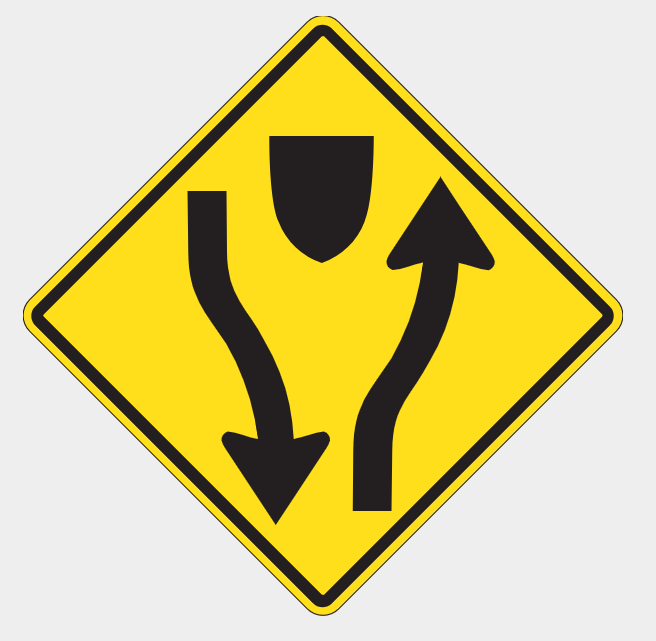
Divided highway begins.
Divided highway ends.
Two-way traffic ahead.
Keep to the left of the median.
This sign warns that the road will soon be split by a median or barrier. The symbol at the top indicates the "beginning" of the division.
What does this sign represent?
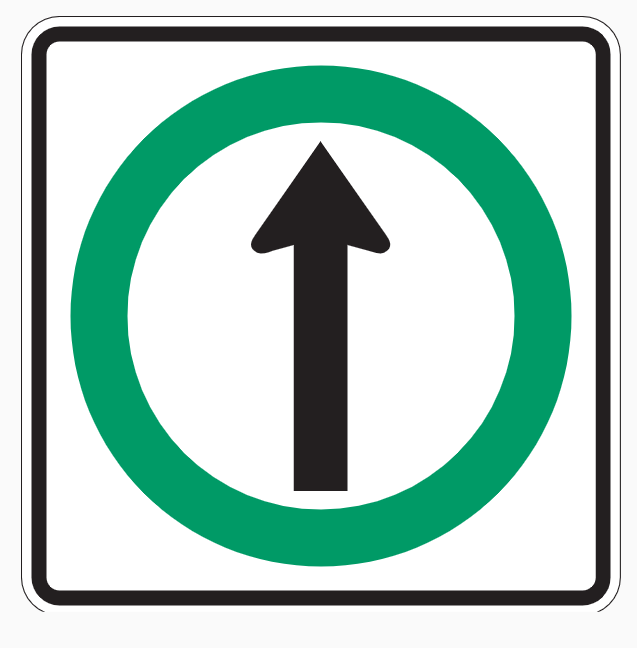
One-way traffic begins ahead.
No passing ahead.
No turns allowed.
One-way traffic ends ahead.
This sign means drivers must continue straight and are not permitted to turn left or right at the intersection.
If visibility is limited while driving at night, you should:
Drive faster to reach soon.
Reduce speed and scan the road.
Follow the vehicle ahead closely.
Watch only the centre line markings.
Reduced visibility at night makes it harder to see hazards, so drivers should slow down and scan the road carefully.
What does this sign indicate?
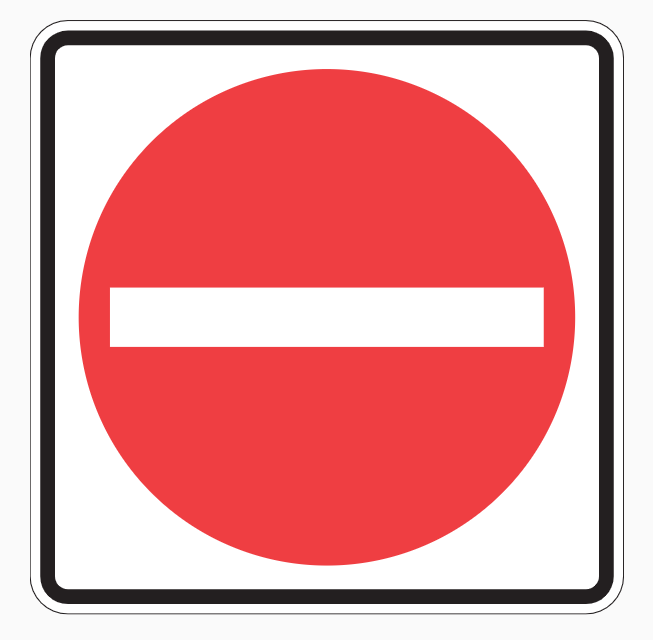
Stop and proceed when safe.
Do not enter the roadway.
No parking allowed.
One-way traffic ends ahead.
This sign is typically found at the exit of a one-way street or an off-ramp. It warns drivers that entering the road from this direction is prohibited and dangerous.
When a school bus has flashing red lights, drivers must:
Slow down and pass carefully.
Stop until the lights stop flashing.
Pass if no children are visible.
Continue at the posted speed limit.
Drivers in both directions must stop for a school bus with flashing red lights and remain stopped until the lights are turned off.
What does this sign mean?
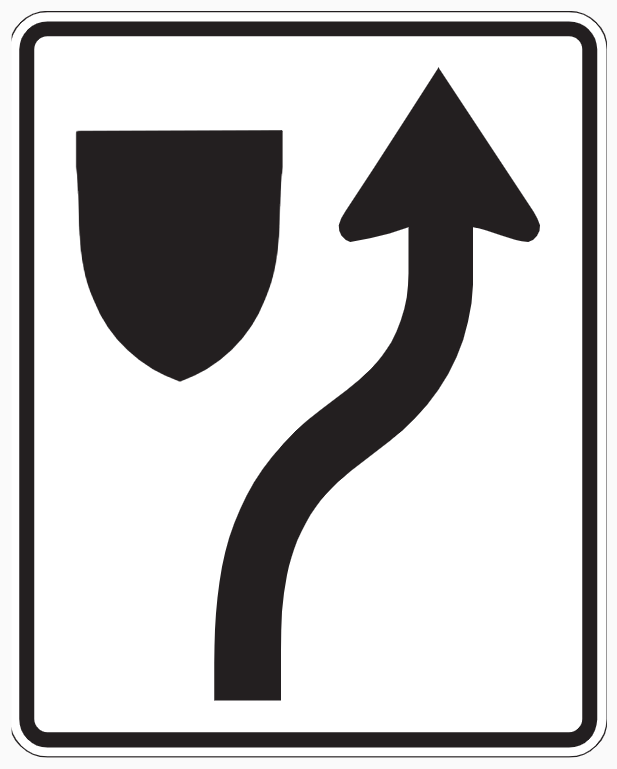
Keep left of the median.
Divided highway begins.
Keep right of the obstruction.
Winding road ahead.
This sign directs drivers to pass to the right side of a median, divider, or obstruction ahead.
What is the maximum BAC allowed for a Learner (L) driver?
0.05%.
0.08%.
0.00%.
0.02%.
Learner stage drivers must have absolutely no alcohol in their system while driving.
Why should you increase your following distance in winter conditions?
Tires grip better on snow.
Vehicles require more distance to stop.
Headlights are less effective.
Traffic moves more slowly.
Reduced traction on icy or snowy roads significantly increases the distance needed to bring a vehicle to a complete stop.
When approaching a hill with limited visibility, you should:
Pass slower vehicles before the top.
Drive near the centre line.
Accelerate over the hill quickly.
Stay right and reduce speed.
When visibility is limited on a hill, staying to the right and slowing down protects you from oncoming vehicles that may be over the centre line.
Before entering an uncontrolled intersection, you should:
Assume others will stop.
Slow down and check traffic.
Accelerate to cross quickly.
Drive near the centre line.
Drivers should slow down and check carefully for approaching traffic before entering an uncontrolled intersection.