Driving Test Manitoba: Free Class 5 Knowledge Test Practice 3
- The test is based on questions taken from the Manitoba Driver’s Handbook.
- You will be asked about traffic laws, safe driving practices and recognition of road signs.
- The test is a series of multiple choice questions.
Need the handbook?
Download the official Manitoba Driver’s Handbook PDF for free.
Reminder: To obtain your Manitoba learner’s licence, you will need to pass a class 5 knowledge test.
How far back must you stop for a school bus with flashing red lights?
3 metres.
5 metres.
10 metres.
15 metres.
Drivers must stop at least 5 metres away from a school bus with flashing red lights and remain stopped until the lights stop flashing.
What does this hand signal indicate?
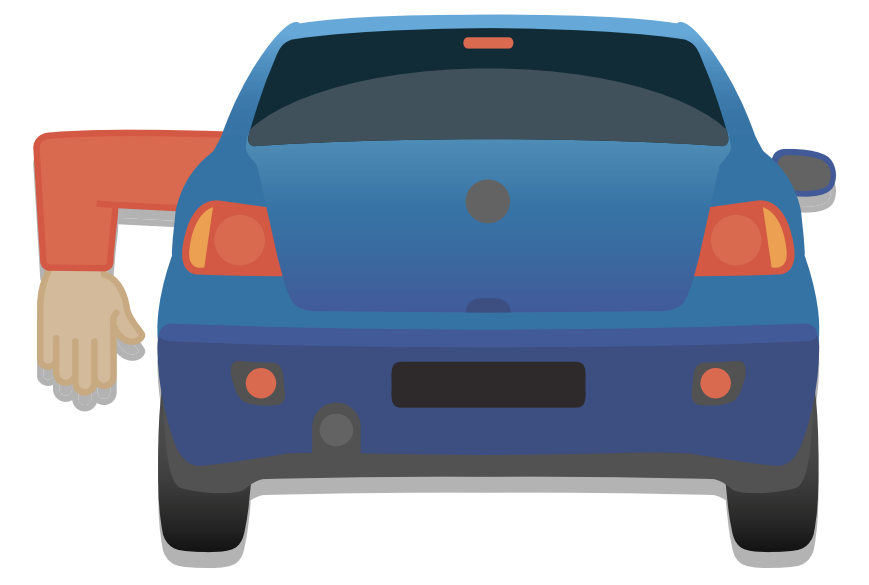
Right turn.
Left turn.
U-turn.
Stop or slow down.
When a driver extends their left arm out and bends it downwards, it signals that they are slowing down or coming to a stop.
At a T-intersection without signs, which driver must yield?
The driver on the through road.
The driver approaching from the right.
The driver ending at the T-intersection.
The driver turning across the intersection.
Drivers on the road that ends (terminating road) must yield to all traffic on the through road before turning.
What does this "Cul-de-sac" sign represent?
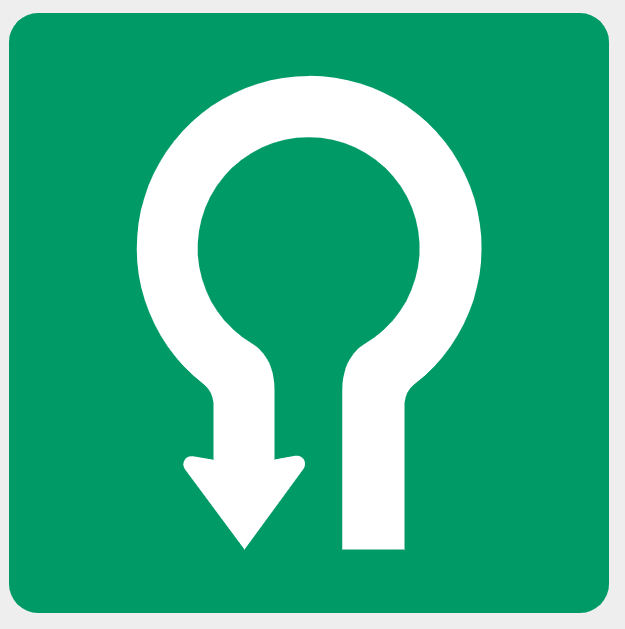
Dead end with turn left.
Dead end with turn right.
Dead end with no turnaround.
Dead end with turnaround.
This is a dead-end street with a circular area at the end, allowing vehicles to turn around safely without needing to reverse.
What does this sign mean?
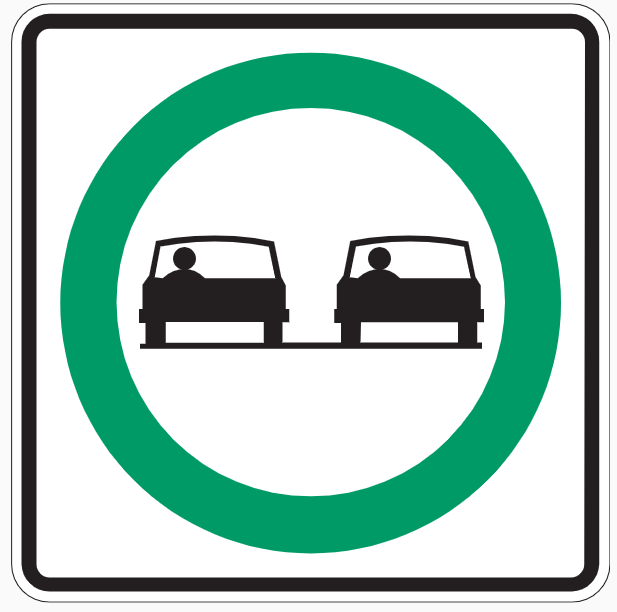
Passing permitted.
Parking permitted.
Stop and waiting permitted.
Two-way traffic permitted.
This sign indicates that passing other vehicles is permitted in this area. Drivers should still ensure it is safe to do so before overtaking.
What does this sign represent?
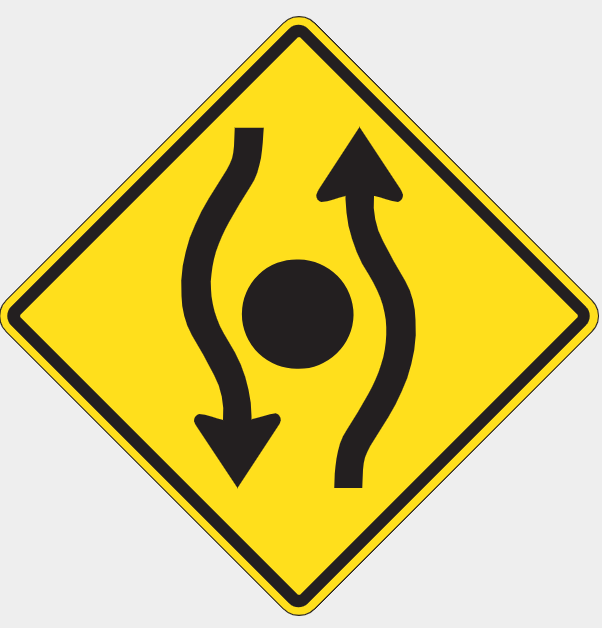
Divided highway begins.
Roundabout ahead.
Two-way traffic ahead.
Traffic island ahead.
This sign warns that there is a traffic island or obstruction in the roadway ahead. Drivers should slow down and keep to the right of the island unless otherwise directed.
What should you do after passing another vehicle?
Slow down before re-entering.
Stay in the passing lane longer.
Return to your lane when safe.
Move back immediately after passing.
After passing, you should only return to your original lane when there is enough space and you can see the passed vehicle in your rearview mirror.
What is the safest way to brake on a slippery road?
Apply brakes smoothly and gradually.
Pump the brakes rapidly.
Brake hard before every turn.
Use the parking brake.
On slippery roads, sudden braking can cause wheels to lock and the vehicle to skid. Gentle, steady pressure on the brake pedal helps maintain control.
You are driving during a snowstorm and visibility suddenly decreases. You should:
Reduce speed and increase following distance.
Continue at highway speed.
Follow the vehicle ahead closely.
Pass slower vehicles immediately.
Snowstorms reduce traction and visibility, so drivers should slow down and leave extra space to react safely.
If traffic signals are completely dark, you should:
Treat it as a four-way stop.
Proceed without slowing down.
Yield only to larger vehicles.
Follow the vehicle ahead.
When traffic signals are not working, drivers should stop and follow four-way stop right-of-way rules before proceeding.
You are driving near a school and children are beside the road. You must:
Slow down and be prepared to stop.
Maintain the normal speed limit.
Sound the horn to warn the children.
Pass quickly before they begin crossing.
Children may act unpredictably near schools, so drivers should reduce speed and be ready to stop at any time.
You are parking near an intersection with limited visibility. You should:
Park as close to the corner as possible.
Park briefly with hazard lights on.
Find a safer legal parking location.
Park if other vehicles are already nearby.
If visibility near an intersection is limited, drivers should choose a safer legal parking location where they will not block the view of traffic or pedestrians.
You are entering a roundabout and vehicles are already inside. What should you do?
Enter before traffic gets closer.
Yield to traffic entering from the left.
Yield to traffic entering from the right.
Yield to traffic already inside.
Drivers entering a roundabout must yield to all traffic already in the circle, regardless of which direction they are coming from.
The safest place for young children to sit in a vehicle is:
The front seat.
The back seat with proper restraints.
Any seat without a seat belt.
On an adult’s lap.
Children are safest in the back seat, properly secured in a car seat or booster seat suitable for their age, height, and weight.
On a multilane road, slower traffic should generally:
Use the right lane.
Use the left lane.
Use the middle lane.
Change lanes often.
On highways with multiple lanes, slower-moving vehicles must stay in the right-hand lane, leaving the left lane free for passing.
If a cyclist signals a turn, drivers should:
Pass quickly before the cyclist turns.
Expect the cyclist to change direction.
Continue because the cyclist is near the edge.
Sound the horn and continue past.
A cyclist’s hand signal shows their intention to turn, so drivers should slow down and allow enough space for the maneuver.
You are merging onto a highway with fast-moving traffic beside you. You must:
Stop at the end of the merge lane.
Match traffic speed and merge when safe.
Force your vehicle into the lane.
Continue driving on the shoulder.
Drivers should use the acceleration lane to match the speed of highway traffic and merge only when there is a safe gap.
What does this sign represent?
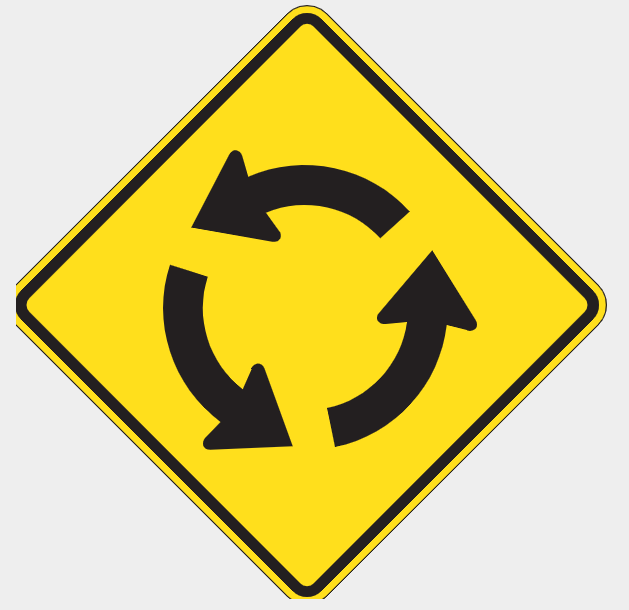
Mini roundabout.
Roundabout ahead.
Traffic island ahead.
Circular one-way traffic only.
This sign warns drivers that a roundabout is ahead, where traffic flows in a circular direction around a central island.
What does this sign mean?
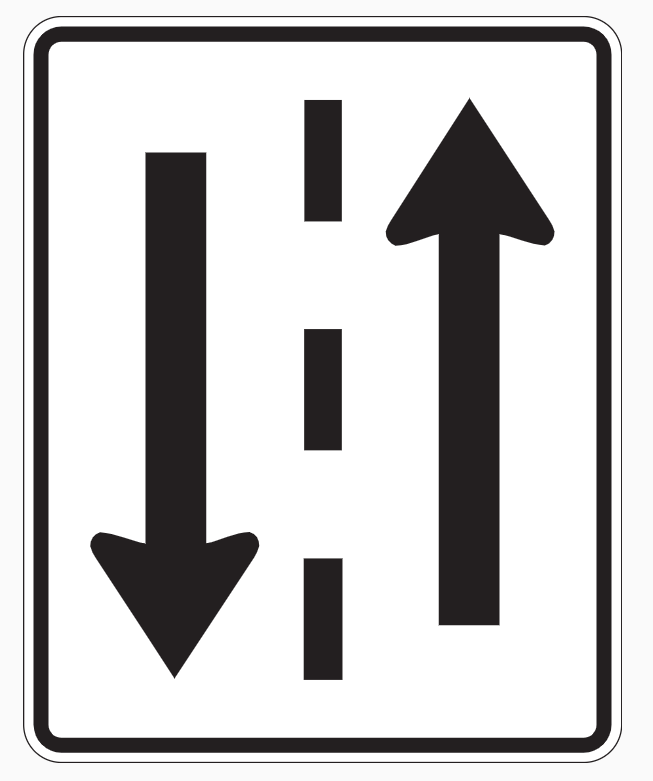
Passing permitted.
Divided highway begins.
One-way traffic ahead.
Two-way traffic ahead.
This sign indicates that you are on a road with two-way traffic. Drivers should stay in their lane and be alert for oncoming vehicles.
The minimum distance you must park from a fire hydrant is:
1 metre.
3 metres.
5 metres.
9 metres.
You must not park within 3 metres of a fire hydrant so emergency crews can access it quickly during a fire.
What does this sign indicate?
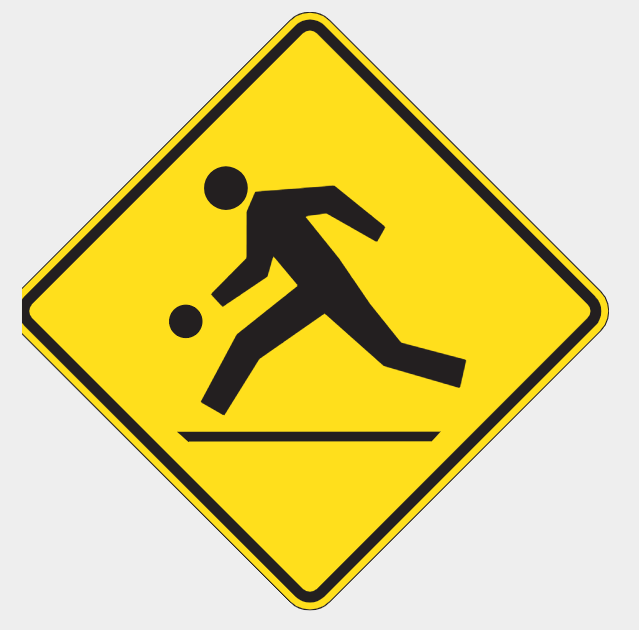
School zone area ahead.
Children playing area ahead.
Playground ahead.
Recreational trail ahead.
This sign warns that a playground is near the road. Drivers should be extra cautious and slow down, as children may unexpectedly run into the street while playing.
You are approaching a flooded section of roadway. You must:
Accelerate quickly through the water.
Follow the vehicle ahead through the flood.
Drive through slowly without stopping.
Avoid driving through unknown water depth.
Flooded roads can hide deep water, debris, or road damage, making it dangerous to drive through without knowing the conditions.
What does this sign warn drivers about?
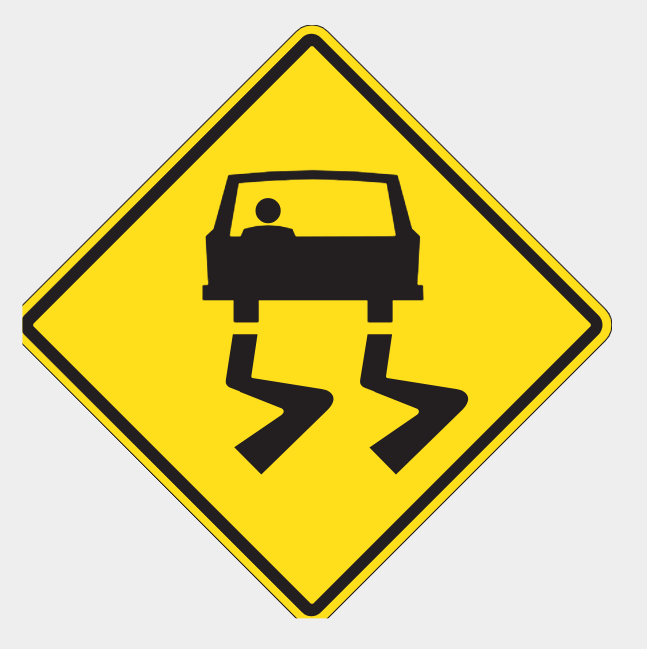
Winding road ahead.
Loose gravel ahead.
Slippery road ahead.
Road repairs ahead.
This sign warns that the road surface may become slippery, especially in wet or icy conditions, requiring reduced speed and careful steering.
Another driver is tailgating you on a freeway. You should:
Brake suddenly to warn the driver.
Increase space ahead and remain calm.
Block the driver from passing.
Reduce speed sharply without signalling.
If someone is tailgating, do not react aggressively. Increase the following distance from the vehicle ahead to give yourself more room to brake safely and reduce the risk of a rear-end collision.
Can you use a hand-held mobile phone while driving in Manitoba?
Yes, permitted.
Yes, only in emergencies.
No, illegal.
Yes, only for texting.
Manitoba law prohibits drivers from using hand-held mobile devices while driving because distracted driving increases the risk of collisions.
What is the safest choice before drinking alcohol?
Plan not to drive afterward.
Drink coffee before driving.
Wait until you feel normal to drive.
Drive only a short distance home.
The safest choice is to arrange a sober driver, taxi, or other safe transportation before consuming alcohol.
What does this sign mean?
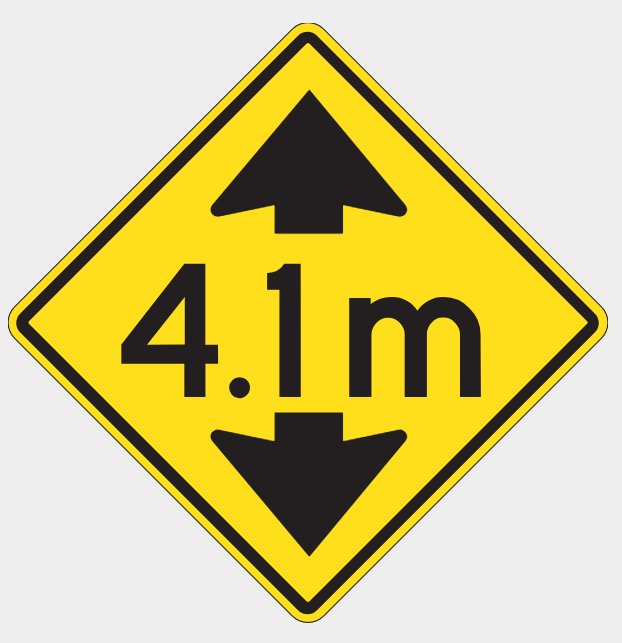
Maximum width clearance.
Minimum width clearance.
High structure clearance.
Low structure clearance.
This sign warns of a low overhead structure, such as a bridge or tunnel, and shows the maximum safe height for vehicles to pass underneath safely.
What does this sign indicate?
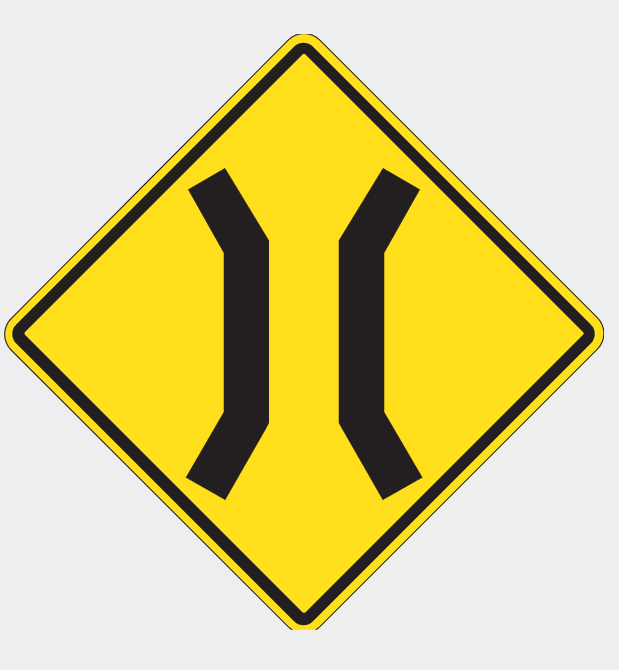
Divided highway begins.
Two-way traffic ahead.
Narrow bridge ahead.
Railway bridge ahead.
This sign warns that the bridge or roadway ahead becomes narrower, requiring drivers to use extra caution when meeting oncoming traffic.
Before turning right at an intersection, you should position your vehicle:
Close to the right curb or edge.
Near the centre line.
In the left lane.
In any position if you signal first.
Before making a right turn, drivers should move close to the right curb or edge of the roadway to complete the turn safely.
What is the main purpose of defensive driving?
To reach destinations more quickly.
To anticipate and avoid hazards.
To reduce the use of mirrors.
To maintain higher speeds safely.
Defensive driving is about proactively scanning the road to identify potential dangers and reacting early to prevent accidents.