Driving Test NL: Free Class 5 Permit Test Practice 3
- The test is based on questions taken from the Newfoundland and Labrador Driver’s Handbook.
- You will be asked about Rules of the Road, Safe Driving Practices, Road Sign Recognition and more.
- The test is a series of multiple choice questions.
Need the handbook?
Download the official Newfoundland and Labrador Driver’s Handbook PDF for free.
Reminder: To obtain your Newfoundland and Labrador learner’s permit, you will need to pass a class 5 written test.
What does this sign represent?
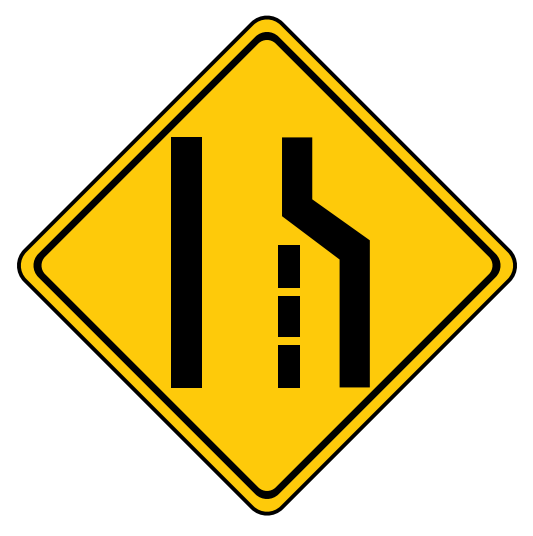
Right lane is ending.
Left lane is ending.
Divided highway ahead.
Road narrows ahead.
This sign warns drivers that the right lane is ending ahead and traffic must safely merge into the left lane.
Children between 18 and 37 kilograms (40–80 lbs) must be secured in a:
Rear-facing seat.
Front seat of the vehicle.
Lap belt only.
Approved booster seat.
In Newfoundland and Labrador, children weighing between 18 and 37 kg (40–80 lbs) and measuring 145 cm or less must be properly secured in an approved booster seat.
Before turning right on a red light, a driver must:
Increase speed.
Yield and stop.
Follow other vehicles.
Sound the horn.
Before turning right on a red light, drivers must come to a complete stop and yield to traffic and pedestrians.
What does this sign indicate?
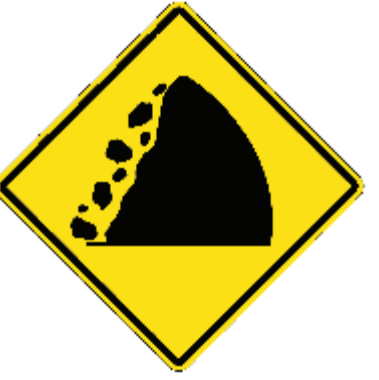
Gravel road begins.
Steep hill ahead.
Road work area ahead.
Falling rocks ahead.
This warning sign alerts drivers that they are entering an area where rocks may fall or be present on the roadway. Drive with caution and watch the road surface.
When traffic lights are not working, drivers should treat the intersection as:
Four-way stop.
Free passage.
Highway merge.
Yield zone.
When traffic signals are not operating, drivers must treat the intersection as a four-way stop and proceed only when safe.
What should you do before exiting a roundabout?
Increase speed.
Sound the horn.
Signal right.
Stop suddenly.
Drivers should signal right before exiting a roundabout to inform other road users of their intention to leave the roundabout.
On multi-lane roads, slower traffic should usually keep:
In the left lane.
In the right lane.
In the centre lane.
Near the shoulder.
On multi-lane highways, you should drive in the right-hand lane unless you are passing another vehicle or preparing to make a left turn.
What is the unposted speed limit on the paved Trans-Canada Highway?
80 km/h.
100 km/h.
90 km/h.
110 km/h.
If no speed limit sign is posted, the legal speed limit is 100 km/h on paved portions of the Trans-Canada Highway in Newfoundland and Labrador.
When parking uphill without a curb, wheels should turn:
Toward the side of the road.
Away from the side of the road.
Straight ahead.
Toward traffic.
When parking uphill without a curb, turn the wheels away from the side of the road so the vehicle will roll safely away from traffic if it moves.
What does this sign signify?
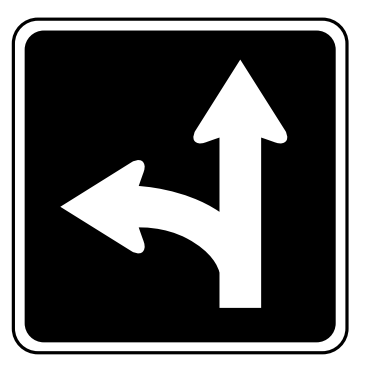
Left turn only.
Straight only.
Left turn or straight only.
Right turn or straight only.
This regulatory sign indicates that drivers in this specific lane are only allowed to either make a left turn or proceed straight ahead. No right turns are permitted.
What should you do before entering a main road from a driveway?
Stop and yield.
Speed up quickly.
Honk continuously.
Enter without stopping.
Before entering a main road from a driveway, drivers must stop and yield the right-of-way to traffic and pedestrians.
What does this sign mean?
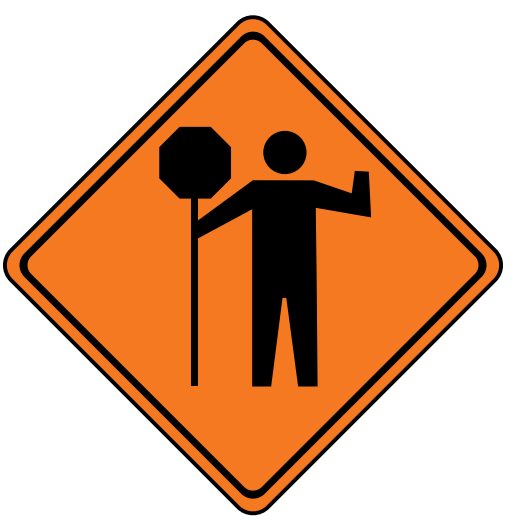
Construction detour ahead.
Survey crew ahead.
Road worker ahead.
Flag person ahead.
This warning sign alerts drivers that a traffic control person (Flag person) may be directing traffic ahead and drivers should be prepared to stop for instructions.
If you double your speed, braking distance increases by:
Two times.
Three times.
Four times.
Six times.
When you double your speed, braking distance increases four times because kinetic energy increases with the square of the speed.
What does this sign indicate?
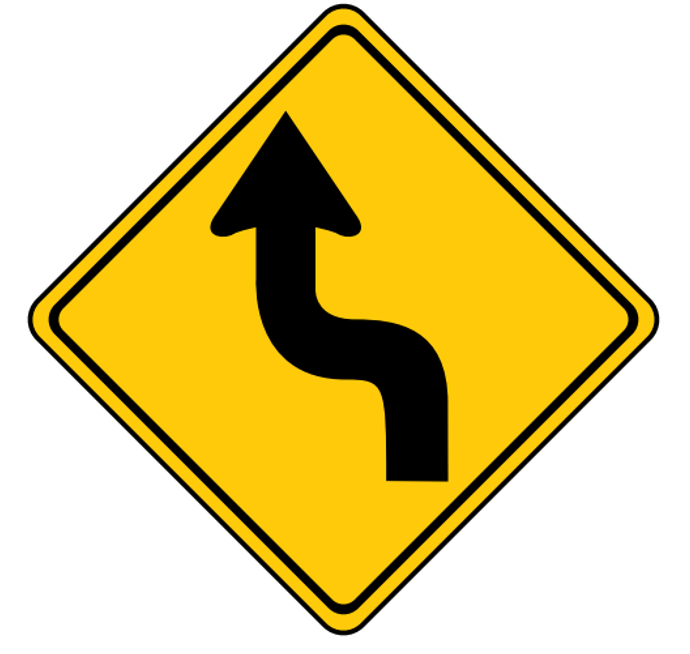
Winding road ahead.
Left turn followed by a U-turn.
Right turn followed by a left turn.
Left turn followed by a right turn.
This warning sign indicates that the road ahead curves to the left first, and then curves to the right. Drivers should slow down and proceed with caution.
Before passing another vehicle, you should:
Honk continuously.
Drive on the shoulder.
Increase speed suddenly.
Check mirrors and blind spots.
Before passing, drivers must check mirrors and blind spots to ensure the lane is clear and safe.
A flashing red traffic light means:
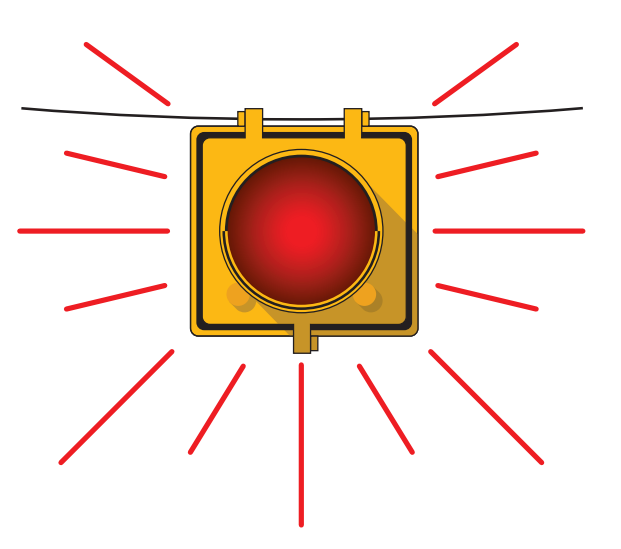
Stop completely.
Proceed carefully.
Yield only.
Speed up.
A flashing red traffic light means drivers must come to a complete stop, then proceed only when the intersection is clear and safe.
What does this sign signify?
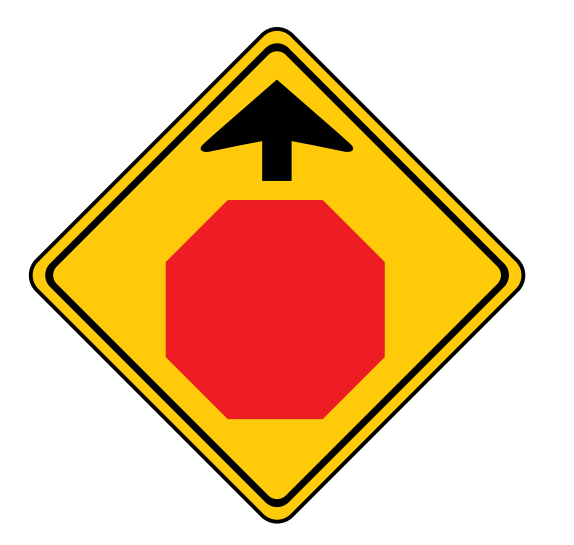
Stop sign ahead.
Yield sign ahead.
Speed limit ahead.
Detour sign ahead.
This warning sign alerts drivers that a stop sign is ahead and they should be prepared to stop safely.
What does this sign mean?
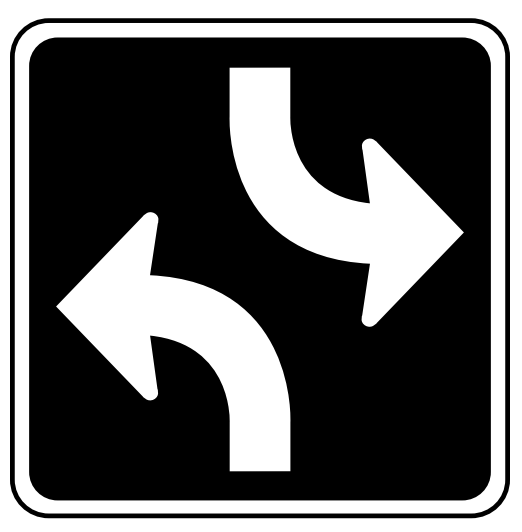
Centre lane is a shared left and right turn lane.
Centre lane is a shared right turn lane.
Centre lane is a shared left turn lane.
Left turns are prohibited from this lane.
This sign indicates that the centre lane is reserved exclusively for vehicles turning left from either direction of traffic. It does not allow right turns, nor does it prohibit left turns.
What does this hand signal represent?
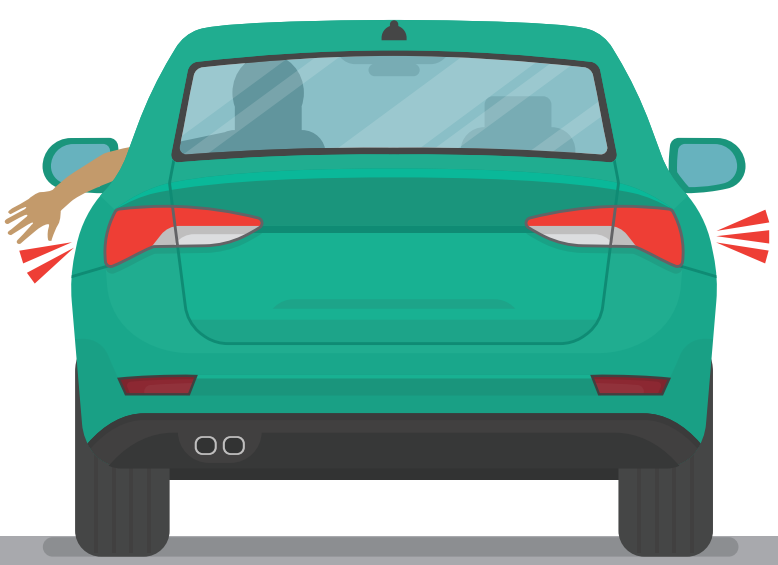
Turning left.
Turning right.
Slowing down or stopping.
Requesting to pass.
This hand signal, with the driver’s arm extended downward out of the window, indicates that the driver is slowing down or stopping.
At this roundabout, which vehicle must yield?
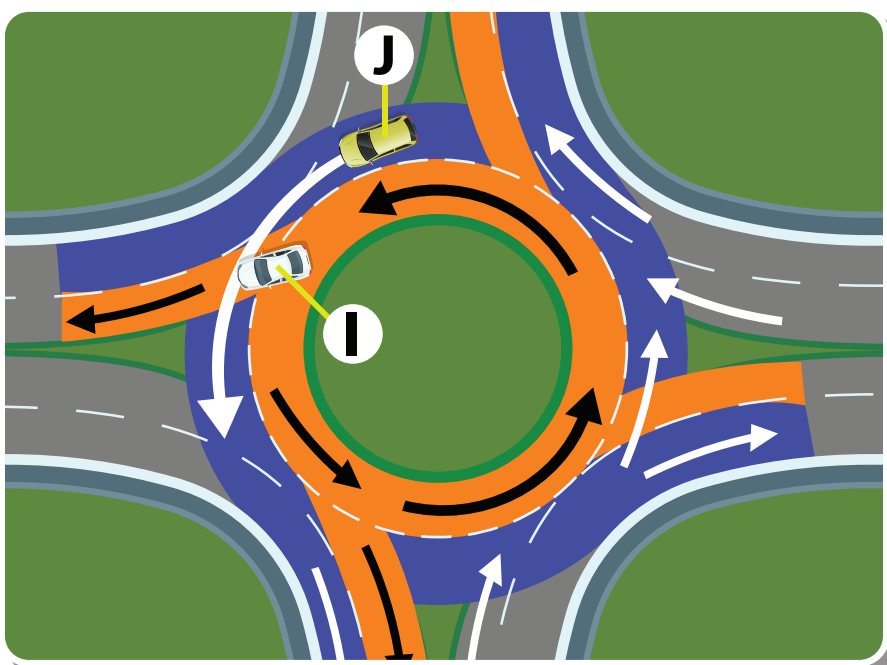
Vehicle I.
Vehicle J.
Both vehicles.
Neither vehicle.
Vehicle J must yield because drivers entering a roundabout must give the right-of-way to vehicles already in the roundabout.