Driving Test Ontario: Free G1 Knowledge Test Practice 1
- The test is based on questions taken from the MTO (Ontario) Driver’s Handbook.
- You will be asked about Safe and Responsible Driving and Traffic Signs and Lights.
- The test is a series of multiple choice questions.
Need the handbook?
Download the official Ontario Driver’s Handbook PDF for free.
Reminder: To obtain your Ontario G driver’s licence, you will need to pass a knowledge driving test.
What does this sign indicate to drivers?
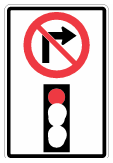
No right turn on red lights.
Divided highway ends.
Narrow bridge ahead.
No right turn.
This sign means drivers are not allowed to turn right when the traffic light is red. A right turn is only permitted when the traffic light is green.
It is legal to turn left on a red light when turning:
From a two-way street to a one-way street, after coming to a complete stop and yielding right of way to other cars in the intersection.
From a one-way street to a two-way street
From a two-way street to a two-way street
From a one-way street to a one-way street
In Ontario, it's legal to turn left on a red light when turning from a two-way street to a one-way street, but only after you come to a complete stop and yield the right of way to any other vehicles or pedestrians in the intersection.
When approaching a stopped school bus from the rear with its red alternating lights and stop arm out, all drivers must stop:
5 feet from the rear of the bus
2 meters from the rear of the bus
2 car lengths back from the rear of the bus
20 meters back from the rear of the bus
In Ontario, when approaching a stopped school bus from behind with red flashing lights and the stop arm out, you must stop at least 20 metres away. This law helps protect children boarding or leaving the bus.
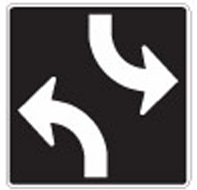
What does this sign mean?
Do not drive in the right lane.
Do not drive in the left lane.
Centre lane for left turns only.
Exit if you are in the right lane.
This sign indicates that the centre lane is reserved exclusively for vehicles making left turns from either direction. It is not intended for through traffic or passing.
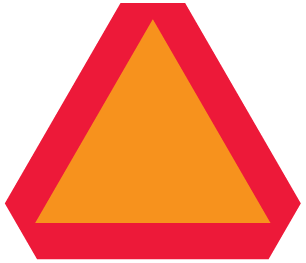
What does this sign mean?
Stop sign ahead.
Yield right of way.
Dead end street ahead.
Slow-moving vehicle.
This sign is an orange triangle with a red border and indicates a slow-moving vehicle that travels at 40 km/h or less. It is commonly displayed on farm tractors, machinery, or other vehicles not capable of maintaining higher speeds. Drivers should reduce speed and approach with caution.
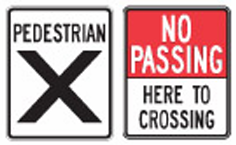
What does this sign mean?
School zone.
Pedestrian crossover.
Uneven pavement.
Do not pass.
This sign indicates a pedestrian crossover. Drivers must be prepared to stop and yield the right-of-way to pedestrians crossing the road.
Which of the following vehicles only may carry a red light visible from the front?
Commercial motor vehicles
Emergency vehicle responding to a call
Pleasure type motor vehicle
Bicycles
Only emergency vehicles responding to a call are permitted to carry a red light visible from the front. This is to signal urgency and priority on the road.
Snow removal vehicles have flashing lights of the following color:
Red
White
Green
Blue
In Ontario, snow removal vehicles may use blue flashing lights, in addition to amber lights, to improve visibility and alert drivers to their presence. This practice is optional and not mandated by provincial law, meaning not all snow removal vehicles will have blue lights. The use of blue lights is typically determined by local municipalities or specific agencies.
When parallel parking on an uphill on the street without a curb, all drivers should angle their front wheels:
Towards the right
Towards the left
Do not need to angle wheels if you use the parking brake
Always turn them to the left regardless of the hill
When parallel parking uphill on a street without a curb, you should angle your front wheels towards the right. This helps prevent the vehicle from rolling into traffic if the parking brake fails.
What does this sign indicate?
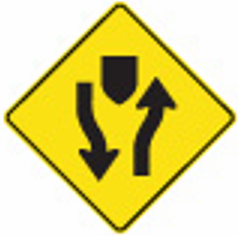
Divided highway begins.
Narrow road ahead.
Road under construction.
Divided highway ends.
This sign indicates that a divided highway begins ahead. Traffic will travel in both directions on separated roadways, and each road carries one-way traffic. Keep to the right-hand road.
What does this Lane Sign mean?
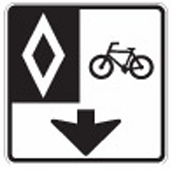
This lane is for buses only.
This lane is for trucks only.
This lane is not for bicycles.
This lane is for bicycles only.
A sign indicating a lane for bicycles only means that only cyclists are allowed to use this lane, and no other vehicles are permitted.
When approaching an intersection where the signal lights are not working, you should:
Park the car and direct the traffic yourself
Stop and wait until the intersection is clear
Treat it as an all way stop sign intersection.
Slow down and proceed with caution
When approaching an intersection with non-working signal lights, treat it as an all-way stop. Stop completely and proceed when it's safe, following the rules for yielding to other vehicles.
When are drivers are required to use low beam headlights:
Upon the approach of another vehicle
Within 150m of the approach of another vehicle
Within 300m of the approach of another vehicle
This is a safety practice, not a law.
Use low-beam headlights within 150 metres of an oncoming vehicle or when following a vehicle within 60 metres. This prevents glare and ensures safety for all drivers.
When you see this sign while driving, what should you do?
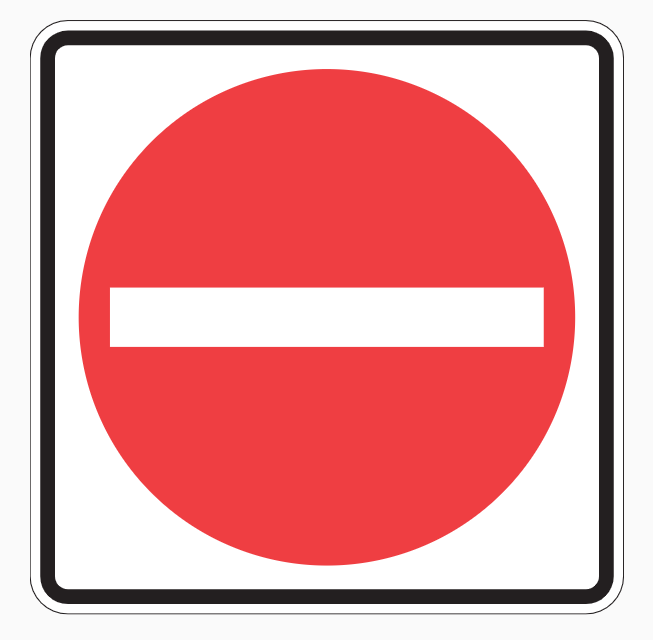
Keep to the right.
Keep to the left.
Do not enter.
Do not pass.
A "Do Not Enter" sign means you must not proceed into that roadway. It is typically placed at the entrance of one-way streets (from the wrong direction) or in areas with restricted access.
What does this sign mean?
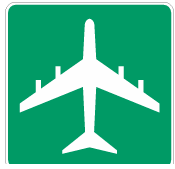
Air show ahead
Airplane landing
Route to airport
Watch out for planes
This sign indicates the route to the airport, helping drivers navigate their way there.
A flashing amber (yellow) signal light at an intersection means:
Come to full stop
Slow down and drive with increased caution
Danger dead end highway
Signal out of order
A flashing amber (yellow) light at an intersection means you should slow down and proceed through the intersection with increased caution, as there may be potential hazards.
When travelling on a one-way street, you see and hear an ambulance with its siren on coming towards you from the rear; what does the law require you to do?
Pull to the nearest curb and stop
Pull to the left only and stop
Pull to the right only and stop
Slow down and let the ambulance pass you on your right
In Ontario, when you're on a one-way street and an emergency vehicle is approaching from behind with its siren and lights on, you must pull over to the closest curb (left or right) and stop. This clears a safe path for the vehicle to pass. Do not block intersections or slow down without pulling over.
What does this road sign mean?
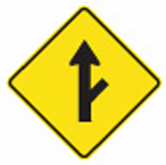
No left turns.
Merging traffic ahead.
Road branching off ahead.
Hidden intersection.
This sign indicates that the road will split ahead, with a branch to the right (as shown in the sign). Drivers need to be aware of the upcoming fork in the road and may need to adjust their position or lane choice to continue in the correct direction.
Where a highway has divided into lanes for traffic, a driver should:
Move from lane to lane with bursts of speed when passing
Never change lanes
Signal intention and move to other lanes only when it is safe to do so.
Straddle lanes and block following traffic
When driving on a highway with multiple lanes, always signal your intention and only change lanes when it is safe to do so to avoid accidents and ensure smooth traffic flow.
What does this sign indicate?
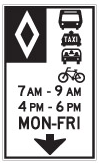
This lane is reserved for specific vehicles with more than two passengers during certain times and days.
No buses are allowed in this lane during specific times and days.
Stopping is prohibited during the times and days posted.
Do not enter during the times and days posted.
This sign indicates that the lane is only for vehicles with more than two passengers during the times and days specified. It is commonly used for carpool lanes.
What does this sign tell you?
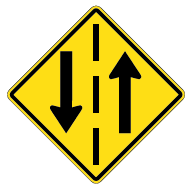
Drive with caution.
Share the road with oncoming traffic.
Slippery when wet.
Right lane ends.
This sign indicates that drivers should be aware of oncoming traffic and share the road safely, particularly on narrow or two-way roads.
What does this sign indicate?
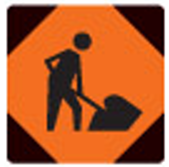
Slow down – obey flag person’s direction.
Road work ahead.
Regulatory sign – reduce speed.
Flag person on duty.
An orange sign showing a person working indicates that there is construction or road work ahead. It warns drivers to slow down, be cautious, and watch for workers on or near the roadway.
What does this Red Octagon sign mean?
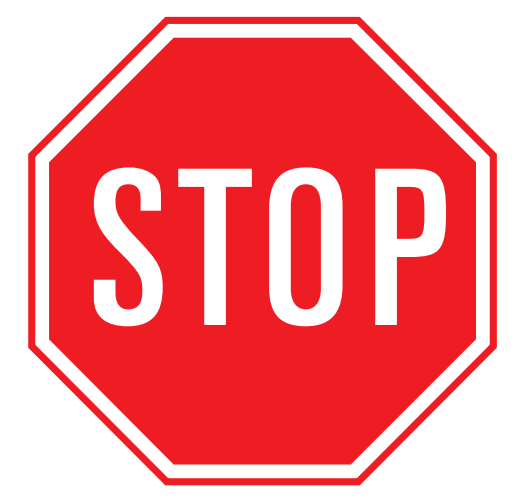
Stop sign 50 metres ahead.
Bump 50 metres ahead.
Stop sign.
Stop only if other vehicles are approaching.
A red octagon always means “Stop.” You must come to a complete stop at the stop line, or before entering the intersection or crosswalk, and proceed only when it is safe.
What does this sign signify?
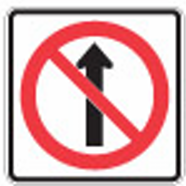
Going straight is allowed.
No right turn.
No left turn.
Do not drive straight through the intersection.
This sign indicates that drivers are not permitted to drive straight through the intersection. It typically suggests that vehicles should follow an alternative route, such as making a turn.
What does this Green Circle Sign mean?
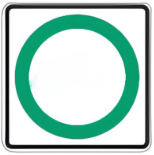
No trucks allowed.
Trucks allowed.
Route for large trucks.
Permissive sign.
A sign with a green circle means you are allowed to do what the symbol shows, such as turning, using a lane, or taking an action.