Driving Test PEI: Free Class 7 Beginner’s Permit Practice 1
- The test is based on questions taken from the PEI Driver’s Handbook.
- You will be asked about Rules of The Road, Signs, Pavement Markings, and Work Zones, Speed Limits, Following Distances and Driving Skills.
- The test is a series of multiple choice questions.
Need the handbook?
Download the official PEI Driver’s Handbook PDF for free.
Reminder: To obtain your PEI Instruction Driver’s Permit (Class 7 license), you will need to pass a written or oral test.
What does this road sign mean?
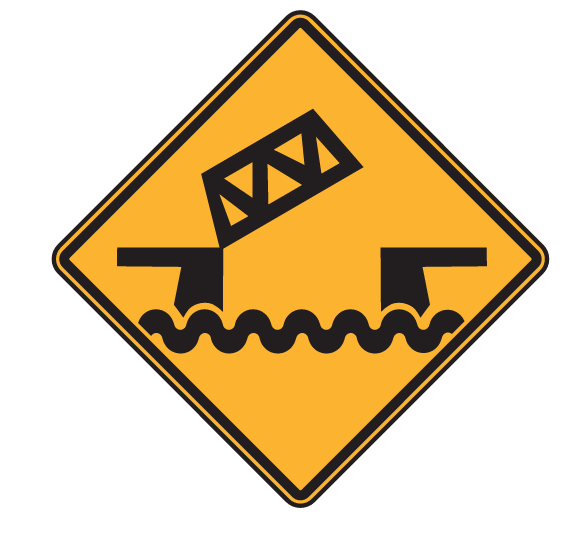
Bridge opening ahead.
Flood zone warning.
Ferry connection ahead.
Narrow bridge ahead.
This warning sign alerts drivers to an upcoming drawbridge or opening bridge. Drivers must be prepared to stop if the bridge is being raised for boat traffic.
A broken yellow line indicates:
Passing is permitted if safe.
No passing allowed.
A one-way street ahead.
An upcoming school zone.
A broken yellow line divides opposing traffic lanes and shows that overtaking or passing is allowed when the road ahead is clear and safe.
What does this sign mean?
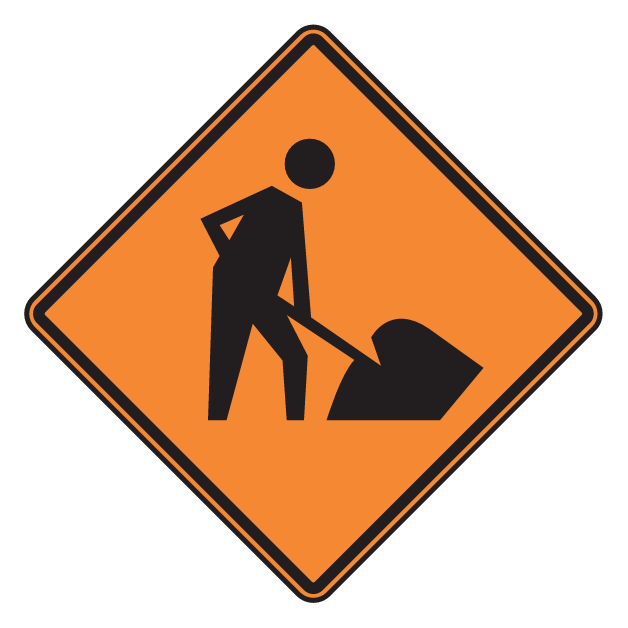
Traffic controller ahead.
Survey crew ahead.
Detour ahead.
Road work ahead.
This sign warns drivers that road construction or maintenance work is taking place ahead and extra caution is required.
What does this sign represent?
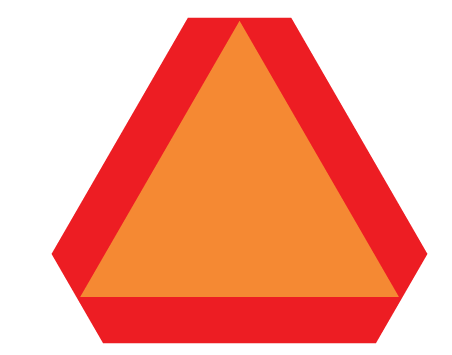
Slow-moving vehicle.
Fast-moving vehicle.
Yield right-of-way ahead.
Emergency stopping zone.
This reflective orange triangle with a red border is placed on the rear of vehicles that travel at speeds of 40 km/h or less to warn approaching drivers to slow down.
What is the maximum BAC limit for drivers under 19?
0.08%.
0.05%.
0.02%.
0.00%.
Under the zero-tolerance policy, young and novice drivers must maintain a 0.00% blood alcohol concentration while operating a vehicle.
Flashing amber school signals require reducing speed to:
50 km/h.
30 km/h.
40 km/h.
10 km/h.
Drivers must reduce their speed to 30 km/h when school zone amber lights are flashing to help protect students.
What does this sign signify?
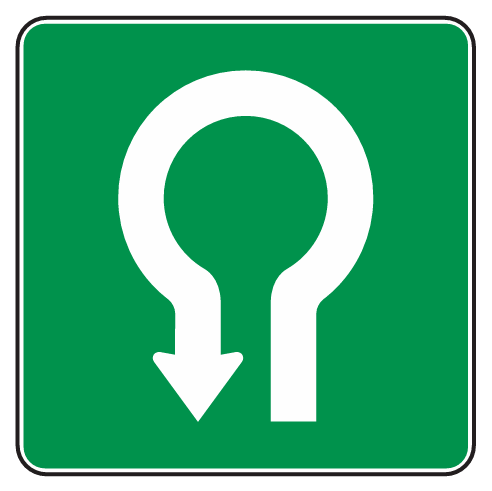
Cul-de-sac ahead.
Roundabout intersection.
Sharp U-turn permitted.
No left turn allowed.
This sign indicates a cul-de-sac or a dead-end street with a circular turnaround at the end, meaning there is no through passage for vehicles.
Within a roundabout, traffic must move:
Clockwise.
Counter-clockwise.
In both directions.
In either direction.
All vehicles entering a roundabout must turn right and proceed in a counter-clockwise direction around the central island until they reach their intended exit.
What does this sign indicate?
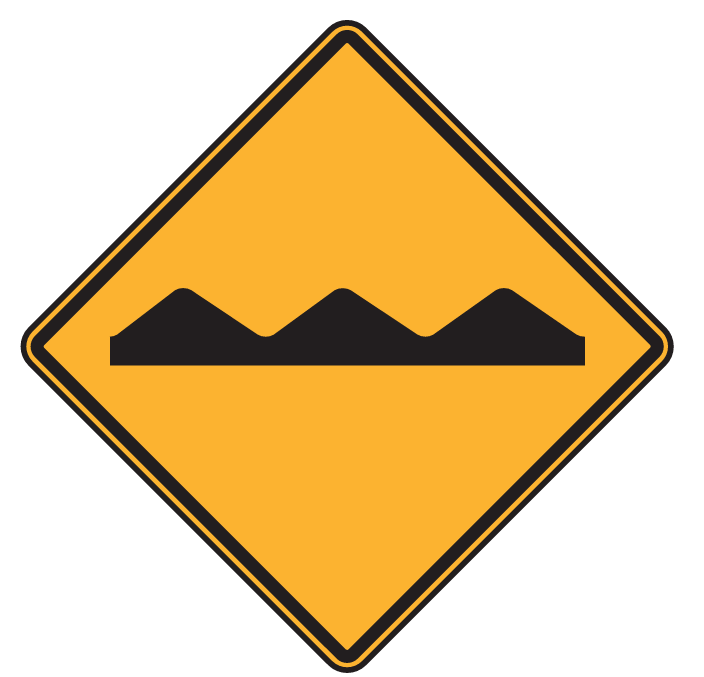
Rumble strips ahead.
Slippery when wet ahead.
Bump or rough road ahead.
Swing bridge ahead.
This warning sign alerts drivers that the road surface ahead is bumpy or rough. Drivers should reduce their speed to safely navigate the uneven surface.
When making a left turn at an intersection, you must yield to:
Traffic behind you.
Oncoming traffic
Only other left turners.
Traffic turning right.
Left-turning drivers must yield the right-of-way to all oncoming vehicles approaching from the opposite direction before completing their turn.
What does this sign indicate?
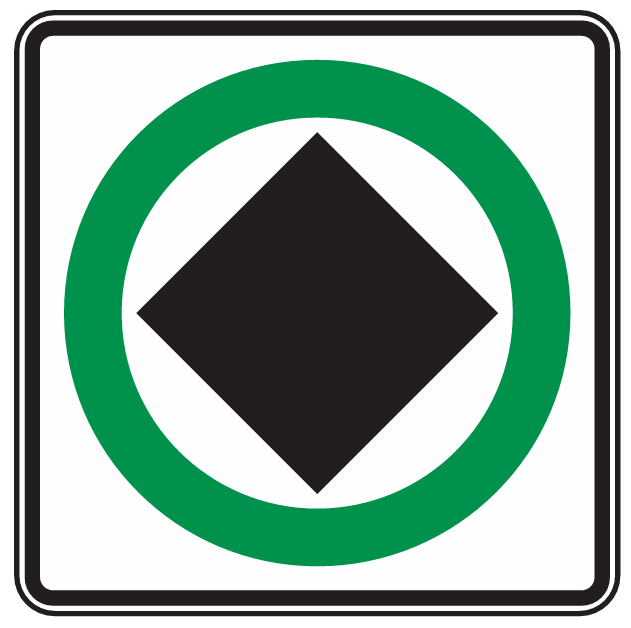
Dangerous goods route.
Emergency detour route.
Hidden intersection ahead.
Road closed to trucks.
This sign indicates a designated route that vehicles carrying dangerous or hazardous materials are required or permitted to follow for safety purposes.
Where should the lap belt portion of a seat belt be positioned?
Across the stomach.
Above the belly button.
Across the upper thighs.
Low over the hips.
The lap belt must be positioned low over the hips so that the pelvic bones, rather than the vulnerable abdomen, absorb the force of a crash.
What does this sign represent?
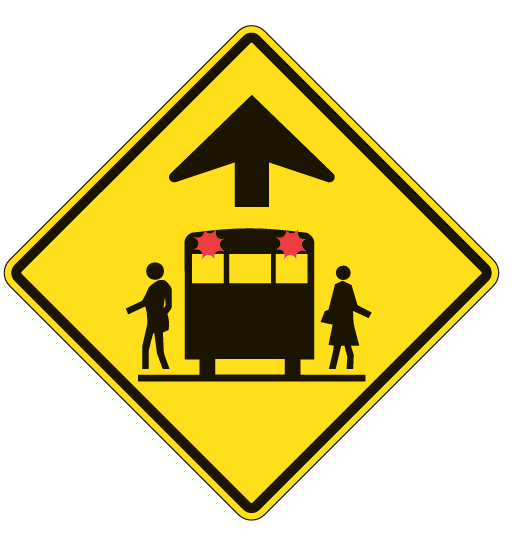
Bus lane only.
Bus terminal ahead.
School bus stop ahead.
Public transit route.
This warning sign alerts drivers that a school bus stop is ahead and they must be prepared to stop for flashing school bus lights.
What is the first rule for a driver approaching a stop sign?
Slow down to 5 km/h.
Stop only if traffic is coming.
Honk to signal presence.
Come to a full stop.
Drivers must always come to a complete stop at a stop sign, regardless of whether other traffic is visible at the intersection.
What should you do at this sign?
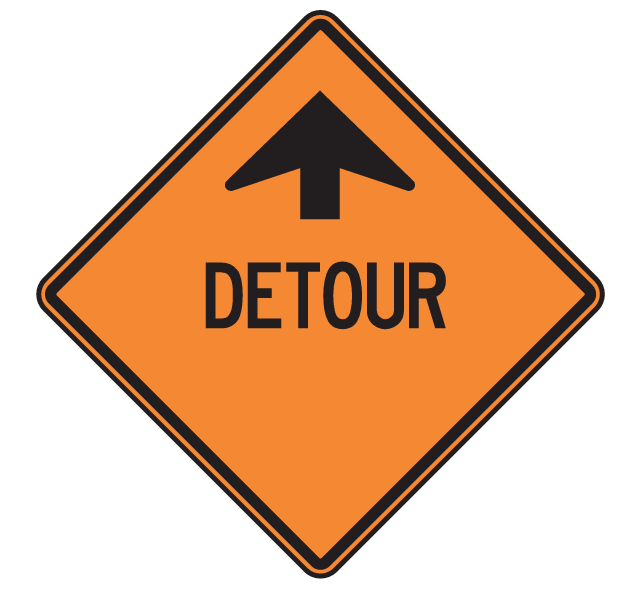
Ignore it if you know a shortcut.
Turn around and go back.
Follow the marked alternate route.
Stop and wait for instructions.
This construction sign indicates that the regular road ahead is closed. Drivers must follow the temporary designated alternate route to bypass the work zone.
Infants under 10 kg must always be placed in:
A booster seat.
A forward-facing seat.
A rear-facing seat.
A parent's lap.
Infants under 10 kg must be secured in a rear-facing child safety seat to provide proper support and protection.
In a 3-way stop, the right-of-way rule is:
Main road always goes.
Yield to school buses only.
Yield to the left.
Yield to the right.
When two vehicles arrive at a 3-way stop at the same time, the driver on the left must yield the right-of-way to the vehicle on the right.
Standard following distance in ideal conditions is:
One second.
Two seconds.
Three seconds.
Four seconds.
Drivers should maintain at least a two-second gap behind the vehicle ahead under ideal road and weather conditions to allow sufficient stopping time.
What does this sign represent?
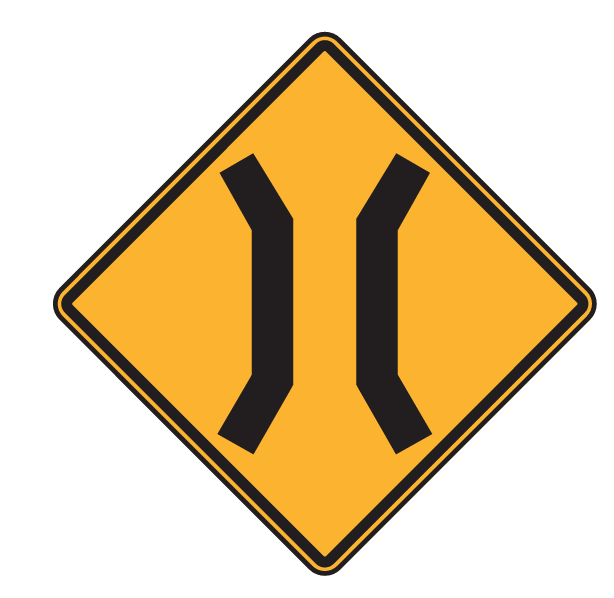
Slippery road ahead.
Swing bridge ahead.
Narrow bridge ahead.
Uneven road ahead.
This sign warns drivers that the bridge ahead is narrower than the road they are currently travelling on, requiring extra caution.
What does this flashing red light mean?
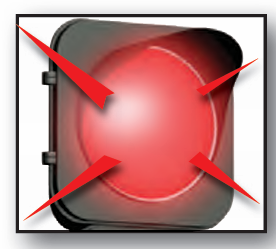
Slow down and proceed with caution.
Stop, then proceed when safe.
Yield to traffic without stopping.
Continue if the intersection is clear.
A flashing red light requires drivers to come to a complete stop and proceed only when it is safe to do so.