Driving Test NL: Free Class 5 Permit Test Practice 2
- The test is based on questions taken from the Newfoundland and Labrador Driver’s Handbook.
- You will be asked about Rules of the Road, Safe Driving Practices, Road Sign Recognition and more.
- The test is a series of multiple choice questions.
Need the handbook?
Download the official Newfoundland and Labrador Driver’s Handbook PDF for free.
Reminder: To obtain your Newfoundland and Labrador learner’s permit, you will need to pass a class 5 written test.
What are the two components of stopping distance?
Vision and hearing.
Speed and weight.
Weather and tires.
Reaction and braking.
Stopping distance consists of the distance travelled during driver reaction time and the distance needed to brake the vehicle to a stop.
What does this sign mean?
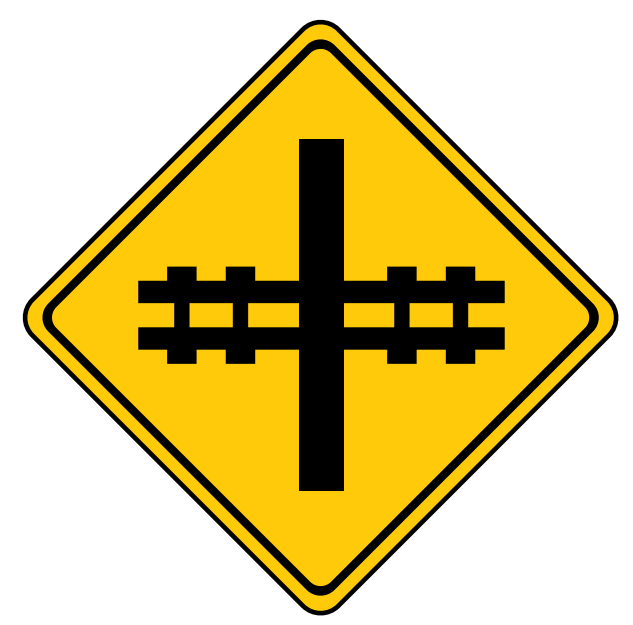
Four-way intersection ahead.
Construction zone ahead.
Railway crossing ahead.
Railway underpass ahead.
This warning sign alerts drivers that a railway crossing is ahead and they should be prepared to stop for trains.
What does this sign signify?
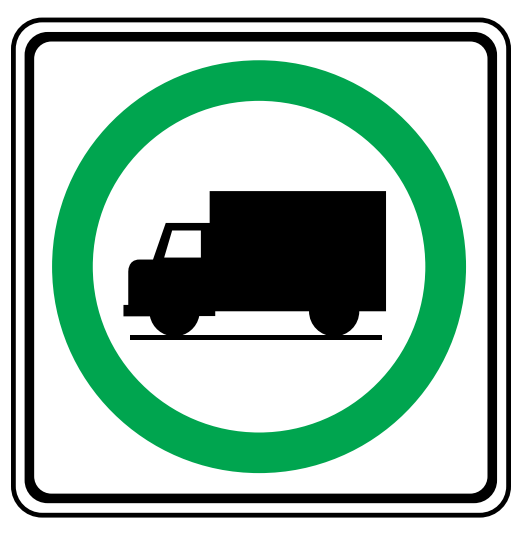
Trucks permitted on this roadway.
Trucks prohibited on this roadway.
Truck inspection area ahead.
Truck parking area ahead.
This sign indicates that trucks are allowed to use this roadway or route.
At this uncontrolled intersection, which vehicle has the right-of-way?
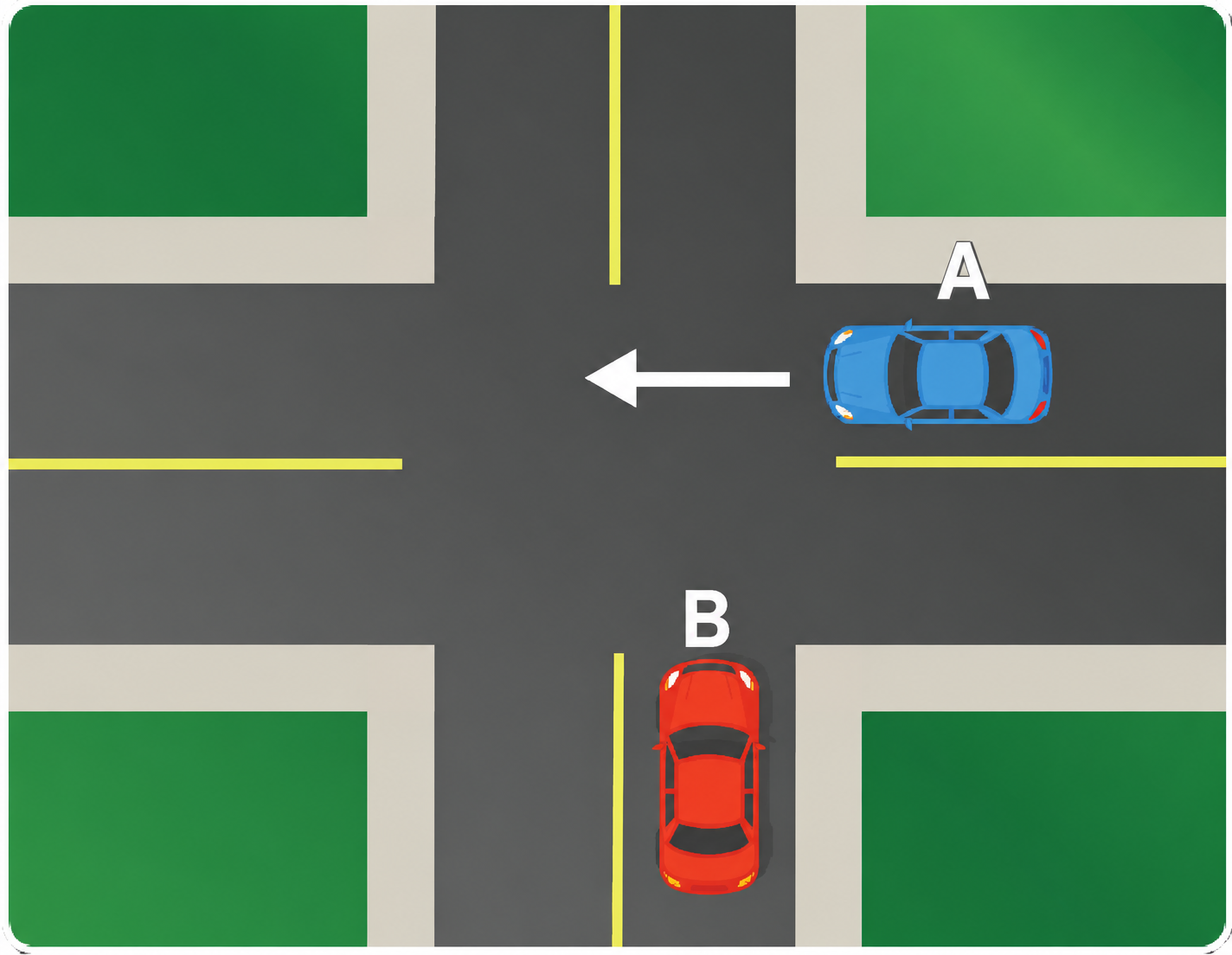
Vehicle B.
Vehicle A.
Both vehicles.
Either vehicle.
Vehicle A has the right-of-way because, at an uncontrolled intersection, the driver on the left must yield to the vehicle approaching from the right.
When two vehicles meet on a steep hill, who should yield?
Vehicle moving downhill.
Vehicle moving uphill.
Larger vehicle.
Faster vehicle.
On a steep hill, the vehicle travelling downhill should yield because the uphill vehicle has more difficulty stopping and starting again.
What does this sign signify?
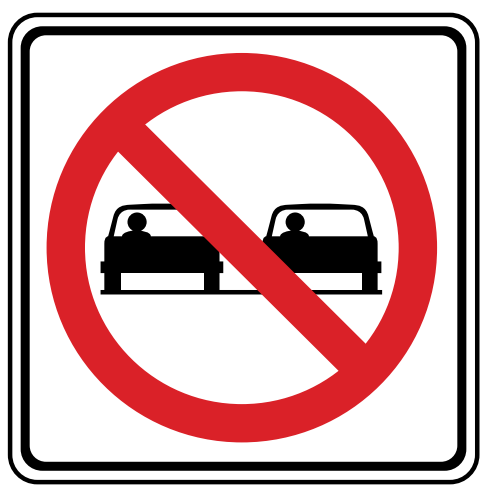
Lane change permitted.
Parking permitted only.
Passing not permitted.
Stopping permitted only.
This regulatory sign indicates that passing or overtaking another vehicle is strictly prohibited on this stretch of the road.
What does a flashing amber traffic light represent?

Proceed at normal speed.
Yield only to pedestrians.
Slow down and proceed with caution.
Stop completely before proceeding.
A flashing amber light warns drivers to slow down and proceed carefully while watching for intersecting traffic and other hazards.
What does this sign indicate?
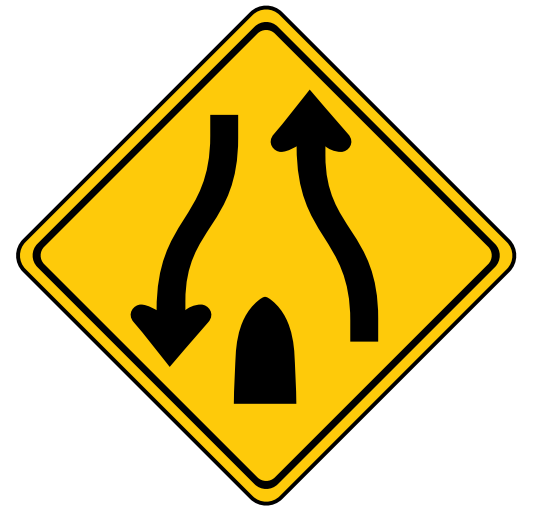
Two-way traffic begins.
Two-way traffic ends.
Divided highway begins.
Divided highway ends.
This sign warns drivers that the divided highway is ending and opposing traffic will soon share the same roadway.
When approaching a school crossing, drivers should:
Prepare to stop.
Maintain normal speed.
Pass other vehicles carefully.
Change lanes quickly.
Drivers approaching a school crossing must slow down, watch for children, and be prepared to stop safely.
When parking downhill with a curb, which way should you turn your wheels?
Away from the curb.
Toward the curb.
Straight ahead.
Toward traffic.
When parking downhill with a curb, turn the wheels toward the curb so the vehicle will roll into the curb if the brakes fail.
What does this sign indicate?
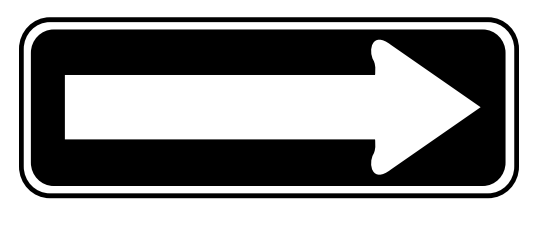
Keep right side of the lane.
Lane ends to the right.
One-way traffic to the right.
Right turn permitted only.
This regulatory sign indicates that the road is a one-way street, and all traffic must move only in the direction indicated by the arrow (to the right).
What should you do if you miss your exit in a roundabout?
Reverse carefully.
Stop immediately.
Turn sharply across lanes.
Continue around again.
If you miss your exit in a roundabout, never stop or reverse; continue around the roundabout until you can safely take the correct exit.
What BAC level is considered the “warn range” in NL?
0.02 to 0.04.
0.05 to 0.08.
0.08 to 0.10.
Above 0.10.
In Newfoundland and Labrador, fully licensed drivers with a BAC between 0.05 and 0.08 are in the warn range and may face penalties.
At this roundabout, which vehicle has the right-of-way?
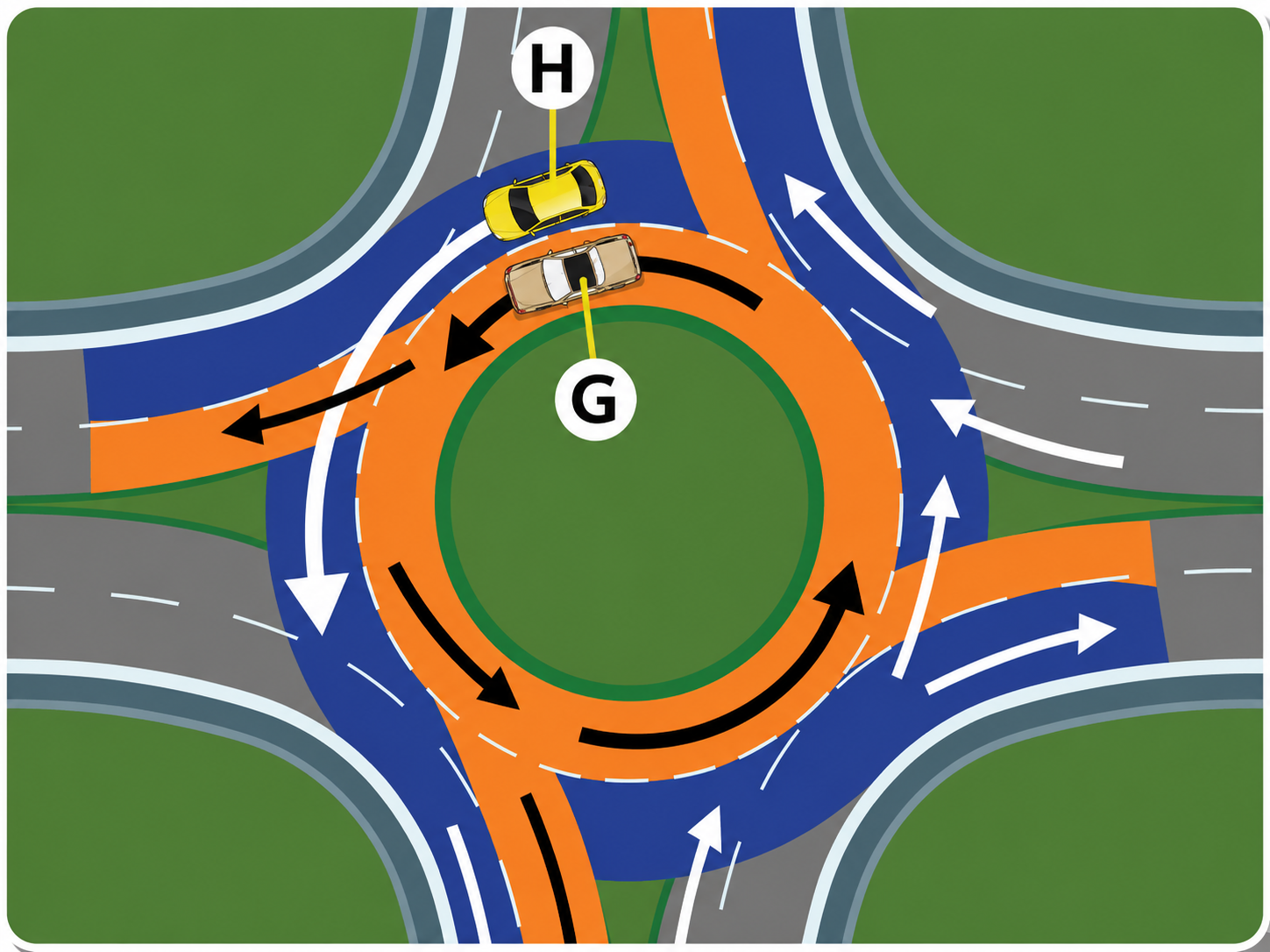
Vehicle G.
Vehicle H.
Both vehicles.
Either vehicle.
Vehicle G has the right-of-way because traffic already inside the roundabout must be given priority by entering vehicles.
Where should the lap portion of a seatbelt rest on a child?
Across the stomach.
Under the arms.
Across the thighs.
Across the hipbones.
The lap portion of a seatbelt should fit low and snug across the child’s hipbones for proper protection in a collision.
What does this sign mean?
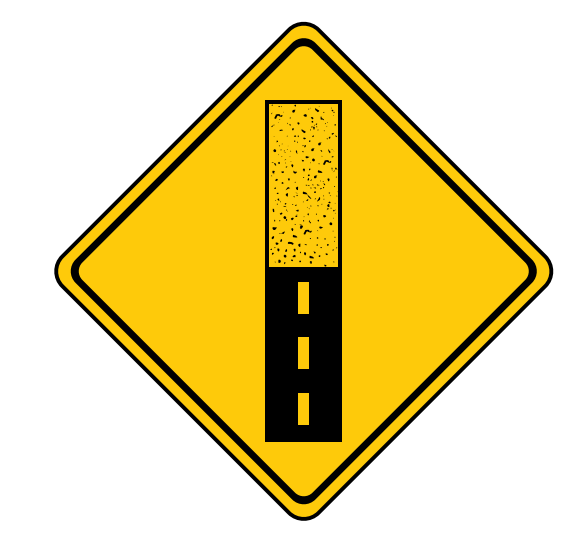
Dead end ahead.
Road closed ahead.
Construction ahead.
Pavement ends ahead.
This warning sign indicates that the paved roadway ends ahead and continues as a gravel surface.
What does this hand signal represent?
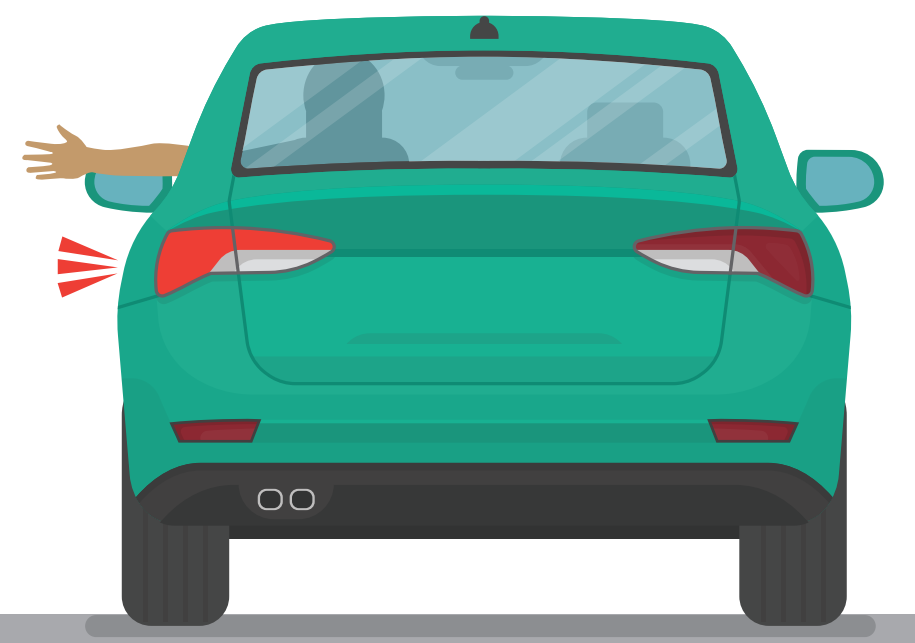
Left turn.
Right turn.
Stopping or slowing down.
U-turn.
This hand signal, with the arm extended straight out of the window, indicates that the driver intends to turn left.
When an emergency vehicle approaches, you must:
Speed up and pass.
Move right and stop.
Change lanes suddenly.
Stay in the same lane.
Drivers must safely move to the right side of the roadway and stop until the emergency vehicle has passed.
What height must a child reach to stop using a booster seat?
120 cm.
135 cm.
145 cm.
160 cm.
Children must continue to use a booster seat until they reach a height of 145 cm (4'9") or a weight of 36 kg (80 lbs).
What is the average reaction time for an alert driver?
1/4 second.
3/4 second.
2 seconds.
5 seconds.
The average reaction time for an alert driver to see a hazard and apply the brakes is 3/4 of a second.