Driving Test Nova Scotia: Free Learner’s Licence (Class 7) Practice 3
- The test is based on questions taken from the Nova Scotia Driver’s Handbook.
- You will be asked about Rules of the Road, Signs, Pavement Markings and Work Zones, Safety, Adverse Driving Conditions, Driving and Impairment.
- The test is a series of multiple choice questions.
Need the handbook?
Download the official Nova Scotia Driver’s Handbook PDF for free.
Reminder: To obtain your Nova Scotia Learner’s Licence (class 7), you will need to pass a Knowledge Test.
What does this sign indicate?
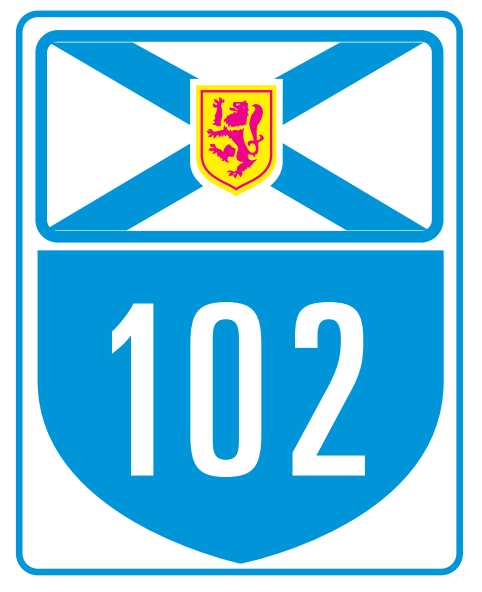
Provincial highway with controlled access.
Provincial highway with unrestricted access.
County road with controlled access.
Municipal route with controlled access.
This route marker identifies a provincial highway with controlled access, also referred to as a 100-series highway.
What should you do before changing lanes?
Speed up immediately.
Honk your horn.
Check mirrors and blind spots.
Brake suddenly.
Before making a lane change, you must check your mirrors and perform a shoulder check to ensure your blind spots are clear.
What does a flashing green light mean?
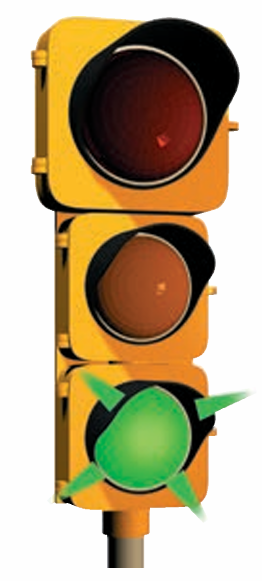
Stop and wait for a green arrow.
Yield to oncoming traffic before turning.
Go only if you are turning left or right.
You may turn left, go straight, or turn right.
A flashing green light gives you the right-of-way, allowing you to turn left, go straight, or turn right through the intersection without stopping.
What signal should you use when exiting a roundabout?
Right turn signal.
Left turn signal.
Emergency flashers.
No signal required.
Drivers should activate the right turn signal before exiting a roundabout or rotary to alert other drivers of their intention to leave the circle.
What does this sign represent?
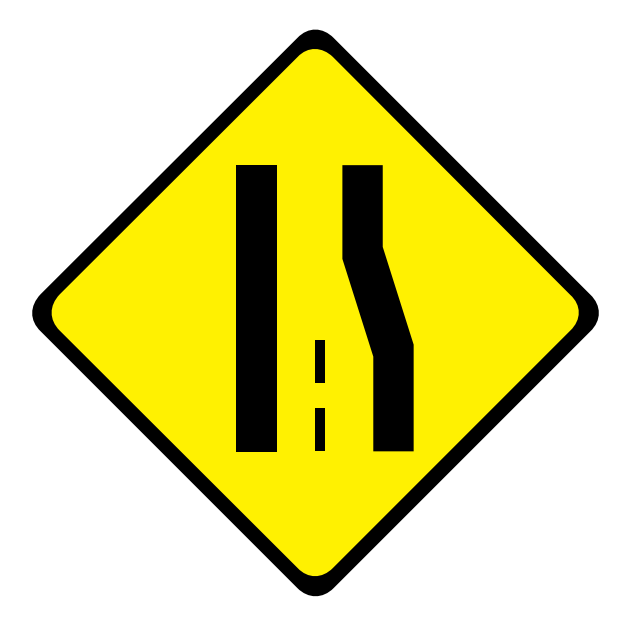
Divided highway begins.
Two-way traffic begins.
Left lane ends.
Right lane ends.
This warning sign indicates that the right lane ends and drivers in that lane must merge left when it is safe to do so.
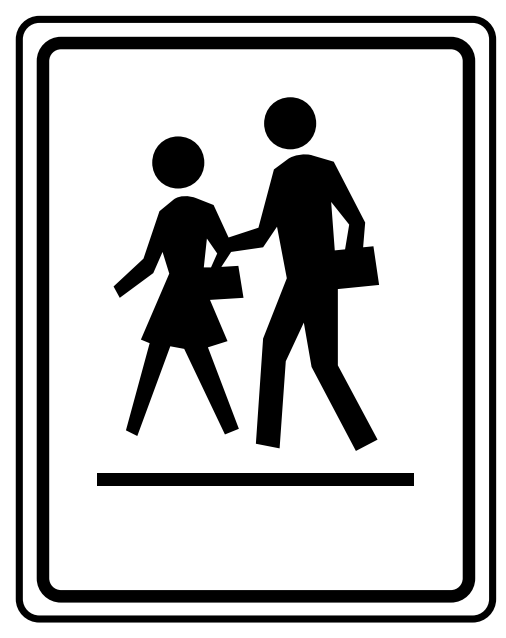
What does this sign indicate?
Pedestrian crosswalk.
Children play zone.
School zone ahead.
School crosswalk.
This sign marks a designated school crosswalk where drivers must watch for and yield to children crossing the road.
What does this sign mean?
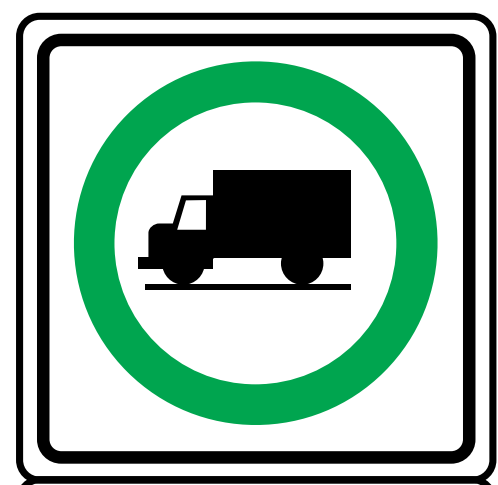
Truck inspection point.
Truck parking area.
Truck route.
Truck loading zone.
This regulatory sign indicates a designated route for trucks and other commercial vehicles.
What does this sign mean?
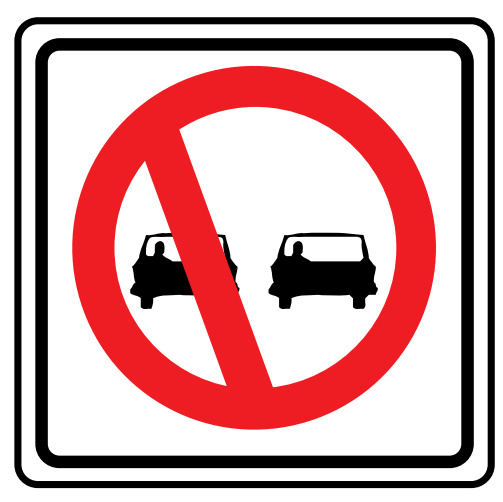
Do not enter.
Do not park.
Do not pass.
Do not stop.
This regulatory sign with a red circle and slash indicates that overtaking or passing other vehicles is prohibited where the sign is posted.
When parking uphill without a curb, which way should you turn your wheels?
To the right.
To the left.
Straight.
It doesn't matter.
When parking uphill without a curb, you must turn your front wheels to the right so the vehicle will roll off the road away from traffic if the brakes fail.
At what rate does the liver break down alcohol?
0.050 mg/hr.
0.015 mg/hr.
0.080 mg/hr.
0.100 mg/hr.
The liver breaks down and eliminates alcohol from the body at a constant rate of approximately 0.015 mg/hr.
What does this hand signal represent?
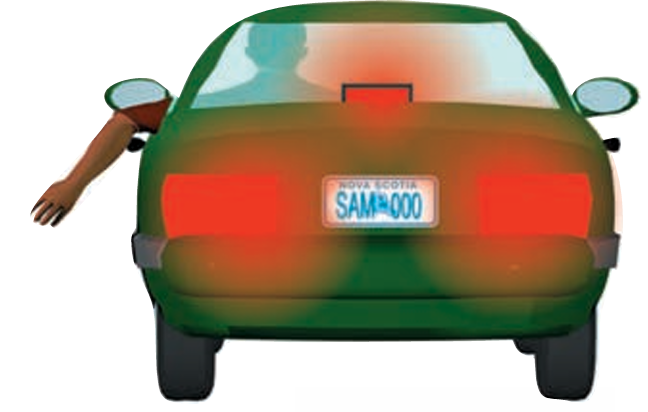
Left turn.
Right turn.
Slow down or stop.
Hazard warning.
Extending the left arm out the window and pointing it downward with the palm facing backward indicates that the driver is stopping or slowing down.
What is the recommended rule for maintaining a safe following distance?
One-car-length rule.
Two-second rule.
Three-second rule.
Fixed 50-metre rule.
Under normal driving conditions, the two-second rule is the standard method used to judge and maintain a safe following distance behind another vehicle.
What do amber flashing lights on a school bus indicate?
The bus is broken down.
Children are crossing the road.
The bus is about to stop.
You must stop immediately.
Amber flashing lights warn drivers that the school bus is preparing to stop to load or unload children, requiring extra caution.
What does this broken yellow line signify?
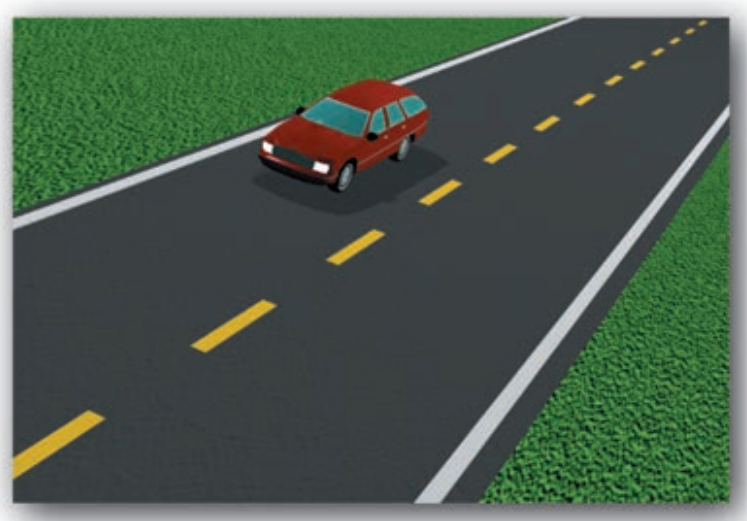
Passing is prohibited in both directions.
Passing with care is permitted in both directions.
Passing is permitted only in one direction.
Lanes are moving in the same direction.
A broken yellow centre line separates traffic moving in opposite directions and indicates that passing with care is permitted in both directions.
What does this road sign signify?
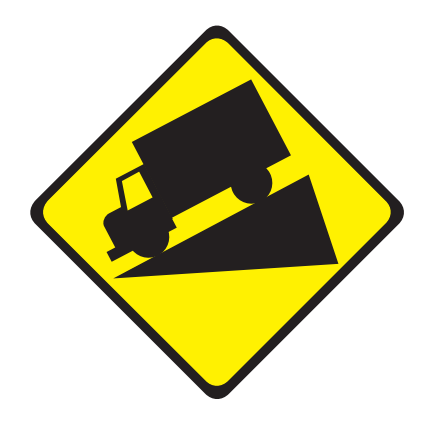
Truck route only.
Runaway truck ramp.
Slippery road ahead.
Steep decline ahead.
This warning sign alerts drivers to a steep downhill grade ahead, indicating that they may need to shift to a lower gear to control their speed and safely descend the slope.
At what distance must brake lights be visible in normal sunlight?
50 metres.
100 metres.
150 metres.
200 metres.
Brake lights must be clearly visible in normal sunlight from a distance of at least 100 metres to provide adequate warning to following drivers.
Parking is prohibited within how many metres of an intersection?
5 metres.
10 metres.
15 metres.
7.5 metres.
Stopping or parking a vehicle is prohibited within 7.5 metres of an intersection to ensure clear visibility and reduce the risk of collisions for all road users.
Children under what age should not be seated in a position with an active airbag?
Under 12 years old.
Under 16 years old.
Under 8 years old.
Under 10 years old.
Children 12 years of age and younger should not sit in a seat with an active airbag, as the force of deployment can cause serious injury.
Which parts of the road freeze first in cold weather?
Gravel roads.
Bridges and overpasses.
Open highways.
Intersections.
Bridges and overpasses freeze before the rest of the roadway because cold air circulates above and below them, causing temperatures to drop more quickly.
What does this sign indicate?
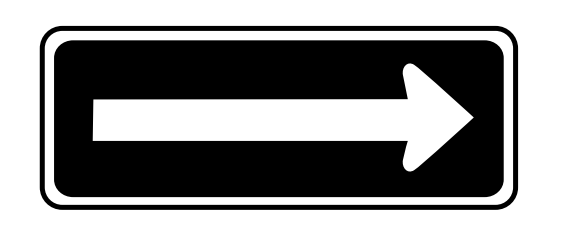
One-way traffic only.
Sharp turn to the right.
Keep right of the divider.
Right lane ends ahead.
This sign indicates that traffic is permitted to travel only in the direction shown by the arrow.