Driving Test PEI: Free Class 7 Beginner’s Permit Practice 2
- The test is based on questions taken from the PEI Driver’s Handbook.
- You will be asked about Rules of The Road, Signs, Pavement Markings, and Work Zones, Speed Limits, Following Distances and Driving Skills.
- The test is a series of multiple choice questions.
Need the handbook?
Download the official PEI Driver’s Handbook PDF for free.
Reminder: To obtain your PEI Instruction Driver’s Permit (Class 7 license), you will need to pass a written or oral test.
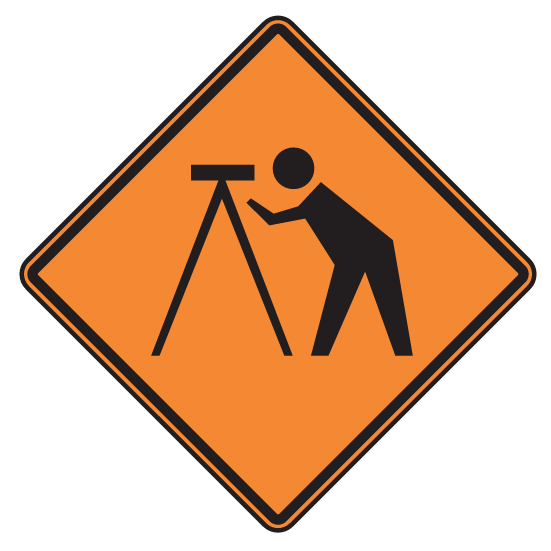
What does this sign represent?
Flagger man ahead.
Road work ahead.
Traffic controller ahead.
Survey crew ahead.
This construction sign indicates that a survey crew is working on or near the traveled portion of the road. Drivers should slow down and practice extra caution.
When exiting a roundabout, what signal should you use?
Left turn signal.
Right turn signal.
Hazard lights.
No signal needed.
Drivers should activate their right turn signal as they approach their exit to indicate their intention to leave the roundabout.
What does a broken white line indicate?
Lane changing is prohibited.
The edge of the road.
Lane changing is permitted.
Traffic moving in opposite directions.
A broken white line separates lanes of traffic moving in the same direction and indicates that lane changing is permitted when it is safe to do so.
What does this sign signify?
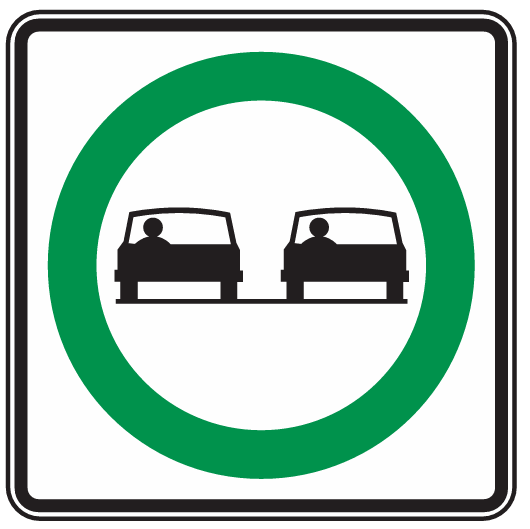
Passing permitted.
No passing allowed.
Car parking zone.
Two-way traffic ahead.
This sign indicates that drivers are allowed to pass other vehicles when the roadway ahead is clear and safe for overtaking.
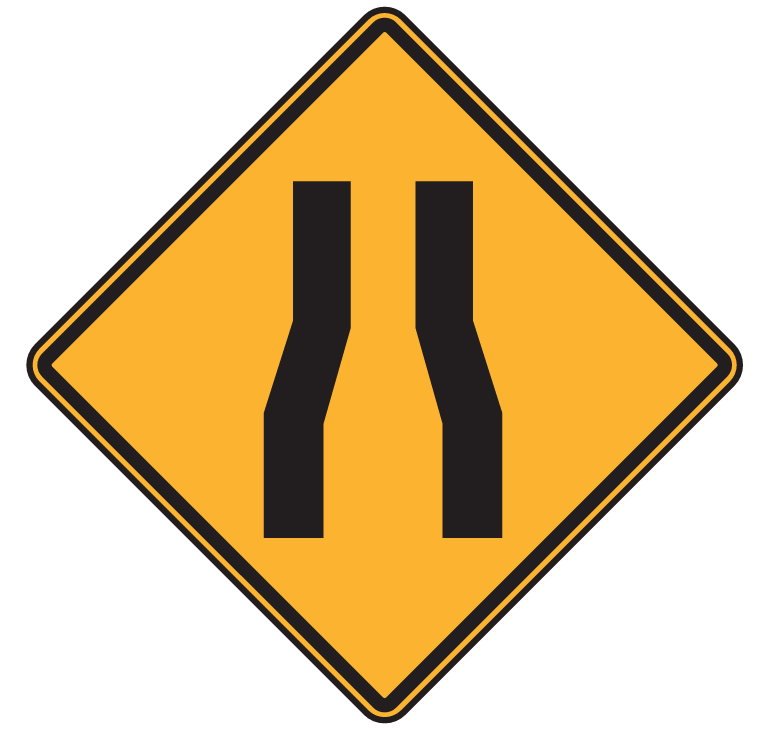
What does this sign mean?
Divided highway ends.
Two-way traffic begins.
Narrow bridge ahead.
Road narrows ahead.
This warning sign alerts drivers that the road ahead narrows or becomes more constricted. Drivers should be cautious and prepare for a tighter driving space.
When parking uphill with a curb, turn your wheels:
Toward the curb.
Parallel to the road.
To the right.
Away from the curb.
Turning the wheels away from the curb ensures that if the vehicle rolls backward, the tires will catch the curb and help prevent it from entering traffic.
While waiting to turn left, your front wheels should be:
Straight.
Turned right.
Turned left.
Angled towards the intersection.
You should keep your front wheels pointed straight while waiting to turn left so that your vehicle is not pushed into oncoming traffic if hit from behind.
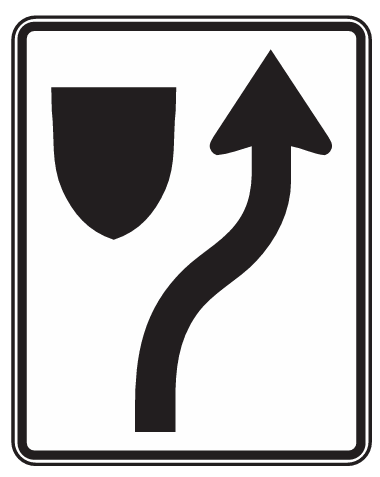
What does this sign indicate?
Exit right side only.
Road curves sharply right.
Keep to the left of traffic island.
Keep to the right of traffic island.
This sign indicates that there is an obstacle, island, or median ahead, and drivers must pass it by keeping to the right side.
When an emergency vehicle with a siren approaches, you should:
Speed up to get away.
Pull to the right and stop.
Turn on hazard lights.
Stop in your current lane.
You must safely pull over to the right edge of the roadway and bring your vehicle to a complete stop until the emergency vehicle has safely passed.
What does this sign indicate?
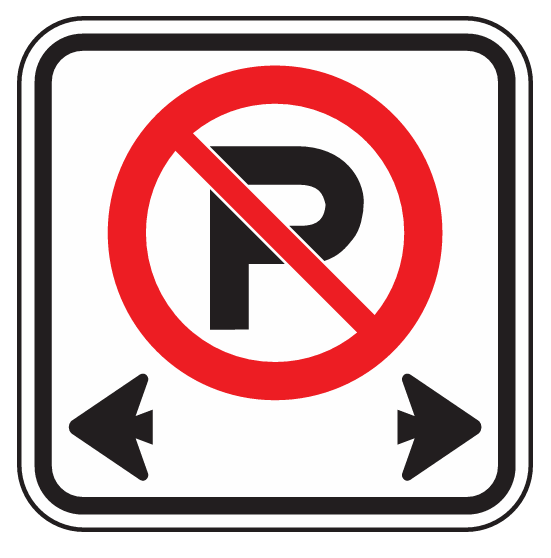
Parking prohibited on either side.
Parking permitted on either side.
Stopping permitted on either side.
Stopping prohibited on either side.
This sign indicates that parking is prohibited on both sides of the roadway shown by the arrows.
A driver must stop at a stop sign for at least:
Until it is safe.
5 seconds.
3 seconds.
10 seconds.
Drivers must come to a complete stop at a stop sign and remain stopped until it is completely safe to proceed through the intersection.
What BAC level is considered the ‘warn range’ in PEI?
0.01% to 0.04%.
0.02% to 0.03%.
0.05% to 0.08%.
Over 0.08%.
In PEI, a BAC between 0.05% and 0.08% falls within the warning range and may result in an immediate roadside licence suspension.
What does this sign mean?
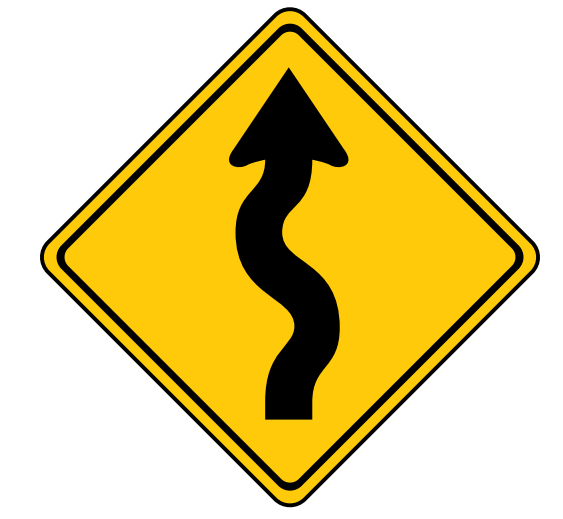
Winding road ahead.
Sharp curve ahead.
First left turn then right only.
First right turn then left only.
This sign warns drivers that the road ahead contains a series of curves requiring reduced speed and extra caution.
What does this sign indicate?
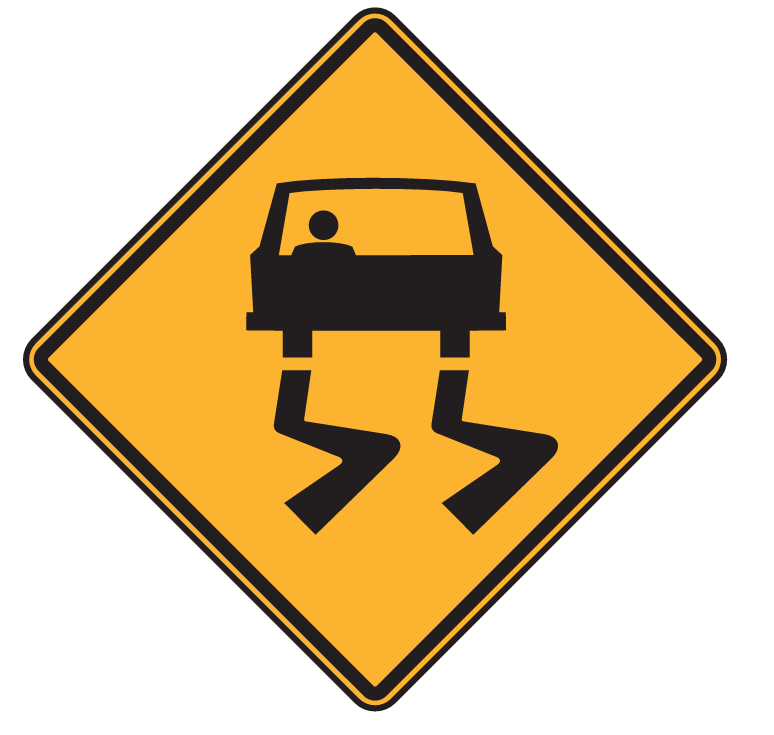
Loose gravel ahead.
Uneven surface ahead.
Winding road ahead.
Slippery when wet.
This sign warns drivers that the road may become slippery when wet, increasing the risk of skidding or loss of control.
What does this sign represent?
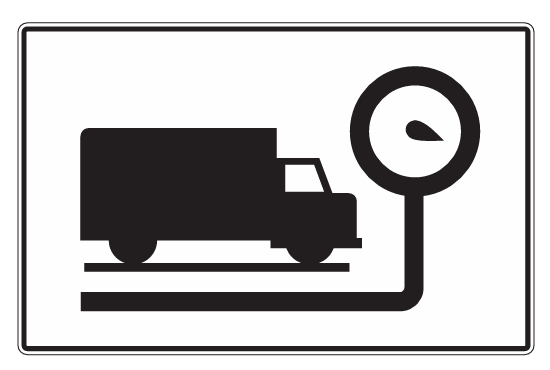
Truck parking zone.
Truck inspection station.
Truck low speed zone.
Truck high speed zone.
This sign indicates a truck inspection station where commercial vehicles may be required to stop for inspection or weighing.
How should the shoulder belt be worn?
Behind the back.
Under the arm.
Across the chest and shoulder.
Resting on the neck.
The shoulder belt must be worn snugly across the chest and over the shoulder to properly distribute crash forces across the strongest parts of the body.
What does this red traffic light signify?
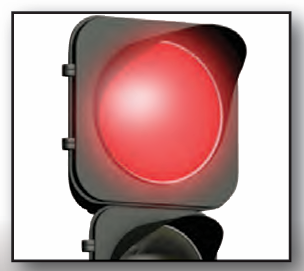
Proceed if the intersection is clear.
Slow down and prepare to stop.
Come to a complete stop.
Yield to cross traffic only.
A red traffic light requires drivers to stop and wait until a green signal or other authorized movement permits them to proceed.
If you miss your highway exit, you should:
Stop and back up.
Make a U-turn across the median.
Proceed to the next exit.
Change lanes quickly.
If you miss your exit on a highway, you must safely continue driving and proceed to the next available exit rather than stopping or reversing.
What does this sign mean?
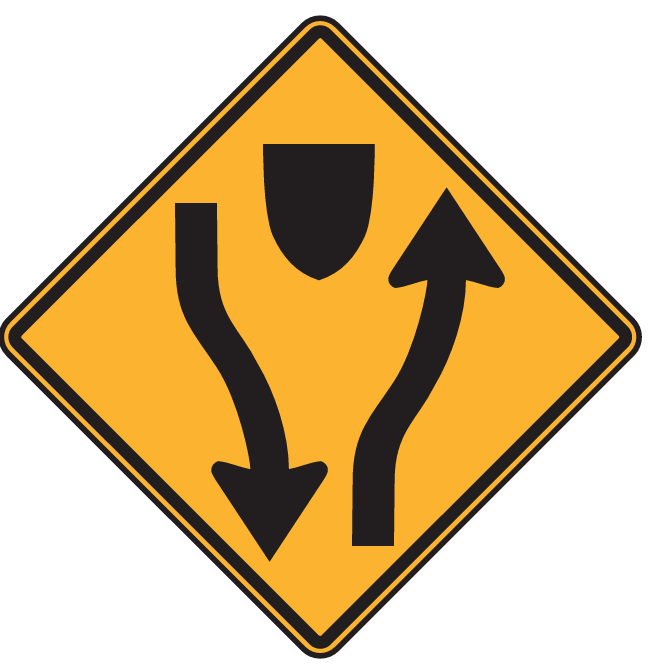
Divided highway ends
Divided highway begins.
Two-way traffic ends.
Two-way traffic begins.
This sign warns drivers that a divided highway begins ahead with a median or obstruction separating opposing traffic lanes.
A toddler seat is designed for children in which weight range?
5 to 10 kg.
10 to 18 kg.
18 to 36 kg.
Over 40 kg.
Toddler seats are designed for children weighing between 10 kg and 18 kg and provide protection using a built-in harness system.