Driving Test Nova Scotia: Free Learner’s Licence (Class 7) Practice 5
- The test is based on questions taken from the Nova Scotia Driver’s Handbook.
- You will be asked about Rules of the Road, Signs, Pavement Markings and Work Zones, Safety, Adverse Driving Conditions, Driving and Impairment.
- The test is a series of multiple choice questions.
Need the handbook?
Download the official Nova Scotia Driver’s Handbook PDF for free.
Reminder: To obtain your Nova Scotia Learner’s Licence (class 7), you will need to pass a Knowledge Test.
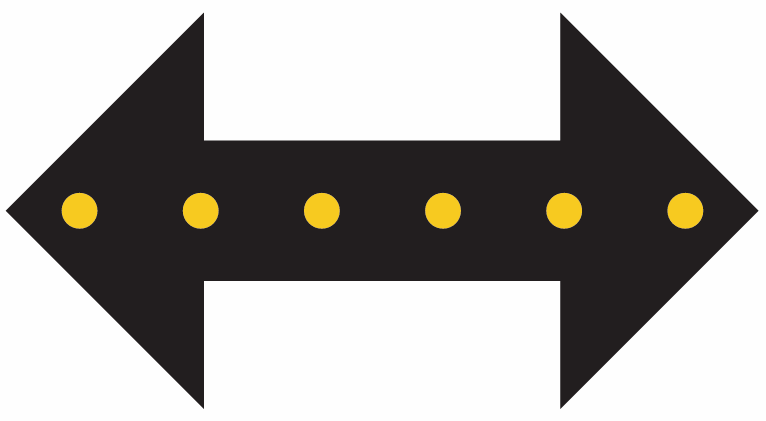
What does a flashing light unit displaying lamps in a straight line or bar represent?
Safe to pass on either side.
Pass only in the direction shown.
A hazard ahead; use caution.
Stop and wait for a signal change.
It warns drivers of a hazard ahead, and unlike arrow modes, it does not indicate that it is safe to pass, so drivers must assess conditions carefully.
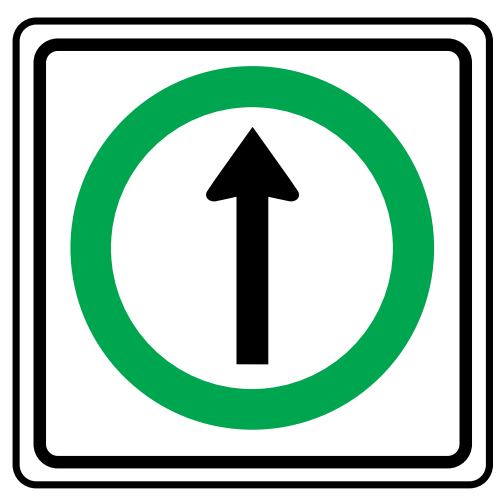
What does this sign indicate?
Passing permitted.
One-way traffic begins.
No turns, straight through only.
One-way traffic ends.
This regulatory sign with a green circle indicates that drivers are permitted to continue straight ahead only, and turns are not allowed.
What is the recommended hand position on the steering wheel?
12 o'clock and 6 o'clock.
10 o'clock and 2 o'clock.
8 o'clock and 4 o'clock.
One hand on the top.
Holding the wheel at the 10 and 2 positions (or 9 and 3) provides good steering control and helps prevent sudden over-correcting.
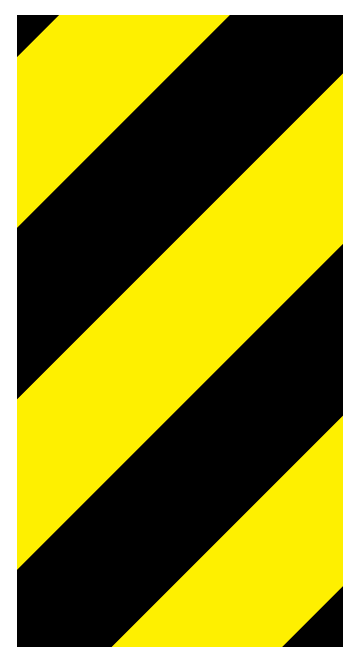
What should you do when you see this hazard marker?
Drive to the left of the sign.
Drive to the right of the sign.
Stop and wait for instructions.
Drive to either side of the sign.
Black lines sloping to the left indicate that drivers must drive to the left of the sign to avoid the obstruction.
When parking uphill with a curb, which way should you turn your wheels?
To the right.
To the left.
Straight ahead.
Parallel to the curb.
When parking uphill with a curb, drivers should turn the wheels to the left so the curb can help stop the vehicle if it rolls backward.
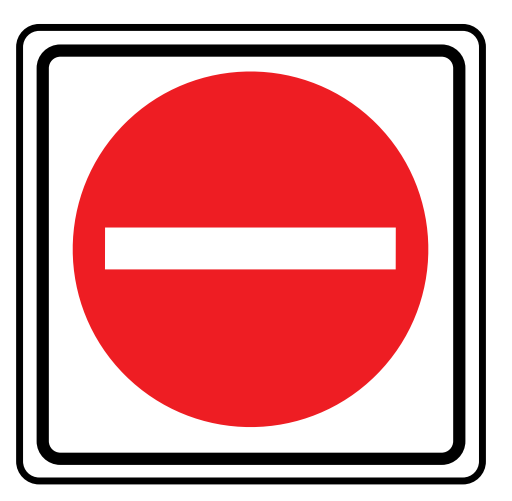
What does this sign represent?
Do not enter.
Do not pass.
Do not park.
Do not stop.
This regulatory sign indicates that drivers must not enter a road, lane, or ramp where the sign is posted.
What does this sign signify?
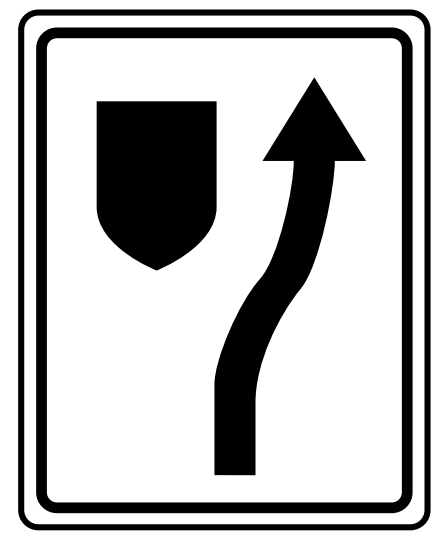
Keep to the right of the obstruction.
Keep to the left of the obstruction.
Keep to both sides of the obstruction.
Keep to either side of the obstruction.
This regulatory sign directs drivers to keep to the right of an upcoming traffic island or obstruction.
What does this sign mean?
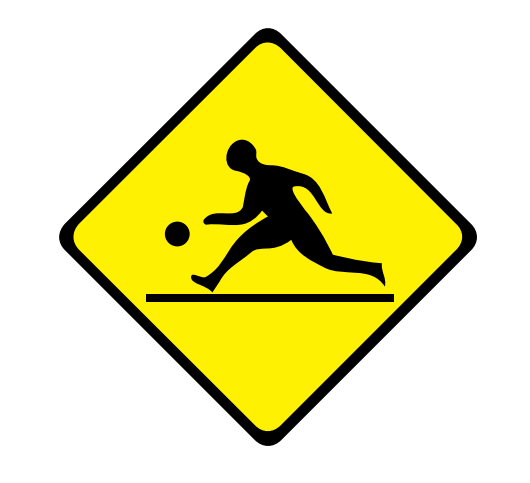
School zone ahead.
Pedestrian crossing ahead.
Sports complex ahead.
Playground ahead.
This warning sign indicates that a playground area is ahead, and drivers should watch for children who may enter or cross the roadway unexpectedly.
What is the minimum legal tread depth for tires in Nova Scotia?
1.0 millimetre.
1.5 millimetres.
2.0 millimetres.
3.0 millimetres.
Tires must have a tread depth of at least 1.5 millimetres to provide proper traction and maintain safe vehicle control.
Who has the right of way in a roundabout?
The faster vehicle.
The vehicle on the right.
Vehicles entering the circle.
Vehicles already in the circle.
Drivers already inside the roundabout have the right-of-way, so entering vehicles must yield and wait for a safe gap before merging into traffic.
If your vehicle goes into a skid, the first thing you should do is:
Slam on the brakes.
Shift to a higher gear.
Take your foot off the gas pedal.
Steer sharply in the opposite direction.
Taking your foot off the gas pedal allows the vehicle to naturally slow down and helps the tires regain traction before you attempt to steer or brake.
At 80 km/h, what is the approximate total stopping distance in ideal conditions?
63 metres.
100 metres.
110 metres.
140 metres.
In ideal conditions, a vehicle travelling at 80 km/h requires approximately 140 metres or more to react and come to a complete stop.
What does this sign signify?
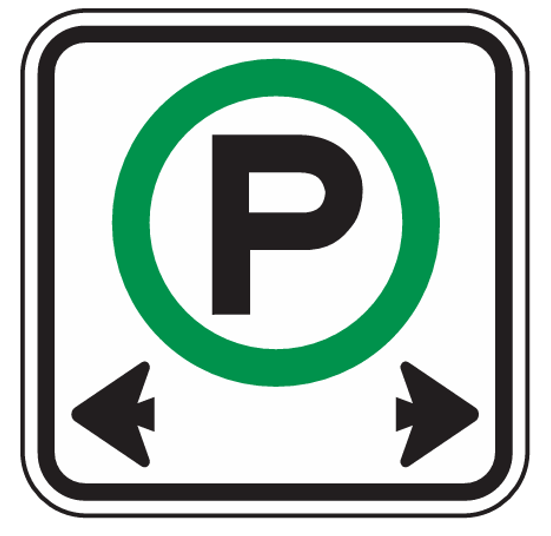
Parking permitted on either side.
No parking allowed on either side.
One-way traffic ends ahead.
Pedestrian crossing ahead.
This regulatory sign indicates that parking is legally permitted on both sides of the sign.
What does this sign indicate?
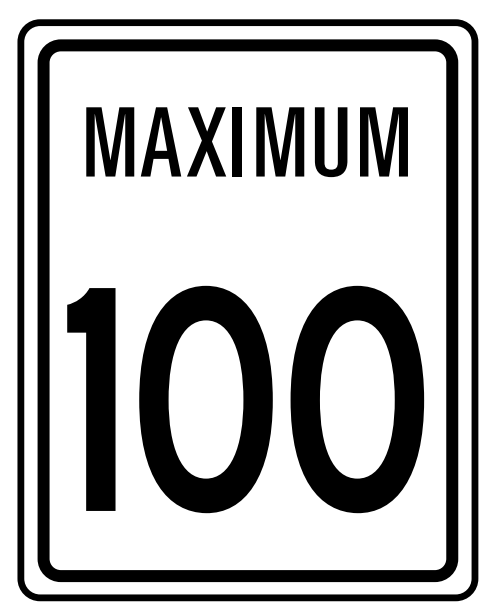
Maximum speed allowable under all weather conditions.
Maximum speed allowable under ideal conditions.
Maximum recommended speed for heavy vehicles only.
Maximum speed limit only during daylight hours.
This regulatory sign indicates the maximum legal speed permitted under ideal road, traffic, and weather conditions.
How does moisture on your brakes affect driving?
Decreases stopping distance.
Increases stopping distance.
Improves vehicle steering.
Has no effect.
Wet brakes lose their gripping power, which delays deceleration and requires a longer distance to come to a complete stop.
What type of sign is represented by this diamond shape?

Guide Sign.
School Zone.
Warning Sign.
Regulatory Sign.
A diamond-shaped sign is used to warn drivers of hazards or changing road conditions ahead.
What is a common symptom of 'highway hypnosis'?
Increased alertness.
Sharper concentration.
Faster reaction times.
Momentary lapses of memory.
Highway hypnosis puts the driver into a dull, trance-like state, causing them to lose active awareness and experience gaps in their short-term memory.
When rounding a curve to the left, where should you position your vehicle?
Far right.
Far left.
In the middle.
On the shoulder.
Driving in the middle of your lane provides a safe buffer space and prevents your vehicle from drifting into oncoming traffic or onto the shoulder.
What should you do when entering a tunnel on a bright day?
Speed up to get through faster.
Keep your sunglasses on.
Maintain speed and turn on headlights.
Slow down and remove your sunglasses.
When entering a tunnel from bright daylight, drivers should slow down and remove their sunglasses to allow their eyes to adjust safely to the darker conditions.
What does this warning sign mean?
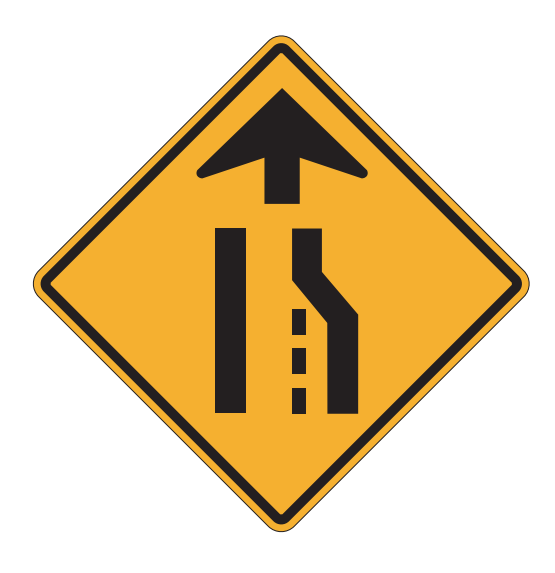
Right lane ends ahead.
Left lane ends ahead.
Two lanes merge into one right lane.
Hidden intersection ahead on the right.
This warning sign gives advance notice that the right lane will end ahead, and drivers in that lane should merge left when it is safe to do so.