Driving Test Nova Scotia: Free Learner’s Licence (Class 7) Practice 6
- The test is based on questions taken from the Nova Scotia Driver’s Handbook.
- You will be asked about Rules of the Road, Signs, Pavement Markings and Work Zones, Safety, Adverse Driving Conditions, Driving and Impairment.
- The test is a series of multiple choice questions.
Need the handbook?
Download the official Nova Scotia Driver’s Handbook PDF for free.
Reminder: To obtain your Nova Scotia Learner’s Licence (class 7), you will need to pass a Knowledge Test.
What does a flashing light unit displaying a single arrowhead mean?
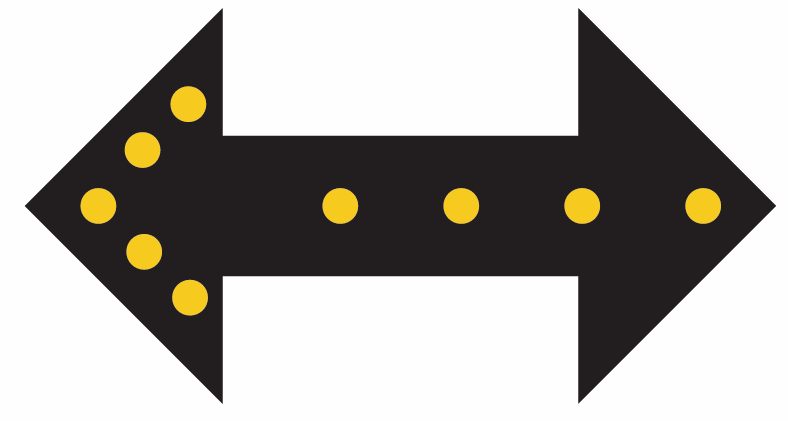
Road closed; you must turn around.
Lane closed; safe to pass on either side.
Move over; pass only in the direction shown.
Stop and wait for instructions.
It means the lane ahead is closed or blocked, and when a single arrowhead flashes, drivers must pass the unit only on the side indicated by the arrow.
If your vehicle has ABS, how should you brake in an emergency?
Pump the brake pedal quickly.
Press the brake steadily and firmly.
Apply light, intermittent pressure.
Use the handbrake only.
For vehicles equipped with ABS, you must maintain firm and steady pressure on the brake pedal during an emergency because the system automatically pumps the brakes for you.
What should you do if a tire blows out while driving?
Brake hard to stop immediately.
Shift to neutral and turn off the ignition.
Turn sharply toward the side of the blowout.
Hold the steering wheel firmly and ease off the gas.
If a tire blows out, you should hold the steering wheel firmly and gradually ease off the accelerator without braking to maintain control of the vehicle.
How close must your curbside wheels be to the curb when parked?
10 cm.
15 cm.
30 cm.
20 cm.
When parked, the curbside wheels must be within 15 centimetres of the curb or edge of the road.
What does this sign represent?
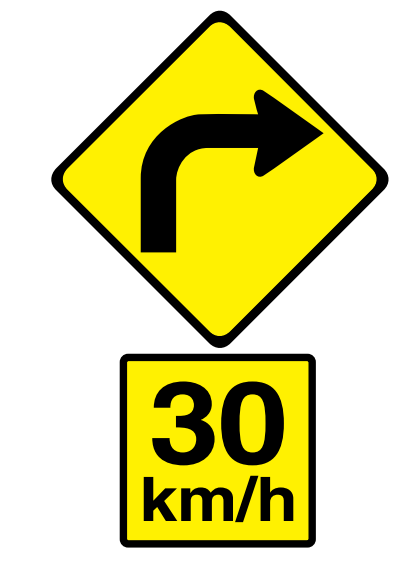
Sharp right turn ahead; maximum speed is 30 km/h.
Right lane ends ahead; reduce speed to 30 km/h.
Slippery curve ahead; do not exceed 30 km/h.
Right curve ahead; 30 km/h is the safe speed for the turn.
This warning sign indicates a right curve ahead, and the advisory speed sign recommends 30 km/h as the safe speed for negotiating the curve.
What happens if you brake suddenly on an icy road?
The car stops faster.
The engine stalls.
The car will go into a skid.
The tires gain traction.
Sudden braking on an icy road can cause the tires to lose traction and send the vehicle into a skid.
What does this sign signify?
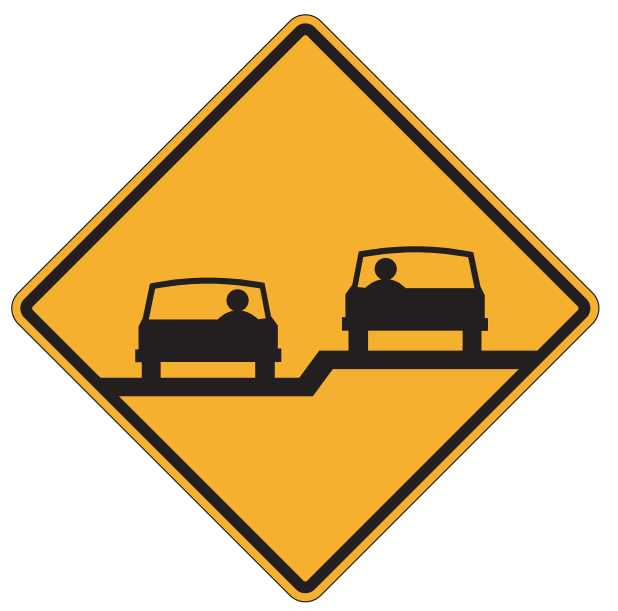
Difference in elevation between the lanes.
Overtaking is prohibited in the left lane.
Uneven pavement shoulders on the right.
Divided highway begins.
This warning sign indicates a difference in elevation between adjacent lanes, and a tire catching the edge could cause a driver to lose control of the vehicle.
If your gas pedal sticks, what should you do first?
Pull the pedal up, then brake.
Shift to reverse to slow down.
Turn off the engine while moving.
Shift to neutral, brake firmly, and pull off the road.
If your gas pedal sticks, you should immediately shift to neutral to cut engine power, apply firm pressure to the brakes, and safely pull off the road.
What should you do before entering a deceleration lane?
Signal well in advance.
Slow down significantly.
Stop on the shoulder.
Speed up to pass others.
You must signal your intention well in advance and enter the deceleration lane at highway speed before slowing down.
When must headlights be turned on?
30 mins before sunset to 30 mins after sunrise.
30 mins after sunset to 30 mins before sunrise.
From the exact time of sunset to sunrise.
Only when street lights are turned off.
Headlights must be used from half an hour after sunset until half an hour before sunrise.
What type of sign is represented by this vertical rectangular shape?

Guide Sign.
Road work sign.
Warning Sign.
Regulatory Sign.
A vertical rectangular sign is commonly used for regulatory signs that tell drivers about traffic laws and restrictions.
What must you do when leaving a private driveway?
Honk and proceed.
Stop and yield to all vehicles and pedestrians.
Merge quickly into traffic.
Only yield to vehicles coming from the left.
When leaving a private driveway or parking lot, you must stop and yield the right of way to all vehicles and pedestrians.
What is the purpose of this sign?
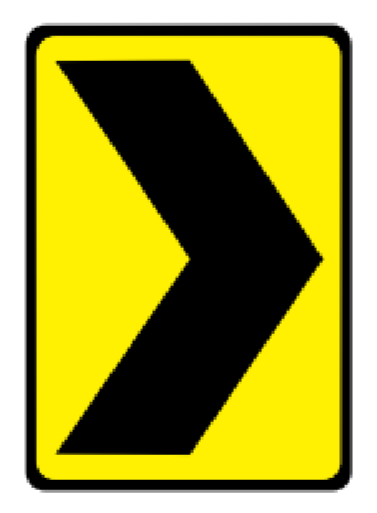
To indicate a one-way street to the right.
To warn drivers of a sharp 90-degree turn ahead.
To guide drivers around sharp curves in the road.
To mark the beginning of a divided highway.
Chevron signs are posted in groups to safely guide drivers through sharp curves and indicate changes in the road's alignment.
What does this sign represent?
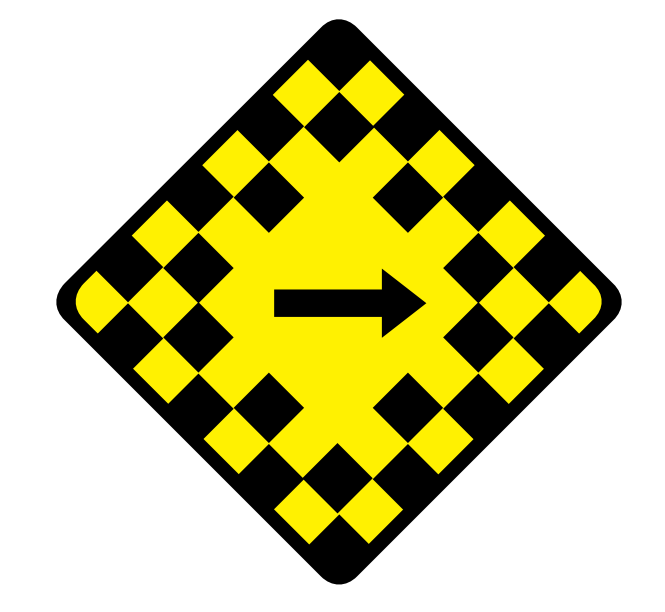
One-way traffic only to the right.
Dead end road straight ahead.
Right lane ends and traffic must merge.
Sharp turn or bend in the roadway ahead.
This warning sign alerts drivers to a sharp turn or bend ahead, and the arrow indicates the direction of the roadway, warning drivers to slow down.
What does this sign indicate?
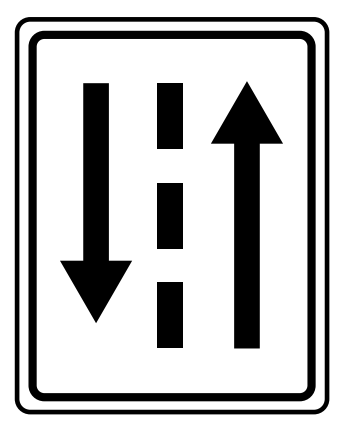
Two-way traffic.
Divided highway begins.
One-way traffic only.
Passing permitted in both directions.
This sign indicates that you are on or approaching a roadway with two-way traffic, where vehicles travelling in opposite directions share the same road.
Which of these is the only way to remove alcohol from your system?
Taking a cold shower.
Giving it time.
Drinking black coffee.
Going for a fast jog.
Time is the only factor that eliminates alcohol from your system; myths like coffee, showers, or exercise do not work.
What does this sign signify?
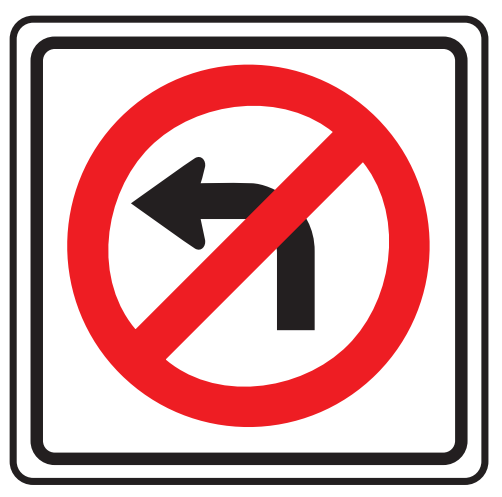
No left turn permitted.
Left turn only.
No U-turn permitted.
Sharp curve to the left.
This regulatory sign indicates that drivers are prohibited from making a left turn at the location where the sign is posted.
How should you adjust your head restraint?
So the top edge is 3 cm above eye level.
So the top edge is 5 cm above eye level.
So the top edge is 7 cm above eye level.
Level with your neck.
Head restraints should be adjusted so the top edge extends at least 7 centimetres (2–3 inches) above eye level to help prevent whiplash injuries during a crash.
What does this sign mean?
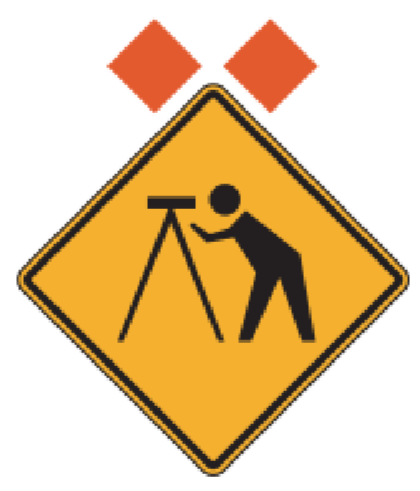
Survey work being done on or near the road.
Road construction ahead.
Utility repair work in progress.
Traffic camera zone ahead.
This warning sign indicates that survey work is being done on or near the road, and drivers should use extra caution because driving mistakes can cause serious injuries to road workers.
What does this sign signify?
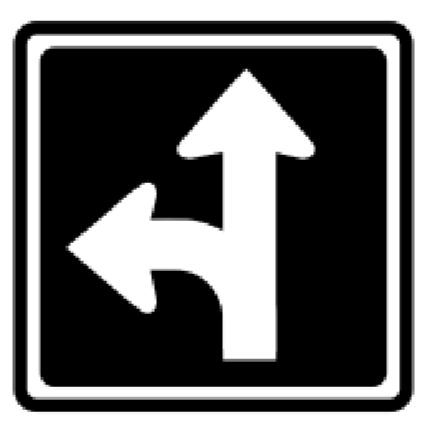
Left turn only.
Straight through only.
Straight through or left turn only.
Two-way traffic split roadway.
This sign indicates that vehicles in the designated lane must either proceed straight through or turn left at the intersection.