Driving Test NL: Free Class 5 Permit Test Practice 4
- The test is based on questions taken from the Newfoundland and Labrador Driver’s Handbook.
- You will be asked about Rules of the Road, Safe Driving Practices, Road Sign Recognition and more.
- The test is a series of multiple choice questions.
Need the handbook?
Download the official Newfoundland and Labrador Driver’s Handbook PDF for free.
Reminder: To obtain your Newfoundland and Labrador learner’s permit, you will need to pass a class 5 written test.
What should you do if your vehicle starts to skid?
Brake hard immediately.
Steer into the skid.
Accelerate sharply.
Turn opposite the skid.
If your vehicle starts to skid, you should take your foot off the pedals and gently steer in the direction you want the front of the vehicle to go.
What should you do if a cyclist is riding ahead in your lane?
Wait until safe to pass.
Force the cyclist aside.
Honk continuously.
Pass without slowing.
You must share the road and wait until there is a safe gap in traffic before passing a cyclist.
At this roundabout, which vehicle must yield?
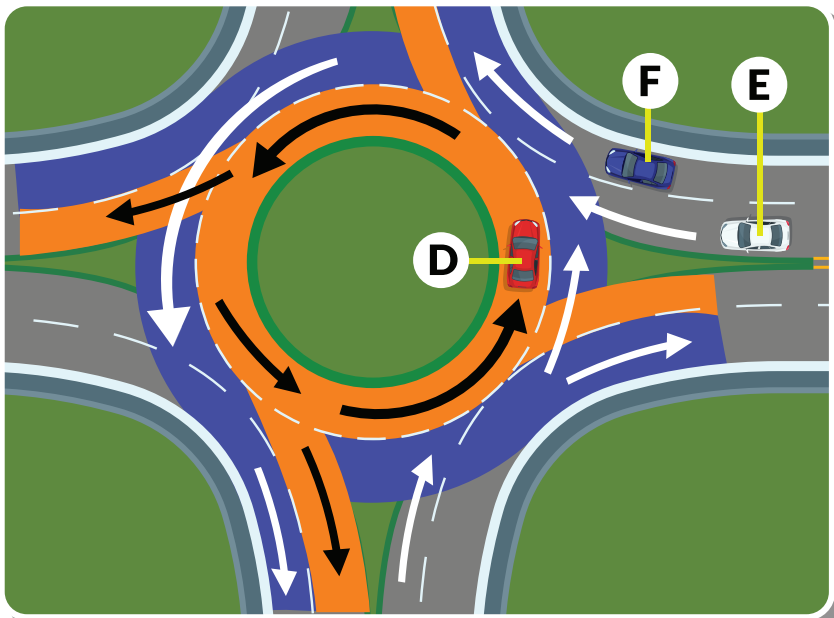
Vehicle D only.
Vehicles D and F.
Vehicles E and F.
Vehicle E only.
Vehicle E must yield to Vehicle D because traffic already inside the roundabout has the right-of-way, while Vehicle F may proceed safely.
What does this sign indicate?
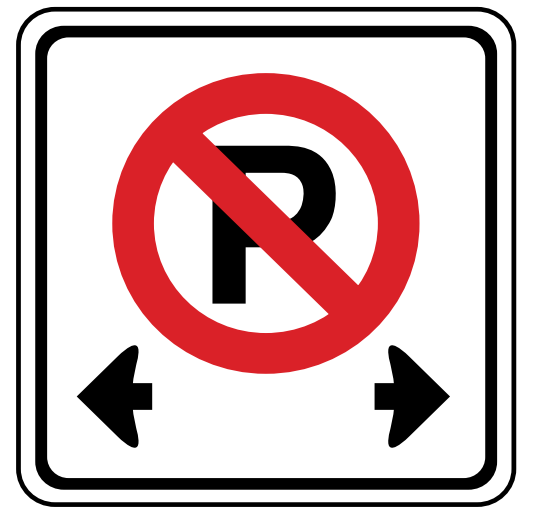
Stopping prohibited on either side.
Parking prohibited on either side.
Parking permitted on either side.
Stopping permitted on either side.
This sign indicates that parking is prohibited on both sides of the roadway shown by the arrows.
What does this sign represent?
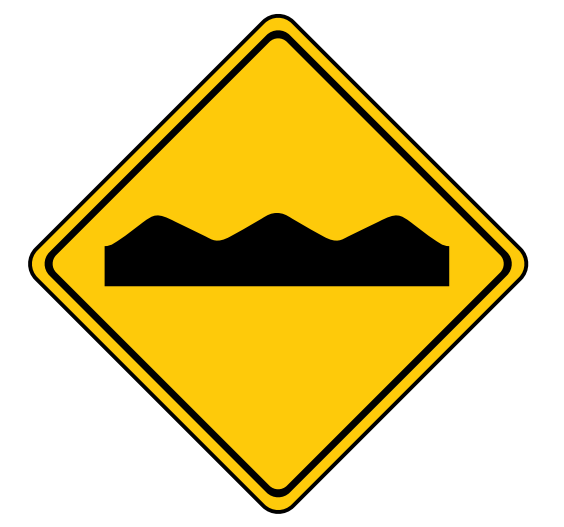
Rumble strips.
Slippery when wet.
Bump or rough road.
Swing bridge.
This warning sign alerts drivers that the road surface ahead is bumpy or rough. Drivers should reduce their speed to safely navigate the uneven surface.
What does this sign indicate?
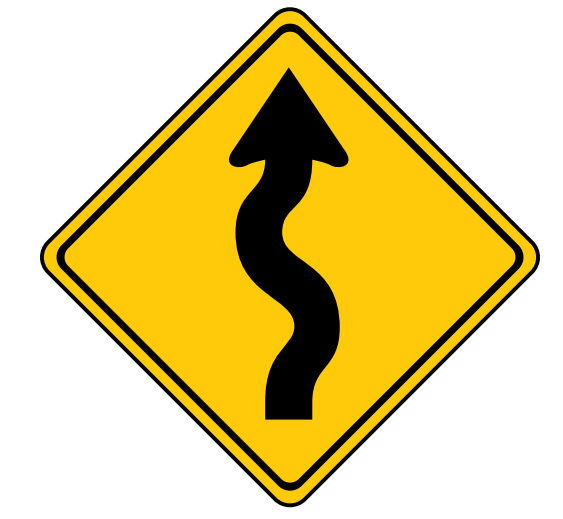
First left turn then right only.
First right turn then left only.
Winding road ahead.
Sharp curve ahead.
This sign warns drivers that the road ahead contains a series of curves requiring reduced speed and extra caution.
What should you do after passing another vehicle?
Return when clear.
Cut in immediately.
Slow down sharply.
Move to shoulder.
After passing, return to your lane only when you can see the entire vehicle in your rearview mirror.
Level I drivers are not permitted to drive between:
10 p.m. and 5 a.m.
11 p.m. and 6 a.m.
Midnight and 5 a.m.
1 a.m. and 5 a.m.
Level I drivers are restricted from driving between midnight and 5 a.m. unless supervised by a qualified driver.
What does this sign mean?
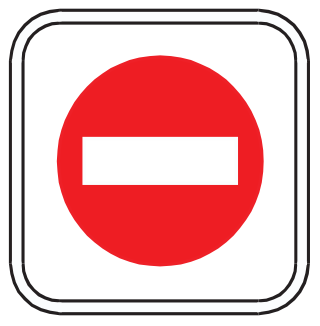
Road closed temporarily.
Stop before proceeding.
One-way traffic ahead.
No entry for vehicles.
This sign is a regulatory sign indicating that vehicles are prohibited from entering that particular road or ramp.
When visibility is reduced by fog, drivers should:
Drive at normal speed.
Decrease following distance.
Increase following distance.
Use high beams only.
Increasing your following distance gives you more time to react and stop safely when visibility is reduced by fog.
What does the “two-second rule” help drivers maintain?
Safe stopping distance.
Safe following distance.
Safe passing distance.
Safe turning distance.
The two-second rule is a simple way to measure a safe following distance between your vehicle and the one ahead under normal driving conditions.
When another vehicle is in your blind spot, you should:
Change lanes quickly.
Wait until clear.
Honk and move.
Speed past immediately.
You must maintain your position and wait until the other vehicle moves out of your blind spot before attempting to change lanes.
What does this sign mean?
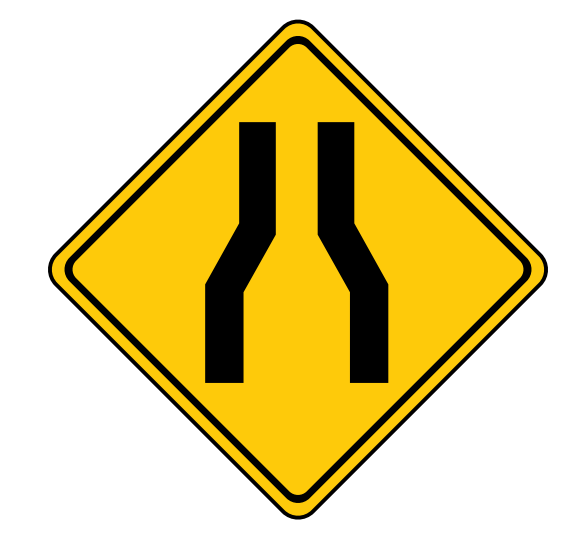
Two-way traffic begins.
Narrow bridge ahead.
Divided highway ends.
Road narrows ahead.
This warning sign alerts drivers that the road ahead narrows or becomes more constricted. Drivers should be cautious and prepare for a tighter driving space.
What does this sign signify?
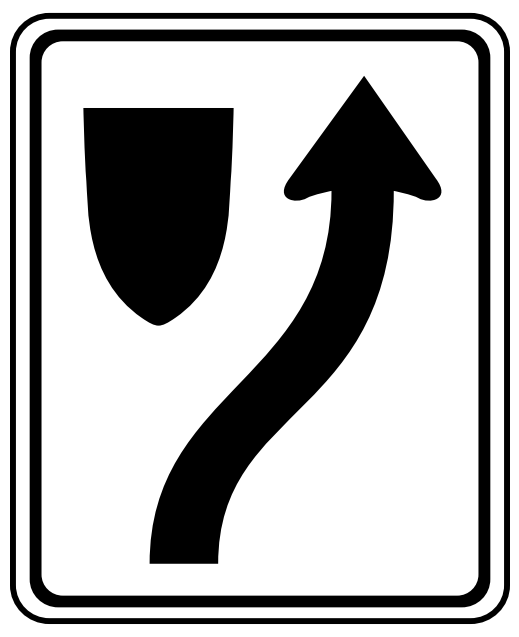
Keep to the right of the island.
Keep to the left of the island.
Road curves sharply right.
Exit right side only.
This sign indicates that there is an obstacle, island, or median ahead, and drivers must pass it by keeping to the right side.
What does a green light with a green arrow signify?
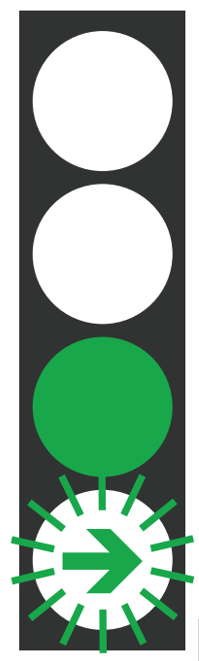
You must only turn in the direction of the arrow.
You must stop and wait for the arrow to turn off.
You can only turn left or right, but not go straight.
You can proceed straight, turn right, or follow the arrow.
A green signal with a green arrow allows drivers to proceed in the direction of the arrow, straight ahead, or turn right unless prohibited by a sign.
What does this sign indicate?
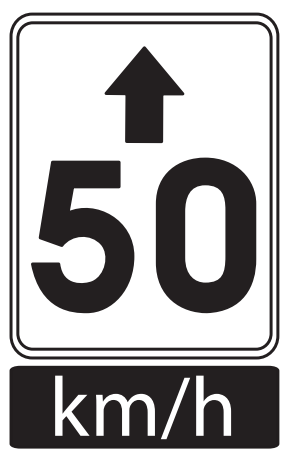
Higher minimum speed zone ahead.
Higher maximum speed zone ahead.
Lower minimum speed zone ahead.
Lower maximum speed zone ahead.
This sign gives advance warning that a lower maximum speed limit zone is ahead and drivers should prepare to reduce speed.
When must you stop for an emergency vehicle?
Only on highways.
Only at intersections.
As soon as it is safe.
Only during daytime.
Drivers must safely pull over and stop when an emergency vehicle approaches with flashing lights or siren.
What does this sign represent?
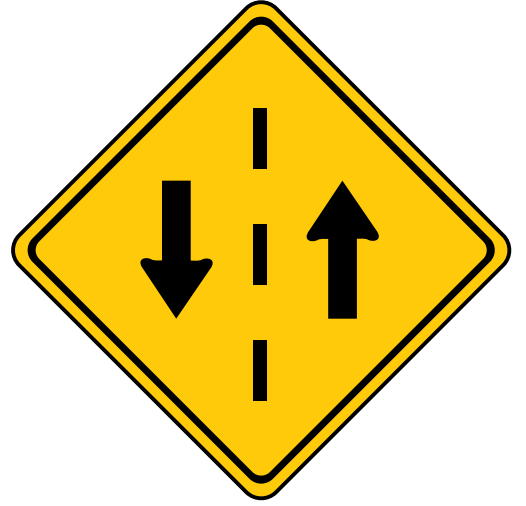
One-way traffic ahead.
Two-way traffic ahead.
Divided highway ends.
Divided highway begins.
This sign warns drivers that they are leaving a one-way road or zone and approaching a roadway with two-way traffic moving in opposite directions.
What should you do if your vehicle begins to hydroplane?
Ease off the accelerator.
Brake hard immediately.
Brake and steer sharply.
Accelerate smoothly.
If your vehicle begins to hydroplane (ride on a thin film of water), you should take your foot off the gas pedal to let the vehicle slow down naturally until the tires regain traction.
When should you dim high beams for oncoming traffic?
Within 150 metres.
Within 300 metres.
Within 500 metres.
Within 800 metres.
You must dim your high beams within 150 metres of an oncoming vehicle to avoid blinding the driver.