Driving Test Alberta: Free Class 7 Learner’s Licence Practice 1
- The test is based on questions taken from the Alberta Driver’s Guide.
- You will be asked about safe driving practices, driving laws, and road signs.
- The test is a series of multiple choice questions.
Need the handbook?
Download the official Alberta Driver’s Guide PDF for free.
Reminder: To obtain your Alberta learner’s licence, you will need to pass a knowledge test.
Which lane is normally used for slower traffic on a highway?
Shoulder lane.
Center lane.
Left lane.
Right lane.
The right lane is generally used for slower-moving traffic so faster vehicles can safely pass on the left side of the highway.
When merging onto a highway, what should you do?
Stop and wait for a gap.
Honk and force your way in.
Match the speed of highway traffic.
Drive on the shoulder.
Drivers should adjust their speed to match highway traffic so they can merge smoothly and safely without disrupting other vehicles.
When parking uphill with a curb, which way should you turn the front wheels?
To the left (away from the curb).
To the right (towards the curb).
To the right (away from the curb).
To the left (towards the curb).
Turning the wheels to the left allows the curb to stop the vehicle from rolling backward into traffic if the brakes fail.
What is the BAC limit for an Alberta Class 7 driver?
0.05%.
0.08%.
0.00%.
0.02%.
Alberta Class 7 drivers must maintain a zero blood alcohol concentration because learner drivers are not allowed to consume any alcohol before driving.
Where should the lap belt be placed?
Across the stomach.
Across the hips or pelvis.
Around the waist.
Across the upper chest.
The lap belt must be worn low across the hips or pelvis to ensure the body's strongest bones absorb the impact during a crash.
What does this sign represent?
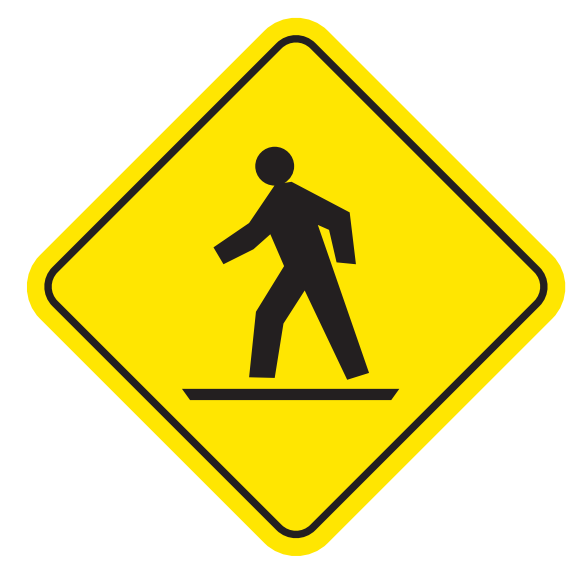
School crosswalk.
Moose crossing.
Sidewalk ends.
Pedestrian crossing.
This warning sign alerts drivers that pedestrians may cross the roadway ahead and extra caution is required.
What does this sign indicate?
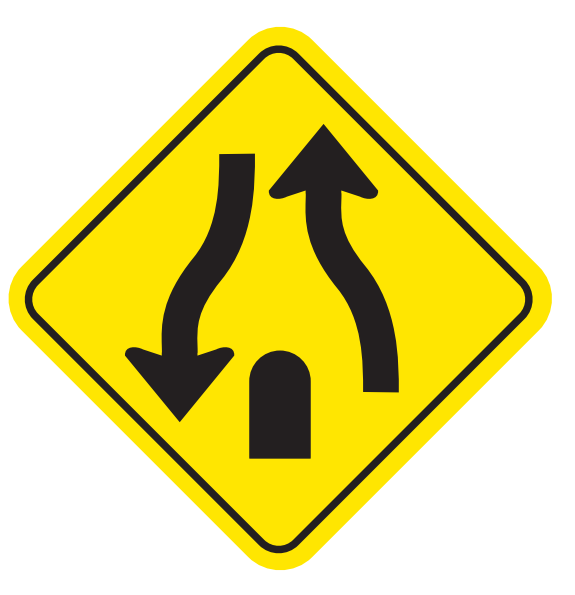
Divided highway ends.
Divided highway begins.
Keep right of the median.
Keep left of the median.
This sign warns drivers that the divided roadway is ending and traffic traveling in opposite directions will soon share the same road.
What does this sign mean?
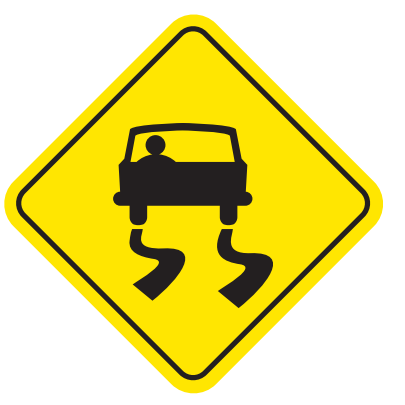
Uneven surface ahead.
Winding road ahead.
Road slippery when wet.
Loose gravel ahead.
This sign warns that the road surface can become very slippery when wet, so drivers should reduce speed and avoid sudden braking or sharp turns.
What signal should you use when exiting a roundabout?
Right turn signal.
Left turn signal.
Hazard lights.
No signal.
You must use the right turn signal before exiting to clearly warn other drivers and pedestrians of your intention to leave the circle.
What does this sign mean?
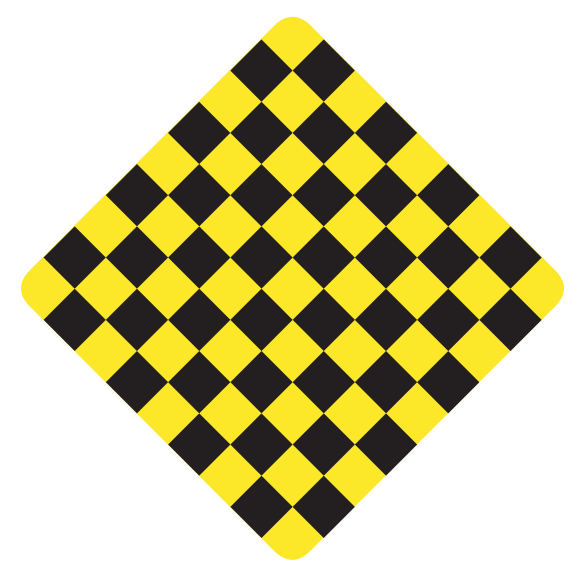
Construction zone ahead.
Hazard close to the edge ahead.
Rumble strips ahead.
Dead end ahead.
This checkerboard sign is a warning that the road ends or there is a dead end ahead, requiring the driver to stop or turn around.
What does this sign represent?
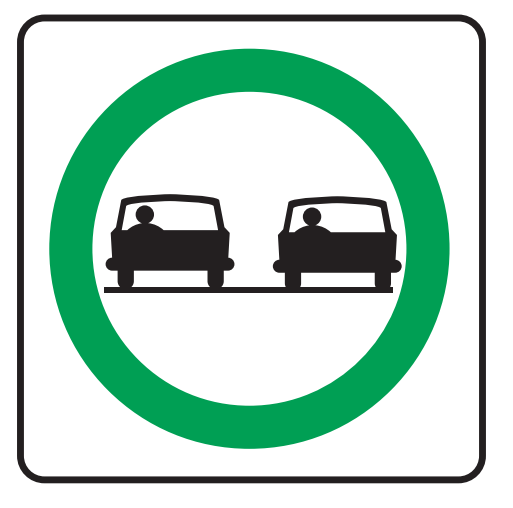
Two-way traffic ahead.
Passing permitted.
No passing allowed.
Car parking zone.
This sign indicates that drivers are allowed to pass other vehicles when the roadway ahead is clear and safe for overtaking.
What should you do if your headlights fail at night?
Turn on hazard lights and park safely.
Keep driving to a service station.
Use high beams only.
Turn on the interior dome light.
If headlights fail, immediately use hazard lights to remain visible to other traffic and pull off the road safely to avoid a collision.
What is the minimum following distance under ideal conditions?
1 second.
2 seconds.
5 seconds.
10 seconds.
Under ideal driving conditions, a two-second following gap gives drivers enough time to react safely if the vehicle ahead stops suddenly.
What does this sign mean?
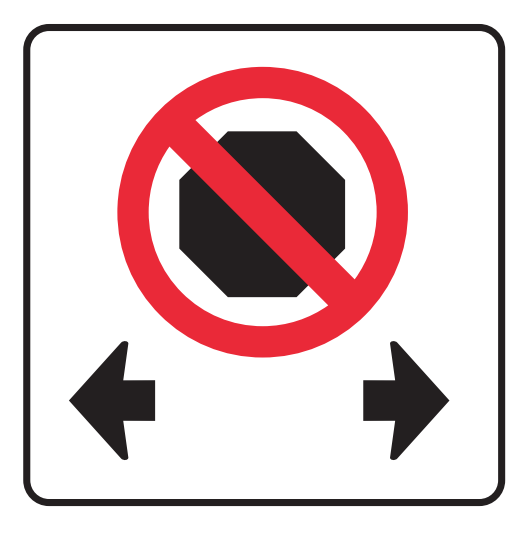
No parking on either side.
No entry for vehicles.
Yield to traffic from both sides.
Stopping not permitted.
This sign indicates that stopping is not allowed in the area in either direction. It is stricter than a "No Parking" sign, as you cannot even pull over for a moment.
When is it legal to not wear a seatbelt while driving?
When driving under 20 km/h.
When driving on a gravel road.
When driving in reverse.
It is never legal.
Drivers are legally exempt from wearing a seatbelt only while performing a reverse maneuver to allow for better visibility and movement.
What does this sign indicate?
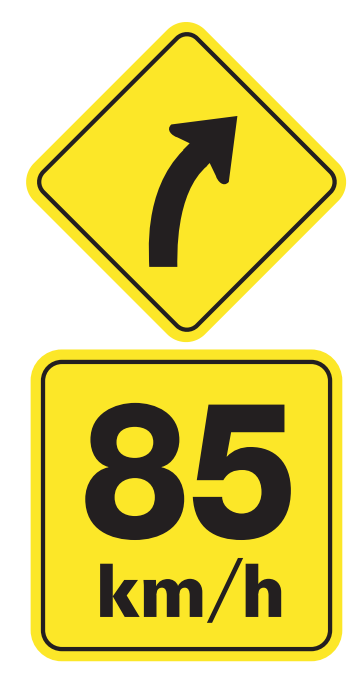
Maximum legal speed is 85 km/h.
Minimum speed through the curve is 85 km/h.
Recommended maximum speed through the curve is 85 km/h.
Sharp curve ends at 85 km/h zone.
This sign advises drivers that 85 km/h is the safest recommended speed for the curve under ideal driving conditions.
What must drivers do when a school bus flashes red lights?
Stop only behind the bus.
Stop only if children are crossing.
Slow to 20 km/h and pass carefully.
Stop at least 20 metres from front or rear.
Drivers must stop at least 20 metres away from a school bus with flashing red lights because children may enter the roadway from either side unexpectedly.
When being passed by another vehicle, what should you do?
Speed up to prevent the pass.
Maintain speed and stay in lane.
Slow down and move to the shoulder.
Speed up and stay in lane.
You must allow the other vehicle to pass safely by keeping a steady speed and not drifting from your current lane.
At this roundabout, which vehicle must give way?
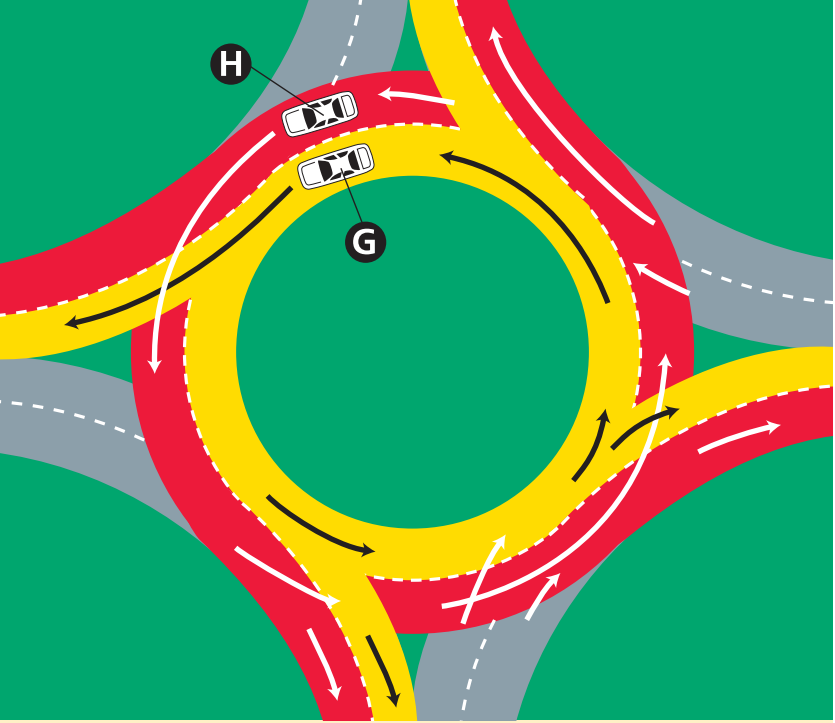
Vehicle G.
Vehicle H.
Vehicles G and H.
Neither vehicle.
Vehicle H must give way because Vehicle G is already inside the roundabout and has the right of way.
What is the correct hand signal for a left turn?
Arm pointing upward.
Arm pointing downward.
Arm straight out.
Arm moving in circles.
A left turn hand signal is made by extending the left arm straight out of the window so other road users can clearly recognize the driver’s intention to turn left.
What does this sign indicate?
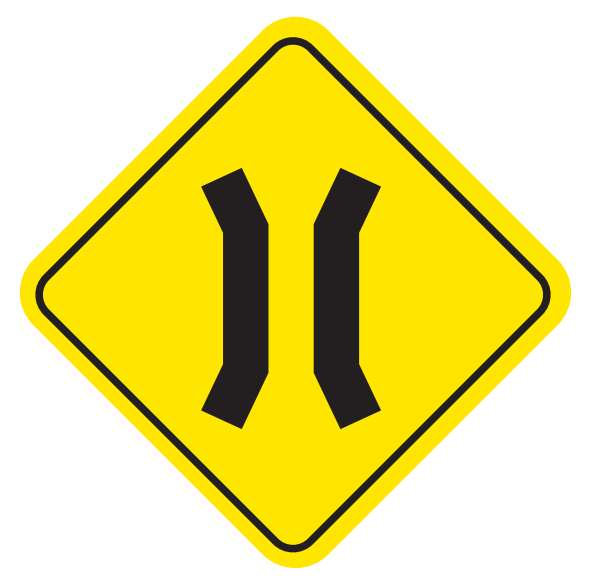
Divided highway begins.
Two-way traffic ahead.
Narrow bridge ahead.
Lane ends ahead.
This warning sign tells drivers that the bridge ahead is narrower than the road and extra caution is required when passing through.
How far should you stop from the nearest rail at a railway crossing?
At least 5 metres.
At least 10 metres.
At least 15 metre.
At least 20 metres.
Drivers must stop at least 5 metres from the nearest rail at a railway crossing to maintain a safe distance from approaching trains.
What does this hazard marker represent?
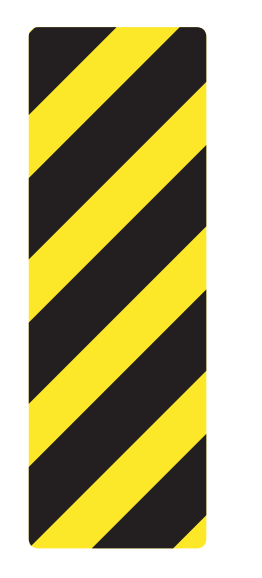
Obstruction on the left.
Object on the right.
Pavement ends.
Rumble strips ahead.
This hazard marker warns drivers that an obstruction is located on the right side of the roadway and traffic must pass safely to the left.
When following a vehicle at night, when must you switch to low beams?
At 500 metres.
At 50 metres.
At 300 metres.
At 150 metres.
You must switch to low beams when following within 150 meters to avoid blinding the driver ahead through their rearview mirror.
Where should the center of the head restraint be positioned?
At the base of the neck.
Level with the top of the ears.
Level with the bottom of the ears.
Level with the chin.
The center of the head restraint should be level with the top of your ears to prevent whiplash injuries during a collision.
At this roundabout, which vehicle has the right of way?
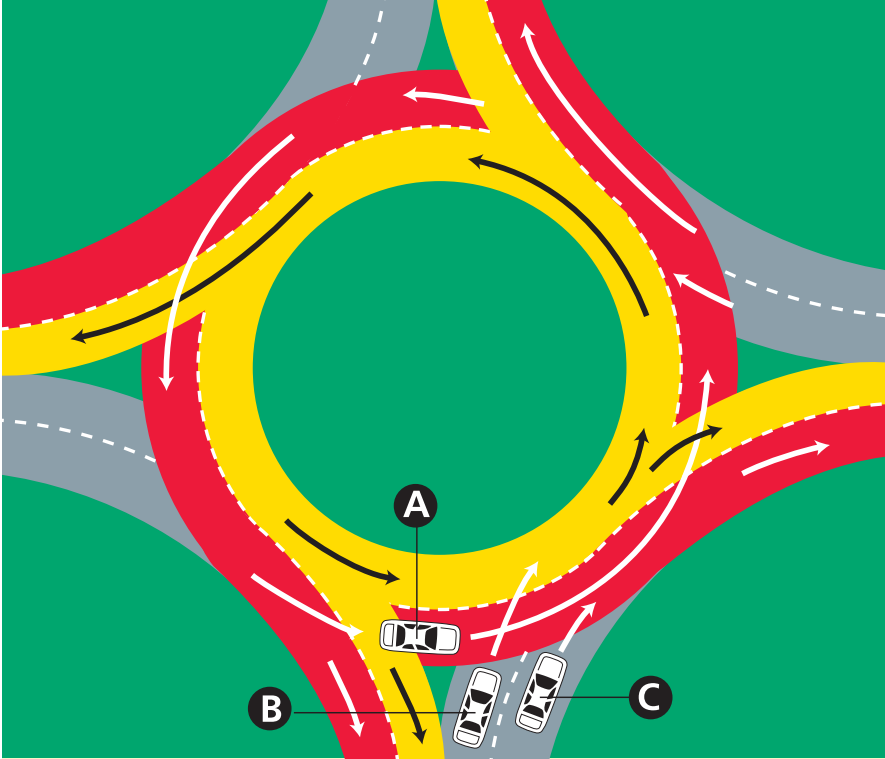
Vehicle A.
Vehicle B.
Vehicle C.
Vehicles B and C.
Vehicle A has the right of way because it is already traveling inside the roundabout, while Vehicles B and C must yield before entering.
What does a solid white line between lanes mean?
Road is one-way only.
Lane changes are permitted.
Lane changes are discouraged.
Parking is allowed.
A solid white line separates traffic moving in the same direction and warns drivers that changing lanes could be hazardous.
Two vehicles reach an uncontrolled intersection together. Who has right-of-way?
Vehicle on the right.
Vehicle on the left.
Faster-moving vehicle.
Vehicle that arrives first.
When two vehicles arrive at an uncontrolled intersection simultaneously, the driver on the left must yield to the vehicle on the right.
What is the unposted speed limit in an urban area?
40 km/h.
50 km/h.
60 km/h.
80 km/h.
In Alberta, the default speed limit in cities and towns is 50 km/h unless a different speed limit sign is posted.
If your vehicle begins to skid, which way should you steer?
Opposite to the skid.
Keep the wheel straight.
Turn sharply to the left.
Toward your intended path.
When a vehicle skids, steering in the direction you want to go helps the tires regain traction and realigns the vehicle with the road.