Driving Test New Brunswick: Free Class 7 Permit Test Practice 5
- The test is based on questions taken from the New Brunswick Driver’s Handbook.
- You will be asked about Rules of the Road, Safe Driving, Sharing the Road and Traffic Signs.
- The test is a series of multiple choice questions.
Need the handbook?
Download the official New Brunswick Driver’s Handbook PDF for free.
Reminder: To obtain your New Brunswick learner’s licence, you will need to pass a class 7 knowledge test.
A two-way left-turn lane should not be used for:
Making a left turn.
Entering a driveway.
Passing other vehicles.
Leaving the highway.
A two-way left-turn lane is designed only for turning left. It should never be used for overtaking or passing other vehicles.
What does a flashing amber traffic light represent?
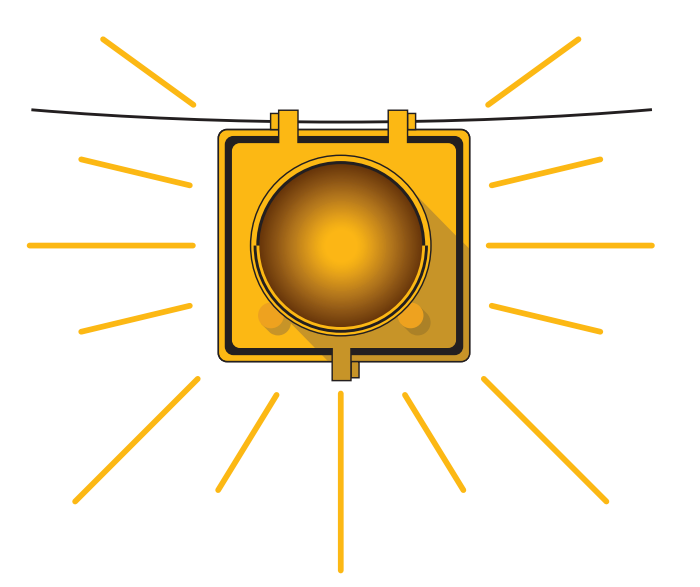
Proceed at normal speed.
Yield only to pedestrians.
Stop completely before proceeding.
Slow down and proceed with caution.
A flashing amber light warns drivers to slow down and proceed carefully while watching for intersecting traffic and other hazards.
What is the proper procedure if a tire blows out?
Shift into neutral.
Steer sharply left.
Apply the brakes quickly.
Do not brake suddenly.
If a tire blows out, avoid braking suddenly and allow the vehicle to slow down gradually while maintaining control.
What does this sign represent?
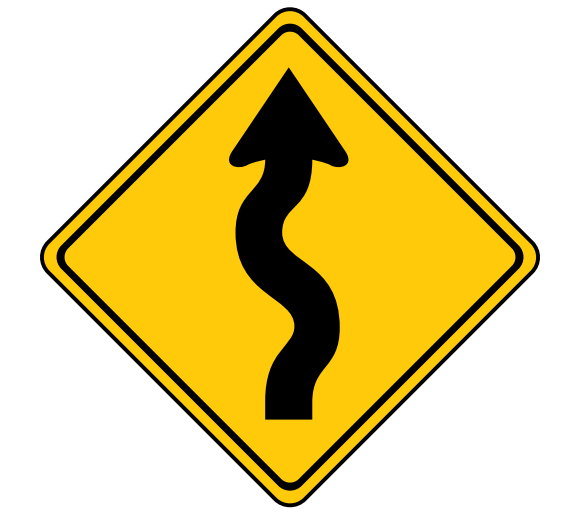
Winding road ahead.
First right turn then left only.
First left turn then right only.
Sharp curve ahead.
This sign warns drivers that the road ahead contains a series of curves requiring reduced speed and extra caution.
What does this sign signify?
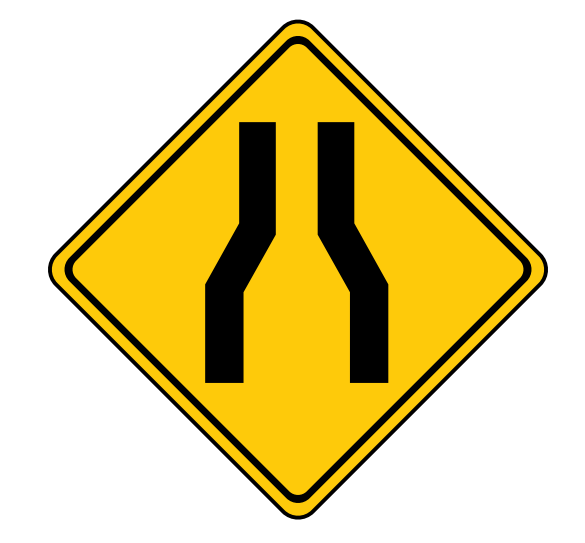
Narrow bridge ahead.
Divided highway ends.
Road narrows ahead.
Two-way traffic begins.
This warning sign alerts drivers that the road ahead narrows or becomes more constricted. Drivers should be cautious and prepare for a tighter driving space.
Where should snow tires be installed for the best traction and control?
Front wheels only.
Rear wheels only.
Driver’s side wheels.
All four wheels.
Snow tires should be mounted on all four wheels to provide better traction, steering control, and overall vehicle stability.
What does this sign indicate?
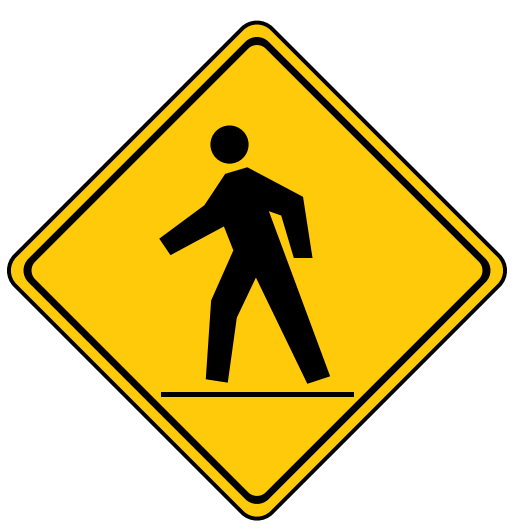
Pedestrian crosswalk.
School crosswalk.
Playground.
Children play zone.
This warning sign indicates a pedestrian crosswalk ahead where drivers must slow down and yield to pedestrians.
What does this sign mean?
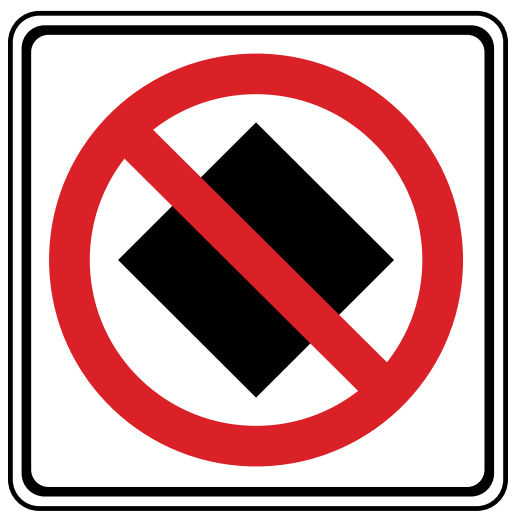
High-occupancy vehicles prohibited.
Dangerous goods carriers prohibited.
Heavy cargo trucks permitted only.
Explosive vehicles permitted only.
This sign indicates that vehicles carrying dangerous or hazardous goods are not permitted beyond this point.
When are roads most slippery during rainfall?
After an hour of rain.
When the rain stops.
In the middle of heavy rain.
Just after the rain begins.
Roads become especially slippery just after rain begins because water mixes with oil and dirt already on the road surface.
What does this sign signify?
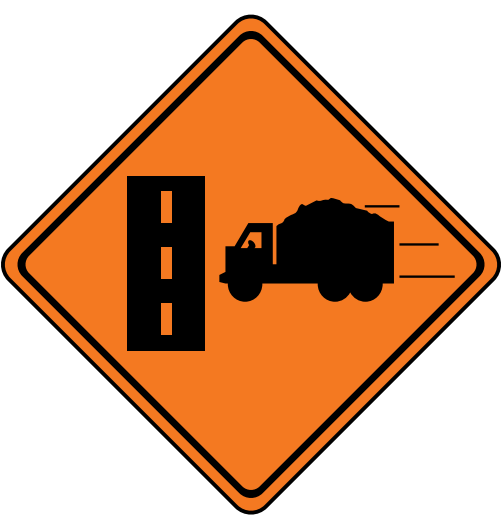
Truck entrance from the right.
Heavy truck parking zone.
Construction detour ahead.
Truck passing zone only.
This construction sign warns drivers that trucks may be entering, leaving, or crossing the roadway from the right side ahead, and drivers should be prepared to adjust their speed.
What does this sign mean?
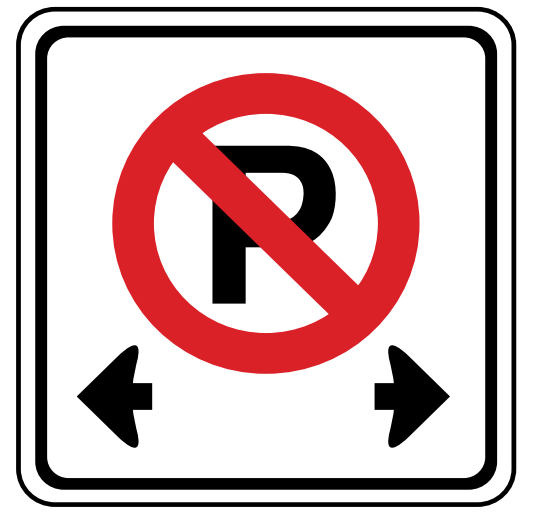
Parking prohibited on either side.
Stopping prohibited on either side.
Stopping permitted on either side.
Parking permitted on either side.
This sign indicates that parking is prohibited on both sides of the roadway shown by the arrows.
Which headlights should you use when driving in fog?
Parking lights.
High beams.
Low beams.
Hazard lights.
Low-beam headlights improve visibility in fog by directing light onto the road instead of reflecting it back into the driver’s eyes.
What does this hand signal represent?
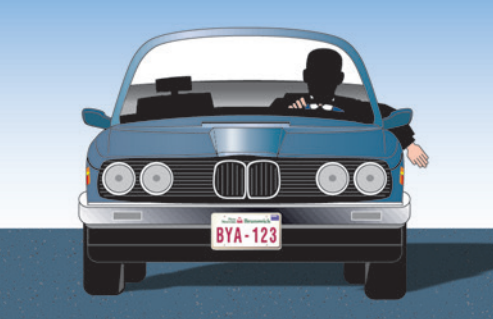
Slow to stop.
Right turn.
Left turn.
U-turn.
This hand signal, where the driver's arm is bent downward at a right angle, indicates the driver's intention to slow down or stop the vehicle.
What does this sign indicate?
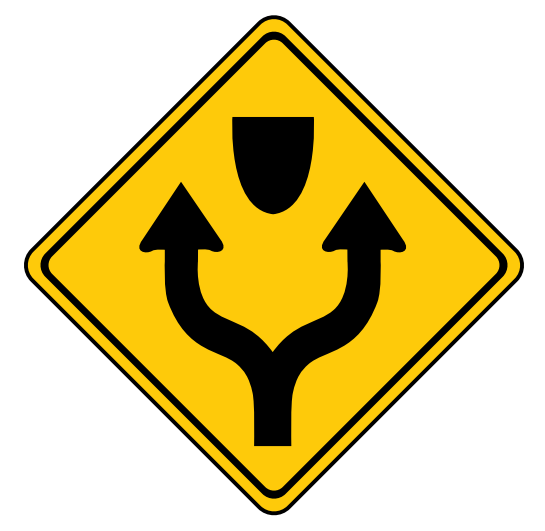
Divided highway begins.
Keep right of the obstruction only.
Keep left of the obstruction only.
Pass to either side of the obstruction.
This sign warns drivers of an upcoming obstacle or island in the road, indicating that traffic is permitted to pass it on either the left or the right side.
How much tire contact does a vehicle have with the road surface?
About one square foot.
About the size of your palm.
About the length of the vehicle.
Only a single point.
The total tire contact with the road is only about the size of the palm of your hand, making traction extremely important.
What should a slow driver do when blocking traffic?
Stay in the center lane.
Pull off and let traffic pass.
Speed up immediately.
Turn on hazard lights.
If a slow-moving vehicle is blocking the normal flow of traffic, the driver should pull off the road at a safe location to allow accumulated traffic to pass.
Who is responsible for wearing a seat belt if the passenger is 16 or older?
The driver.
The passenger.
The vehicle owner.
The parent.
Passengers aged 16 and older are legally responsible for buckling their own seat belts.
Where does roadway condensation freeze first?
At intersections.
On hills.
On bridges and overpasses.
On gravel roads.
Bridges and overpasses freeze before other road surfaces because they are exposed to cold air from above and below.
At 60 km/h, the impact force is how many times that of 30 km/h?
Two times.
Three times.
Four times.
Six times.
Impact force increases with the square of the speed. Since 60 km/h is twice the speed of 30 km/h, the impact force becomes four times (22 = 4) greater.
What does this sign indicate?
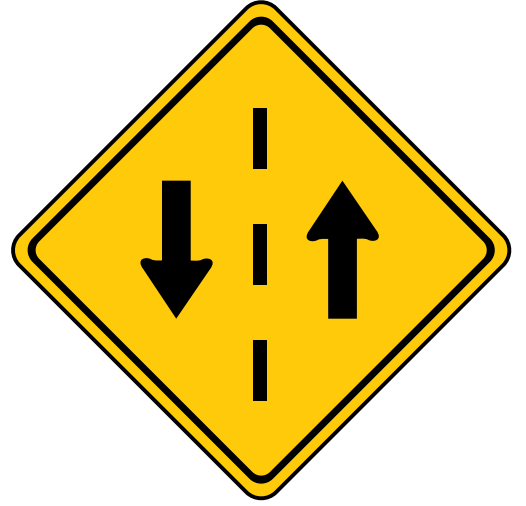
One-way traffic ahead.
Two-way traffic ahead.
Divided highway begins.
Divided highway ends.
This sign warns drivers that they are leaving a one-way road or zone and approaching a roadway with two-way traffic moving in opposite directions.