Driving Test Nova Scotia: Free Learner’s Licence (Class 7) Practice 1
- The test is based on questions taken from the Nova Scotia Driver’s Handbook.
- You will be asked about Rules of the Road, Signs, Pavement Markings and Work Zones, Safety, Adverse Driving Conditions, Driving and Impairment.
- The test is a series of multiple choice questions.
Need the handbook?
Download the official Nova Scotia Driver’s Handbook PDF for free.
Reminder: To obtain your Nova Scotia Learner’s Licence (class 7), you will need to pass a Knowledge Test.
Children from birth to 10 kg (22 lb) must use:
A forward-facing seat.
A booster seat.
A rear-facing infant seat.
An adult lap belt.
Infants weighing up to 10 kg (22 lb) must be secured in a rear-facing infant seat for maximum protection.
What is the speed limit in business and residential districts?
50 km/h.
60 km/h.
30 km/h.
40 km/h.
The standard statutory speed limit for residential and business districts in Nova Scotia is 50 km/h unless signs post a different limit.
When is a left turn on a red light allowed?
It is never allowed on a red light.
No traffic coming from the right.
From a two-way onto a one-way.
From a one-way onto a one-way.
After stopping, a left turn on red is allowed only from one one-way street onto another one-way street unless prohibited by a sign.
While waiting to turn left, which way should your wheels point?
To the left.
To the right.
Straight ahead.
Slightly left.
Keeping wheels straight prevents your vehicle from being pushed into oncoming traffic if hit from behind.
What does this hand signal represent?
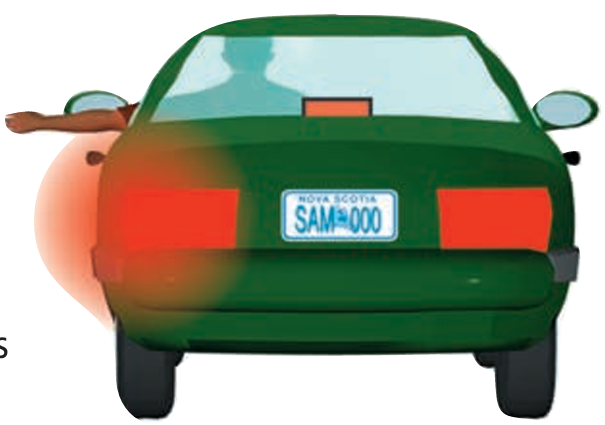
Left turn.
Right turn.
Slow down or stop.
U-turn.
Extending the left arm straight out the window parallel to the road indicates the driver's intention to make a left turn.
What does this sign indicate?
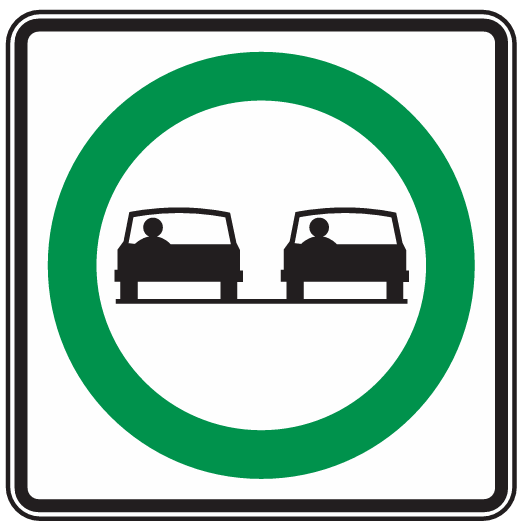
No passing allowed.
Passing permitted.
Car parking zone.
Two-way traffic ahead.
This sign indicates that drivers are allowed to pass other vehicles when the roadway ahead is clear and safe for overtaking.
What does this sign mean?
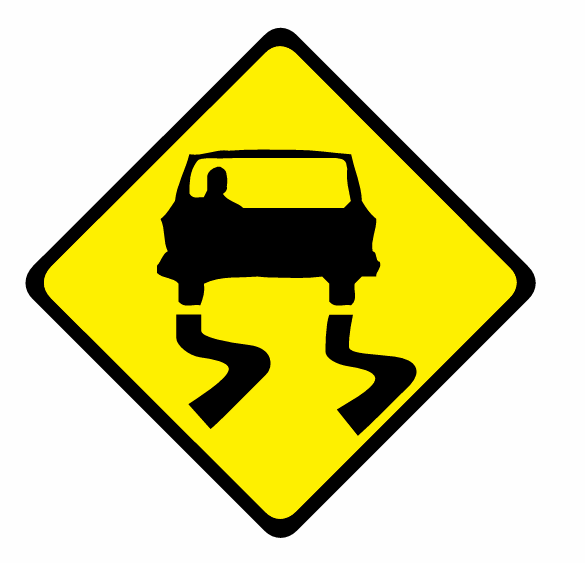
Sharp curves ahead.
Winding road ahead.
Slippery when wet.
Loose gravel ahead.
This warning sign alerts drivers that the road may become slippery when wet, requiring reduced speed and extra caution.
What does this sign signify?
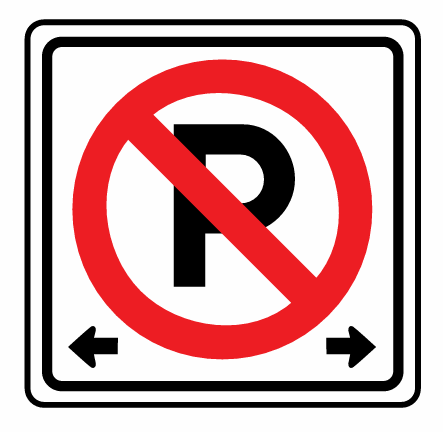
Parking prohibited on either side.
Parking permitted on either side.
Stopping prohibited on either side.
Stopping permitted on either side.
This sign indicates that parking is prohibited on both sides of the roadway shown by the arrows.
What does this sign represent?
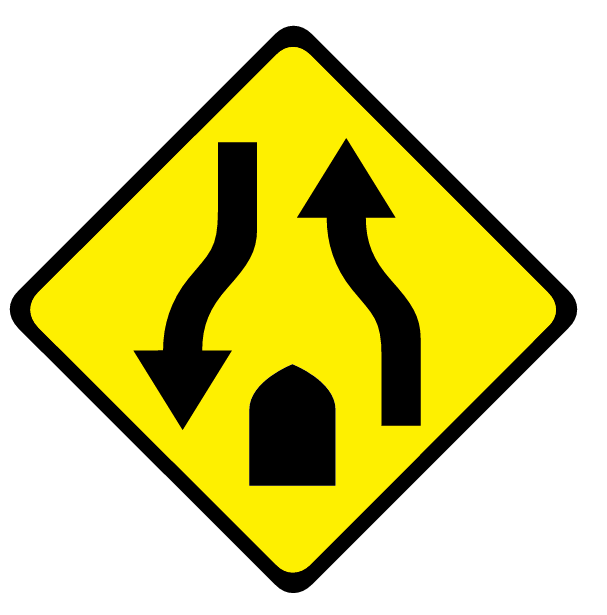
Divided highway begins.
Divided highway ends.
Two-way traffic ends.
Two-way traffic begins.
This sign warns drivers that the divided highway is ending and opposing traffic will soon share the same roadway.
What does this sign mean?
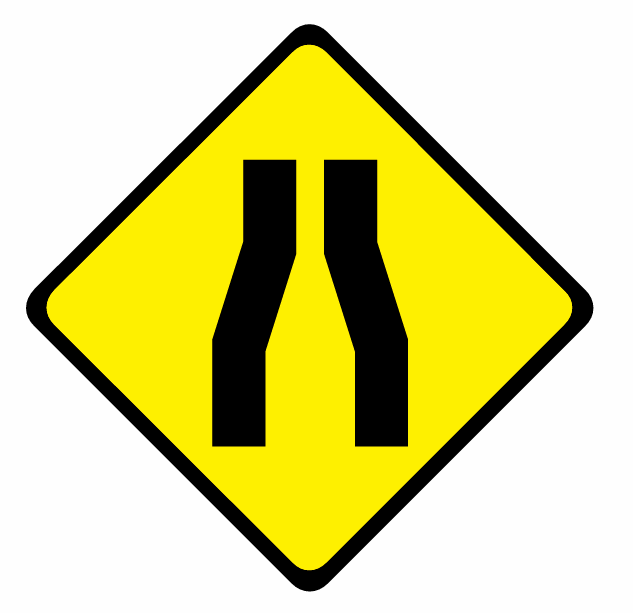
Narrow bridge ahead.
Two-way traffic begins.
Divided highway ends.
Road narrows ahead.
This warning sign alerts drivers that the road ahead narrows or becomes more constricted. Drivers should be cautious and prepare for a tighter driving space.
When should you gradually accelerate through a curve?
Before entering.
At the beginning.
At the midpoint.
After exiting.
Gradually accelerating from the midpoint helps maintain control and allows the vehicle to follow the curve smoothly.
What is the minimum distance you must keep behind a fire vehicle?
50 metres.
100 metres.
150 metres.
200 metres.
Drivers must not follow a fire vehicle closer than 150 metres to avoid interfering with emergency operations.
What is the permitted BAC for a learner driver?
0.04%.
0.05%.
0.08%.
0.00%.
Learner drivers must maintain a zero blood alcohol level and are not allowed to drive after consuming alcohol.
What does this road sign indicate?
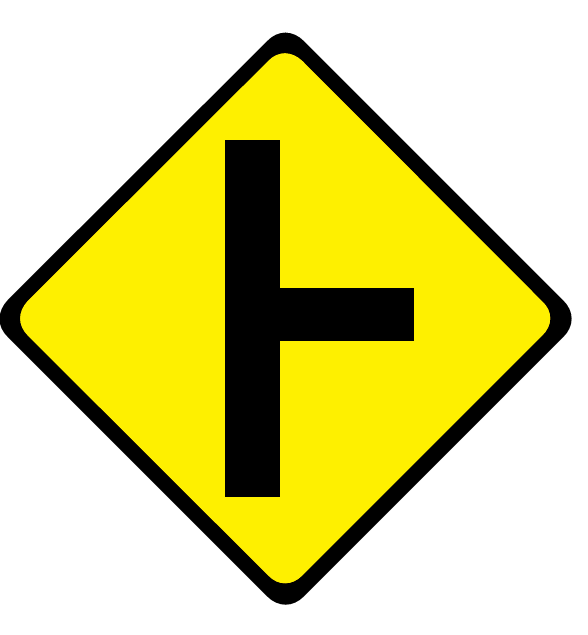
Right lane ends ahead.
Hidden intersection ahead.
One-way traffic only.
Railway crossing ahead.
This warning sign alerts drivers that another road enters the highway from the right. It may be hidden from view, so drivers should prepare for vehicles entering the traffic stream.
What does a flashing light unit displaying two arrowheads represent?
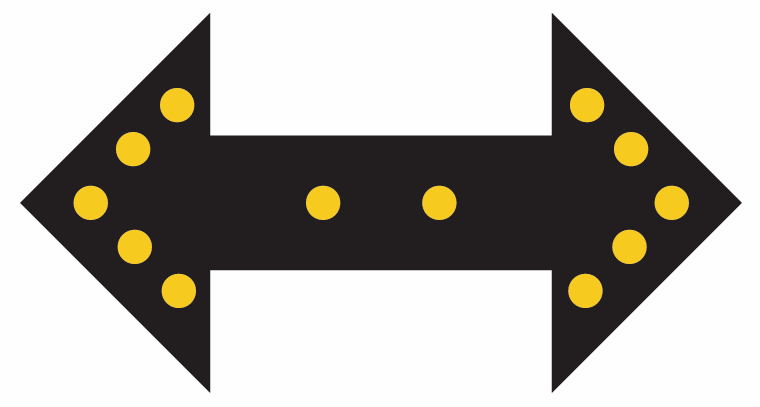
Road closed; you must turn around.
Lane closed; safe to pass on either side.
Move over; pass only on the left.
Stop and wait for a green arrow.
It means the lane ahead is closed or blocked, and when both arrows flash together, it is safe to pass on either side of the unit.
On a multi-lane highway, slower vehicles must travel in:
The right lane.
The left lane.
The middle lane.
The passing lane.
Slower traffic must stay in the right lane to keep the left lane open for overtaking and passing vehicles.
What type of sign is represented by this pentagon shape?
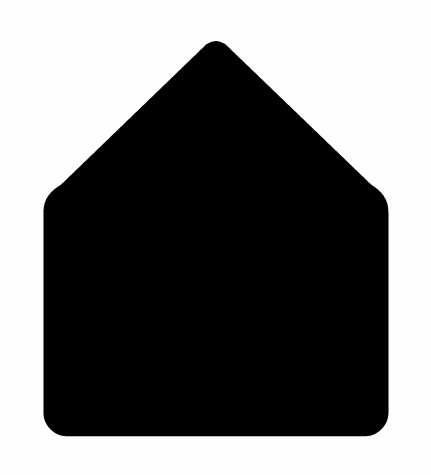
Guide Sign.
Pedestrian Zone.
Construction Zone.
School Zone.
A pentagon-shaped sign is used to identify school zones and school crossings, alerting drivers to watch for children.
What does this sign signify?
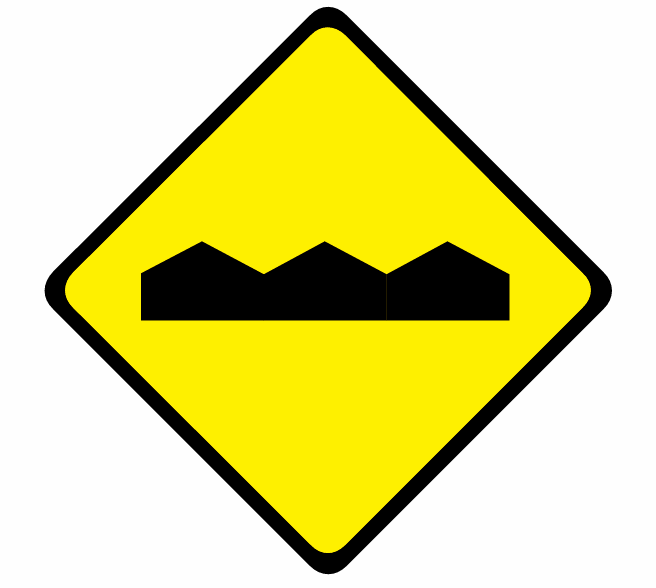
Rumble strips ahead.
Slippery when wet ahead.
Swing bridge ahead.
Bump or rough road ahead.
This warning sign alerts drivers that the road surface ahead is bumpy or rough. Drivers should reduce their speed to safely navigate the uneven surface.
While backing straight, where should your left hand be on the steering wheel?
At 12 o'clock.
At 9 o'clock.
At 6 o'clock.
At 3 o'clock.
Placing your left hand at the 12 o'clock position provides maximum control and stability while backing your vehicle straight.
In which direction must traffic travel in a roundabout?
Clockwise.
Counterclockwise.
Either direction.
Toward the left.
All vehicles in a roundabout must travel counterclockwise to maintain a safe and orderly flow of traffic.