Driving Test Manitoba: Free Class 5 Knowledge Test Practice 2
- The test is based on questions taken from the Manitoba Driver’s Handbook.
- You will be asked about traffic laws, safe driving practices and recognition of road signs.
- The test is a series of multiple choice questions.
Need the handbook?
Download the official Manitoba Driver’s Handbook PDF for free.
Reminder: To obtain your Manitoba learner’s licence, you will need to pass a class 5 knowledge test.
A cyclist ahead signals a left turn. What should you do?
Speed up to pass them before they turn.
Honk your horn to warn them not to turn.
Expect the cyclist to move left and give them space.
Move to the left lane immediately to get ahead.
Cyclists have the same rights on the road as drivers. When they signal a turn, slow down and allow them enough room to complete the move safely.
What does this sign represent?
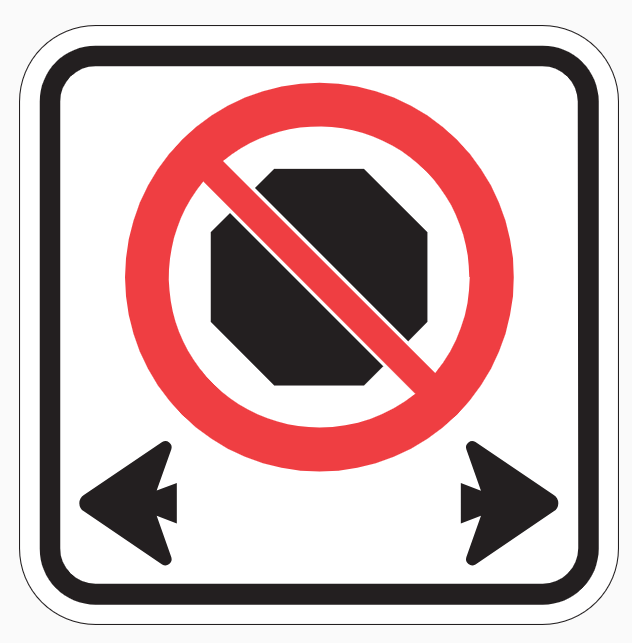
No parking allowed.
Do not enter.
Stop sign ahead.
Do not stop to wait.
This sign means you must not stop or wait in this area for any reason, except when required by traffic or a signal.
The safest way to leave a parking space beside traffic is to:
Reverse without checking mirrors.
Accelerate sharply into traffic.
Signal and check for approaching traffic.
Depend only on the rearview mirror.
Always signal your intention before moving. Check your mirrors, blind spots, and oncoming traffic to ensure it's safe to leave the parking space.
If you feel impaired or unfit to drive, you should:
Drive slowly to compensate.
Avoid driving until safe and alert.
Depend on other traffic to react.
Use high beams for better focus.
If your ability to drive is impaired, do not drive. Wait until you are sober and alert, or use a taxi or public transport to reach home safely.
What does this sign indicate?
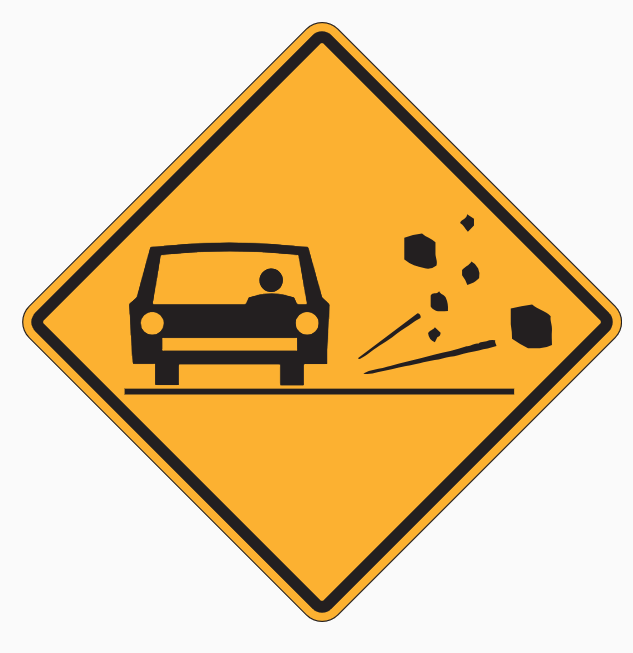
Flying stones.
Falling rocks.
Loose gravel road.
Road construction.
This sign warns that loose stones or debris may be thrown into the air by passing vehicles, which can damage vehicles or reduce visibility.
What does this sign represent?
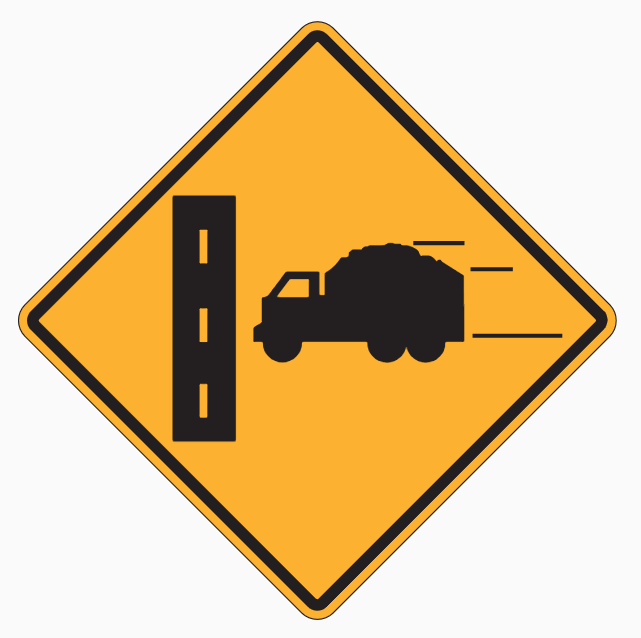
Slow-moving vehicles ahead.
Trucks parking only.
Trucks entering on the right.
Trucks entering on the left.
This sign warns that trucks may be entering the road from a side road or driveway on the right. Drivers should stay alert and be prepared to share the road.
What does this sign indicate?
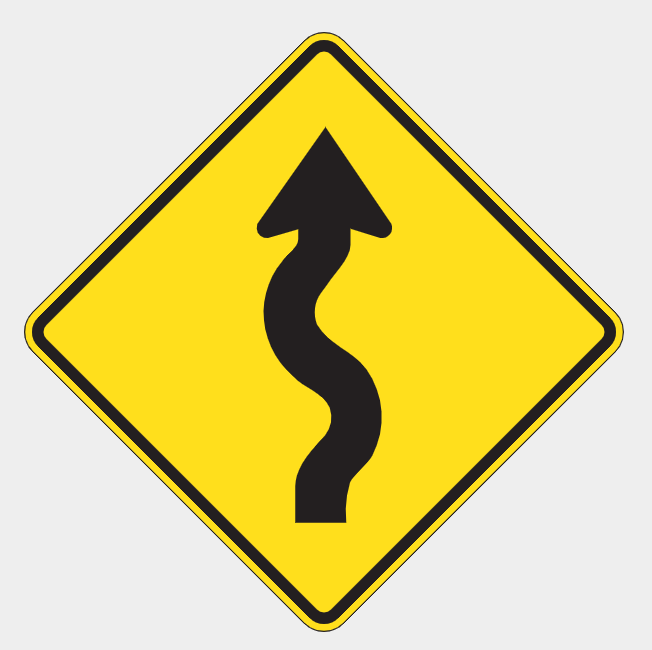
Winding road ahead.
Slippery road ahead.
Sharp curve to the right ahead.
Sharp curve to the left ahead.
This sign warns drivers that the road ahead has a series of curves (more than two). You should reduce your speed and stay alert for multiple turns.
If headlights from an oncoming vehicle create glare at night, you should:
Stop immediately in your lane.
Turn on your high beams in response.
Look toward the right edge of the road.
Accelerate to pass the vehicle quickly.
To avoid being blinded by glare, look toward the white line or the right edge of your lane. This helps you stay on course while keeping your vision clear.
If an emergency vehicle approaches with flashing lights and siren, you must:
Continue if your light is green.
Clear the intersection safely.
Stop immediately where you are.
Follow the emergency vehicle closely.
Drivers should clear the intersection and then pull over safely to allow the emergency vehicle to pass.
At a T-intersection where your road ends, you must:
Proceed first because you are turning.
Enter the roadway slowly without stopping.
Depend on other drivers to stop.
Yield to traffic on the through road.
When your road ends at a T-intersection, you must yield to all traffic and pedestrians on the through road. Only proceed when there is a safe gap.
When sharing the road with snowplows, drivers must:
Give snowplows extra space.
Pass snowplows immediately on curves.
Follow closely behind snowplows.
Drive beside snowplows continuously.
Snowplows create clouds of snow that reduce visibility and may make sudden turns or stops, so drivers should stay back and give them extra space.
What does this sign mean?
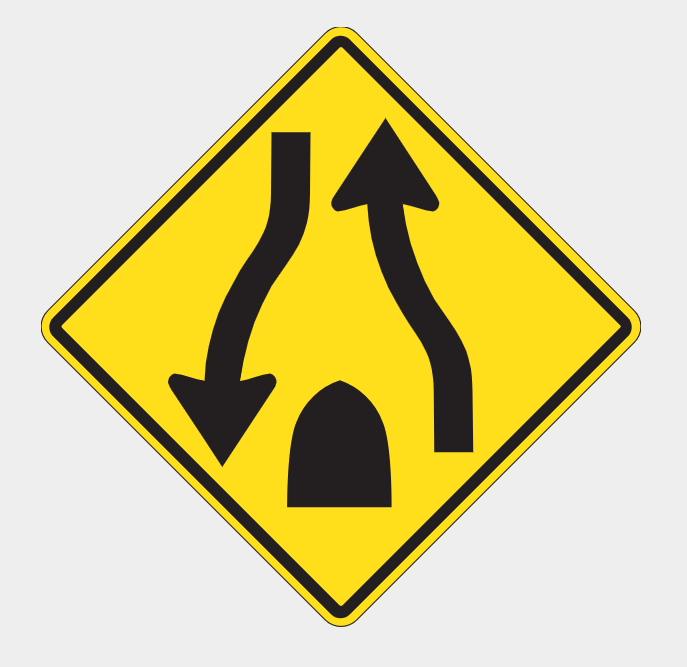
Divided highway begins.
Divided highway ends.
Two-way traffic ahead.
Keep to the right of the median.
This sign warns that the divided highway is ending. The symbol at the bottom indicates that traffic from both directions will soon share the same roadway without a barrier.
What does the “A” on this Trans-Canada sign indicate?
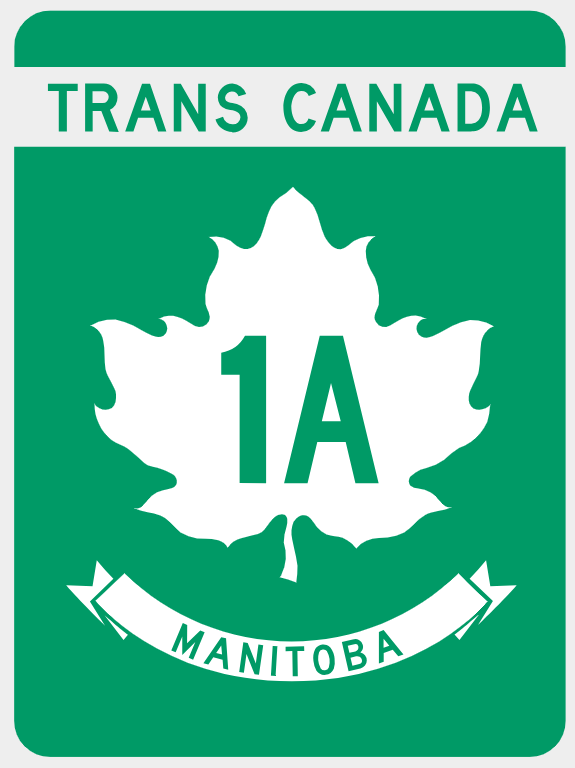
A route reserved for commercial vehicles.
An arterial road that leads to the city center.
An alternative route that will return to the main route.
An auxiliary lane for slow-moving vehicles.
The “A” identifies an alternate Trans-Canada route that reconnects with the main highway farther ahead.
If another driver is merging into your lane on the highway, you should:
Adjust speed and allow space if possible.
Accelerate to block the driver.
Sound the horn continuously.
Move onto the shoulder immediately.
If someone is merging, adjust your speed or change lanes to help them enter safely. Cooperation helps maintain a smooth traffic flow and prevents accidents.
You notice smoke coming from your vehicle while driving. You should:
Pull over safely and stop.
Drive faster to let the wind cool the engine.
Drive slowly to the nearest service station.
Turn on the AC to lower the temperature.
Smoke from a vehicle may indicate a serious mechanical problem or fire risk, so drivers should stop safely and turn off the engine immediately.
If warning lights begin flashing at a railway crossing, you should:
Continue if the train seems distant.
Cross quickly before the train arrives.
Stop only if the gate lowers completely.
Stop and wait until it is safe.
When warning lights flash, a train is approaching. You must stop and wait until the lights stop flashing and it is clearly safe to cross.
At what BAC level is driving a criminal offence in Canada?
0.05%.
0.00%.
0.08%.
0.02%.
A BAC of 0.08% or higher is a criminal offence. However, driving with 0.05% or higher can still lead to immediate license suspension.
What does this sign mean?
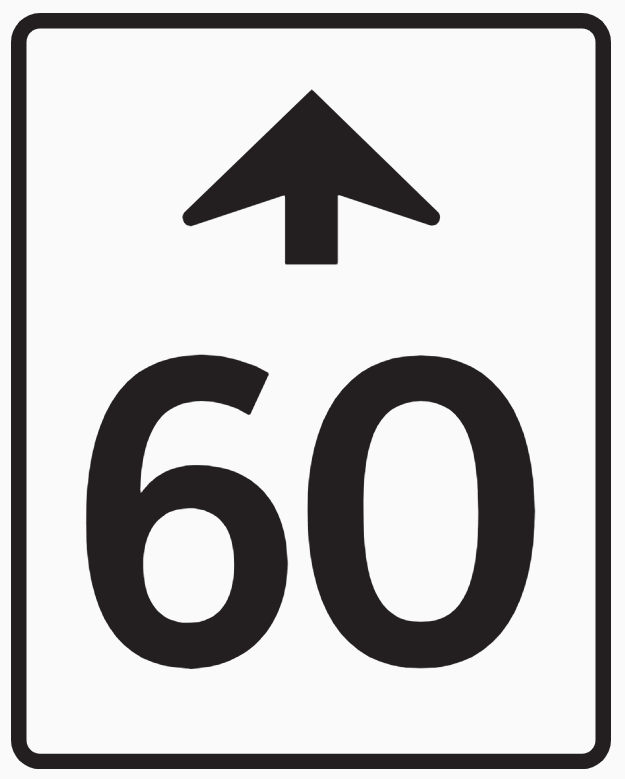
Maximum speed 60 km/h ahead.
Minimum speed 60 km/h ahead.
Recommended speed 60 km/h ahead.
Speed zone ends at 60 km/h.
This sign shows the maximum legal speed limit for the road ahead under normal driving conditions.
What does this sign indicate?
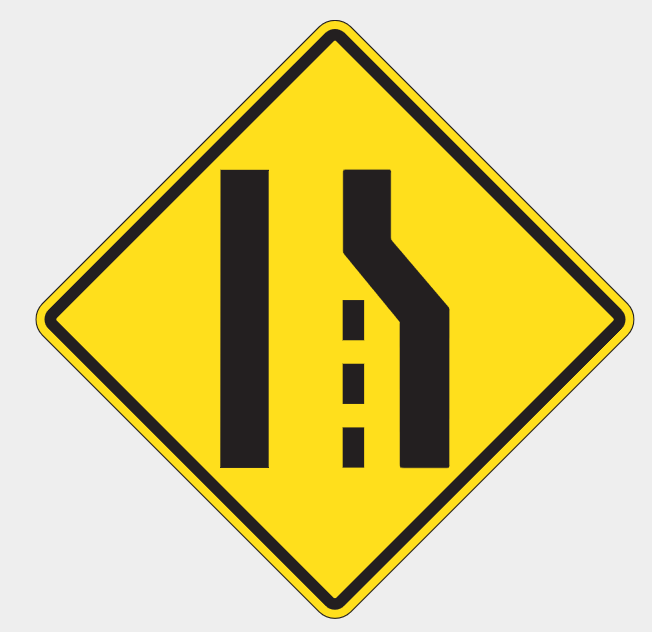
Divided highway ends ahead.
Right shoulder closed ahead.
Road narrows from both sides.
Right lane ends ahead.
This sign warns that the lane on the right is ending. Drivers in that lane must merge safely to the left. It is important to cooperate and allow space for merging traffic.
What is the safest way to drive on icy roads?
Accelerate quickly to maintain traction.
Reduce speed and avoid sudden movements.
Brake sharply before every turn.
Use cruise control continuously.
Icy roads have very little grip. Sudden braking, steering, or acceleration can cause skidding on icy roads, so drivers should move smoothly and reduce speed.
The safest way to merge onto a highway is to:
Stop before entering the highway lane.
Enter at the lowest possible speed.
Match the speed of highway traffic.
Drive on the shoulder until space appears.
Drivers should match the speed of highway traffic to merge smoothly and safely into the flow of vehicles.
Why is driving after consuming alcohol dangerous?
It increases reaction speed and judgement.
It improves night vision and judgement.
It increases coordination and alertness.
It improves confidence but reduces judgement.
Alcohol slows down your brain and reflexes. It gives a false sense of confidence while actually making it harder to judge distances and react to hazards.
At an intersection with no signs or signals, drivers should:
Depend only on hand signals.
Yield according to right-of-way rules.
Continue without slowing down.
Wait for larger vehicles to proceed first.
At uncontrolled intersections, drivers must follow right-of-way rules and be prepared to yield when necessary.
When turning left at an intersection, you must yield to:
Vehicles approaching from behind.
Vehicles parked near the curb.
Drivers waiting at stop signs.
Oncoming traffic going straight.
When turning left, you must yield the right-of-way to any oncoming vehicle that is going straight or turning right. Only proceed when there is a safe gap in traffic.
What does this hand signal mean?
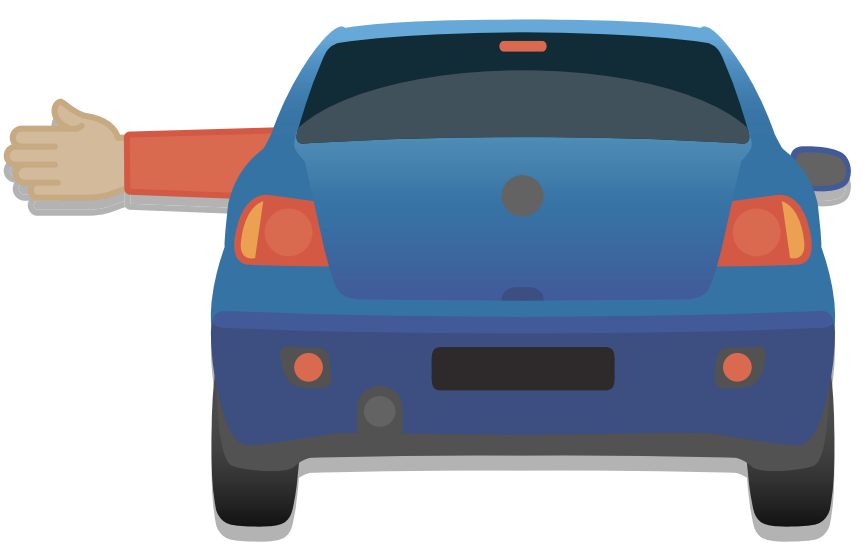
Left turn.
Right turn.
Slowing down or stopping.
U-turn ahead.
When a driver extends their left arm straight out of the window, it indicates their intention to turn left.
A solid yellow line on your side of the road means:
Overtaking is allowed.
Overtaking is prohibited.
Overtaking is allowed only for heavy vehicles.
Passing is allowed if the road is clear.
A solid yellow line means it is unsafe and illegal to pass other vehicles. You must stay in your lane to avoid head-on collisions with oncoming traffic.
What does this sign represent?
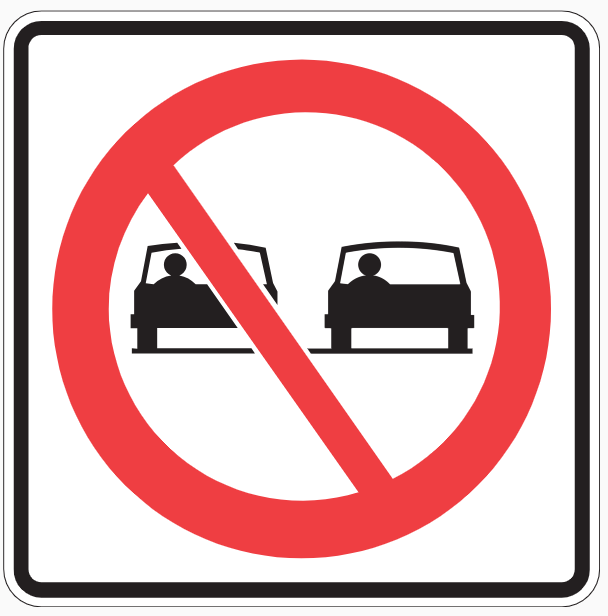
Do not pass.
Do not enter.
Do not park.
No motor vehicles allowed.
This sign means that passing or overtaking other vehicles is prohibited in this area.
When parking uphill with a curb, your front wheels should usually be turned:
Toward the curb.
Straight ahead.
Away from the curb.
Toward the centre of the road.
Turning the wheels away from the curb helps prevent the vehicle from rolling into traffic if it begins to move.
If your vehicle begins to skid, you should:
Brake hard immediately.
Steer in the direction you want to go.
Accelerate sharply through the skid.
Turn the steering wheel rapidly side to side.
Turning the steering wheel in the direction of the skid helps the tires regain traction and allows the driver to recover control of the vehicle.
If your vehicle begins to hydroplane on a wet road, you should:
Brake hard immediately.
Turn sharply toward the shoulder.
Ease off the accelerator smoothly.
Accelerate to regain traction.
Hydroplaning occurs when tires lose contact with the road surface, so drivers should slow down gradually and avoid sudden braking or steering.