Driving Test Nova Scotia: Free Learner’s Licence (Class 7) Practice 2
- The test is based on questions taken from the Nova Scotia Driver’s Handbook.
- You will be asked about Rules of the Road, Signs, Pavement Markings and Work Zones, Safety, Adverse Driving Conditions, Driving and Impairment.
- The test is a series of multiple choice questions.
Need the handbook?
Download the official Nova Scotia Driver’s Handbook PDF for free.
Reminder: To obtain your Nova Scotia Learner’s Licence (class 7), you will need to pass a Knowledge Test.
Where should the lap portion of a seat belt be worn?
Across the stomach.
Around the waist.
As low on the hips as possible.
Just below the ribs.
Wearing the lap belt low on the hips allows the strong pelvic bones to absorb the impact during a crash, reducing the risk of injury to the stomach and internal organs.
When two vehicles reach an intersection at the same time, who yields?
The smaller vehicle.
The faster vehicle.
The vehicle on the right.
The vehicle on the left.
When two vehicles arrive at the same time, the driver on the left must yield the right-of-way to the vehicle on the right.
What is the visual acuity requirement for a Class 7 licence?
20/20 in both eyes.
20/50 in both eyes.
20/40 in at least one eye.
20/30 in the best eye.
To qualify for a Class 7 licence, drivers must have a visual acuity of at least 20/40 in at least one eye.
What does this flashing amber light signify?
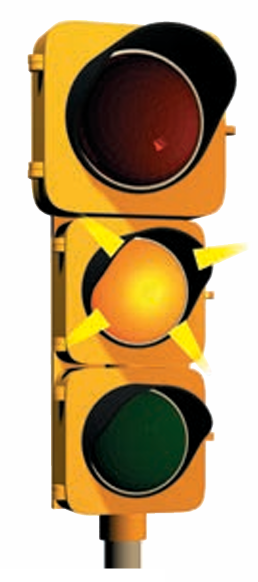
Slow down and proceed with caution.
Stop and proceed when safe.
Wait for the green light.
Speed up to clear the intersection.
A flashing amber (yellow) light warns drivers to slow down and proceed carefully through the intersection when it is safe.
What does this sign indicate?
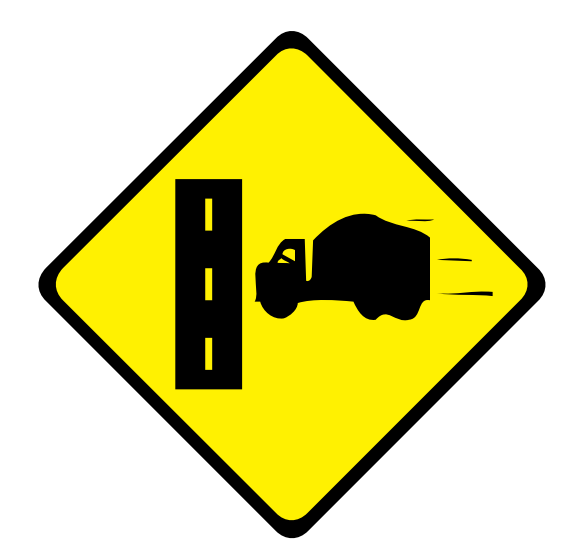
Truck entering.
Truck crossing.
Truck Parking.
Truck inspection.
This sign warns that trucks may be entering the highway from a side road ahead, and drivers should be alert for merging traffic.
What does this sign indicate?
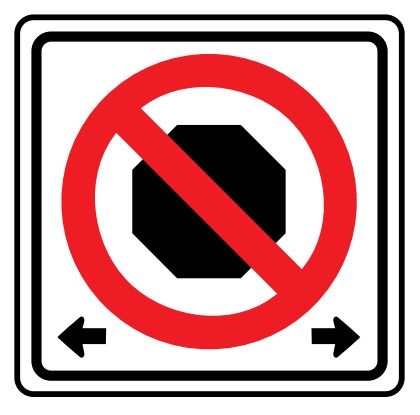
No parking.
Do not enter.
Stop sign ahead.
No stopping.
This regulatory sign indicates that stopping is prohibited on either side of the sign.
What happens to your reaction distance as speed increases?
It decreases.
It increases.
It stays the same.
It becomes shorter.
At higher speeds, your vehicle travels a longer distance during the time it takes you to recognize a hazard and apply the brakes, increasing your reaction distance.
Within how many metres of a crosswalk is parking prohibited?
2 metres.
5 metres.
10 metres.
15 metres.
Drivers must not stop or park within 5 metres of a crosswalk to maintain visibility and provide a safe crossing area for pedestrians.
What is the maximum highway speed in Nova Scotia?
100 km/h.
90 km/h.
50 km/h.
80 km/h.
Unless signs indicate a different limit, the maximum speed permitted on a highway in Nova Scotia is 80 km/h.
What does this lane-use sign represent?
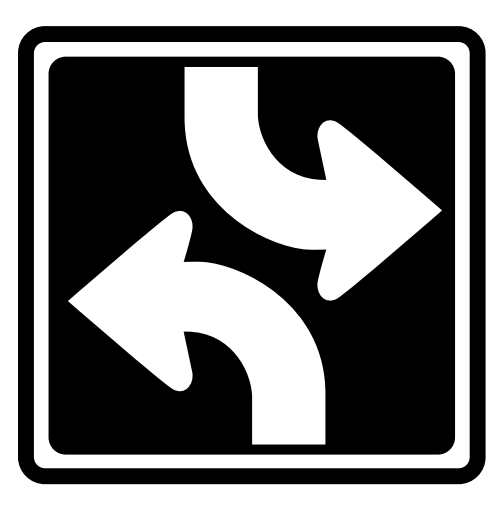
One-way left turn lane.
Two-way left turn lane.
Two-way left and right turn lane.
Two-way traffic begins.
This sign indicates that the designated centre lane is reserved for vehicles making left turns from either direction.
What does this hand signal indicate?
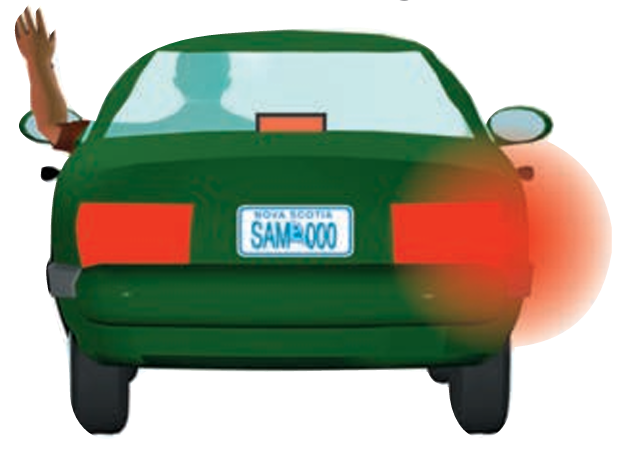
Left turn.
Right turn.
Slow down or stop.
Hazard ahead.
Extending the left arm upward from the window indicates the driver's intention to make a right turn.
What does this sign mean?
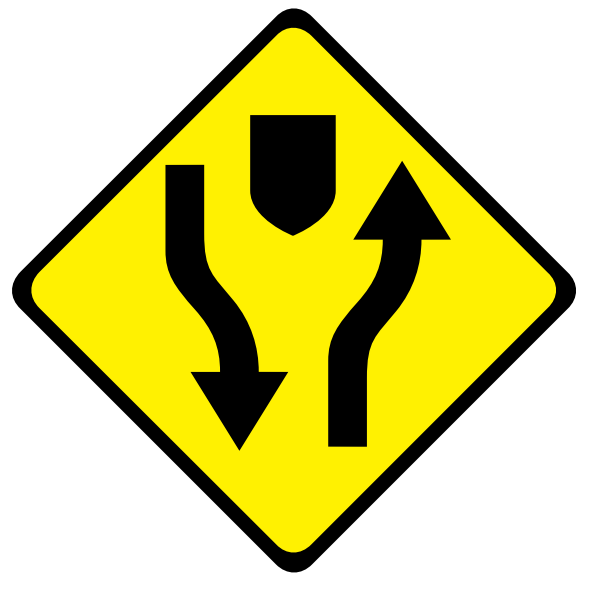
Divided highway begins.
Divided highway ends.
Two-way traffic ends.
Two-way traffic begins.
This warning sign indicates that a divided highway begins ahead, with opposing traffic separated by a median or barrier.
What is the legal BAC limit for impairment in Canada?
0.08%.
0.05%.
0.01%.
0.10%.
A driver is legally impaired in Canada when the blood-alcohol concentration reaches 0.08% or higher.
You should never change lanes while:
Driving on a highway.
In a business district.
Moving through an intersection.
Following another vehicle.
Changing lanes in an intersection can confuse other drivers and lead to collisions, so lane changes should always be completed before entering.
What does this road sign mean?
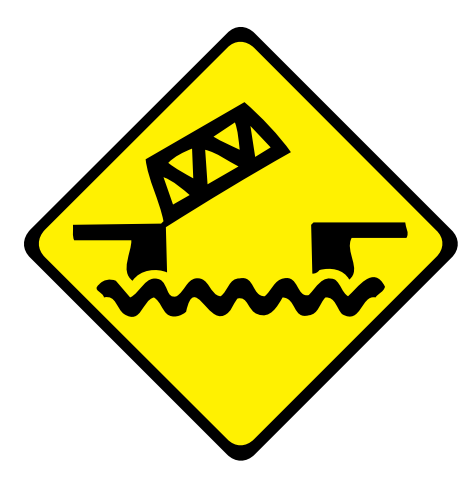
Bridge opening ahead.
Flood zone warning.
Ferry connection ahead.
Narrow bridge ahead.
This warning sign alerts drivers to an upcoming drawbridge or opening bridge, and drivers must be prepared to stop if the bridge is being raised for boat traffic.
Children must use a booster seat until they reach what height?
100 cm.
120 cm.
145 cm.
160 cm.
Children must use a booster seat until they are at least 145 cm (4 feet 9 inches) tall, unless they are 9 years old.
What does this sign mean?
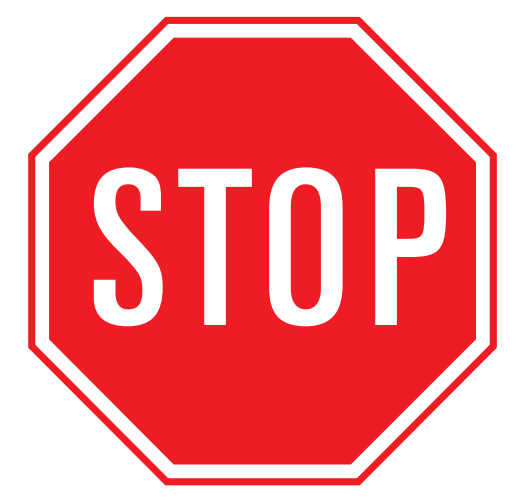
Yield and proceed when safe.
Come to a complete stop.
Stop only if pedestrians are present.
Slow down and proceed without stopping.
A stop sign requires drivers to come to a complete stop and proceed only when it is safe.
What does this sign indicate?
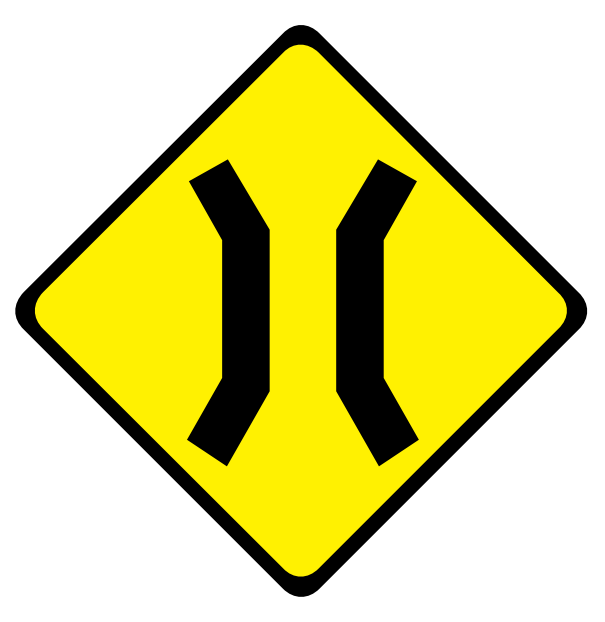
Slippery road ahead.
Swing bridge ahead.
Hump bridge ahead.
Narrow structure ahead.
This warning sign indicates that a narrow bridge or structure is ahead and the roadway becomes narrower.
What do these double solid yellow lines mean?
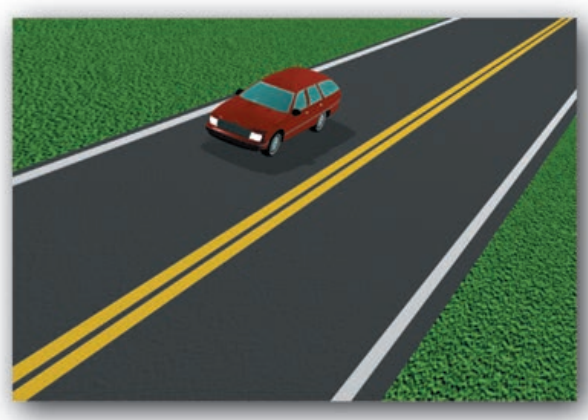
Passing is permitted in both directions.
Passing is permitted only in your direction.
Passing is prohibited in both directions.
Passing is allowed with caution.
Double solid yellow lines separate traffic moving in opposite directions and indicate that drivers must not cross the lines to pass in either direction.
Turning from a two-way onto a one-way road, which lane do you enter?
Any available lane.
The centre lane.
The right curb lane.
The left curb lane.
When turning from a two-way road onto a one-way road, drivers should enter the left curb lane to maintain proper lane position.