Driving Test New Brunswick: Free Class 7 Permit Test Practice 6
- The test is based on questions taken from the New Brunswick Driver’s Handbook.
- You will be asked about Rules of the Road, Safe Driving, Sharing the Road and Traffic Signs.
- The test is a series of multiple choice questions.
Need the handbook?
Download the official New Brunswick Driver’s Handbook PDF for free.
Reminder: To obtain your New Brunswick learner’s licence, you will need to pass a class 7 knowledge test.
When speed is doubled, the impact force in a collision becomes:
2 times greater.
4 times greater.
3 times greater.
8 times greater.
Kinetic energy increases with the square of speed, so doubling the speed makes the impact force four times greater in a collision.
What does this sign mean?
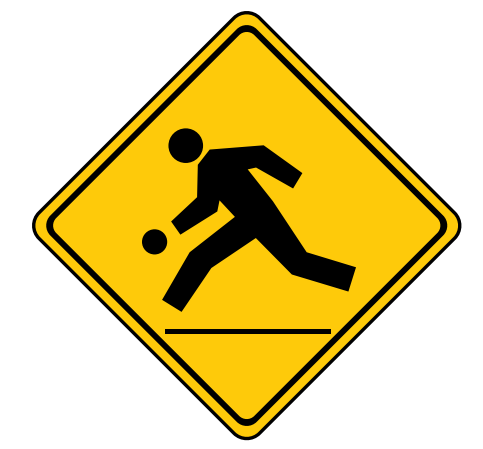
Pedestrian crosswalk ahead.
School sports zone ahead.
Children play zone ahead.
Playground ahead.
This warning sign indicates a playground area ahead where children may be present near or crossing the roadway.
How should you brake on ice if your vehicle has ABS?
Pump the brake pedal.
Apply steady pressure.
Shift into neutral.
Use the hand brake.
ABS automatically pumps the brakes for you, so you must maintain steady pressure on the pedal to allow the system to work effectively.
A passenger under 16 not wearing a seat belt is the responsibility of:
The passenger.
The vehicle owner.
The parent only.
The driver.
The driver is legally responsible for ensuring that all passengers under 16 years old are properly wearing seat belts.
What does this sign represent?
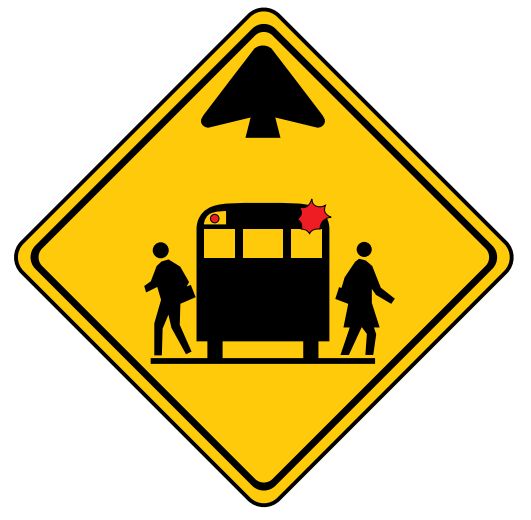
Bus terminal ahead.
Bus lane only.
School bus stop ahead.
Public transit route.
This warning sign alerts drivers that a school bus stop is ahead and they must be prepared to stop for flashing school bus lights.
What does this sign signify?
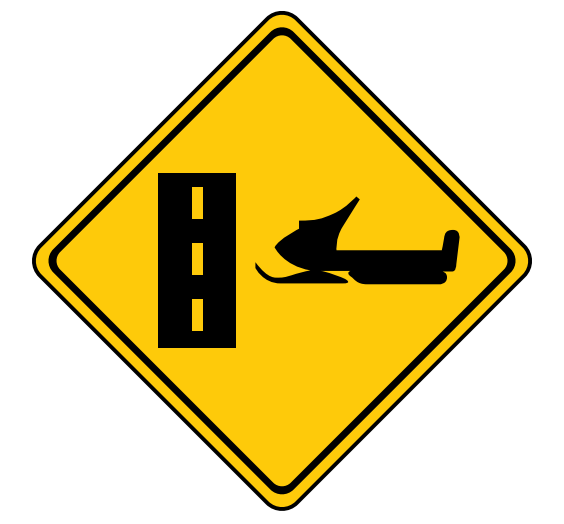
Snowmobile crossing ahead.
Snowmobile parking area.
Snowplow operating ahead.
Snow-covered roadway ahead.
This warning sign alerts drivers that they are approaching an area where snowmobiles may frequently cross the roadway and extra caution is required.
What does this sign indicate?
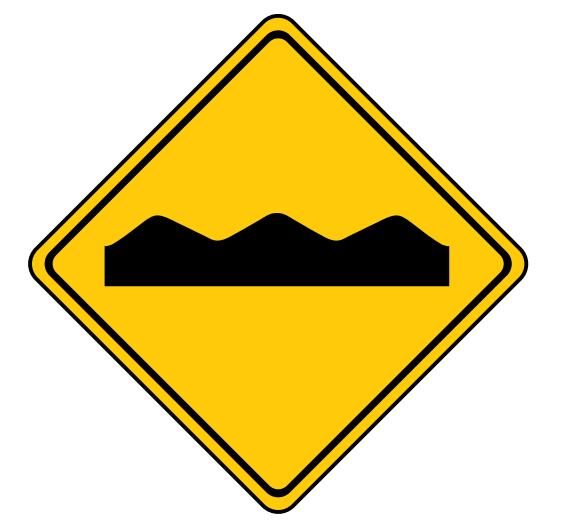
Slippery when wet ahead.
Rumble strips ahead.
Swing bridge ahead.
Bump or rough road ahead.
This warning sign alerts drivers that the road surface ahead is bumpy or rough. Drivers should reduce their speed to safely navigate the uneven surface.
When a climbing lane ends, which driver must yield?
The right lane driver.
The left lane driver.
The faster driver.
The truck driver.
When a climbing lane ends, traffic in the right lane must safely merge and yield to vehicles travelling in the continuing main lane.
What is the minimum stopping distance from a school bus with flashing red lights?
3 metres.
15 metres.
10 metres.
5 metres.
You must stop at least 5 metres away from a school bus with flashing red lights to ensure student safety.
What does this sign represent?
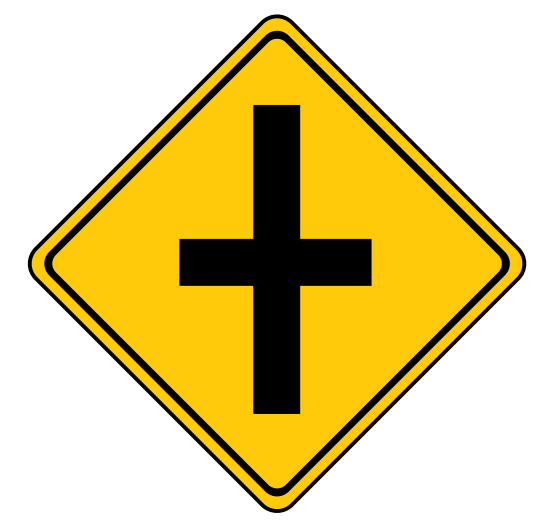
Railroad crossing ahead.
Concealed intersection ahead.
Hospital zone ahead.
Four-way stop ahead.
This warning sign indicates that an unusual or partially hidden intersection is ahead where roads may enter from the right, left, or both sides.
When is the danger of large animals crossing roads highest?
Mid-day.
Midnight.
Noon and night.
Dawn and dusk.
Large animals are most active and harder to see during dawn and dusk, making these the highest-risk times for collisions.
Which type of sign is this Yield sign?
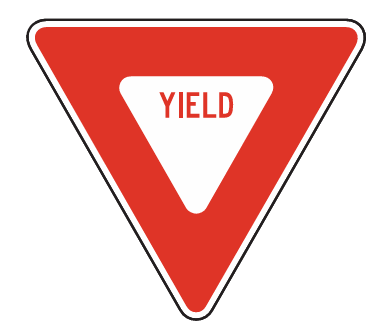
Regulatory sign.
Warning sign.
Information sign.
Construction sign.
A Yield sign is a regulatory sign that requires drivers to slow down and give the right-of-way to any oncoming traffic or pedestrians.
When should you return to the right lane after passing?
When you are 1 metre ahead of it.
Immediately after passing the vehicle.
When you see its headlights in your rear-view mirror.
After waiting for exactly 10 seconds.
Moving back only after seeing the passed vehicle's headlights in your rear-view mirror ensures a safe following distance.
Where must slow-moving vehicles travel on a highway?
On the left shoulder.
At the extreme right.
In the center lane.
Anywhere on the roadway.
Slow-moving vehicles must travel as close as possible to the extreme right side of the highway to keep the faster passing lanes clear and maintain a safe traffic flow.
What do white pavement lines separate?
Traffic moving in opposite directions.
Traffic moving in the same direction.
Designated paths for pedestrians.
Shared bicycle lanes.
White lines separate lanes of traffic moving in the same direction, while yellow lines separate traffic moving in opposite directions.
What does a flashing red traffic light mean?
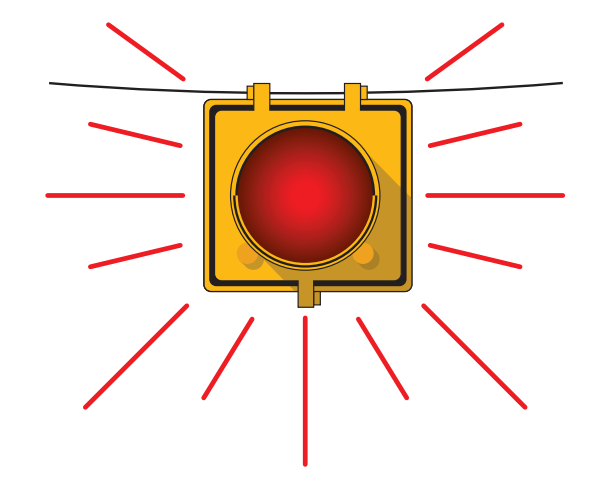
Slow down and proceed carefully.
Stop only if traffic is present.
Come to a complete stop.
Yield to vehicles on the right.
A flashing red light has the same meaning as a stop sign and requires drivers to stop completely before proceeding when safe.
What does this sign mean?
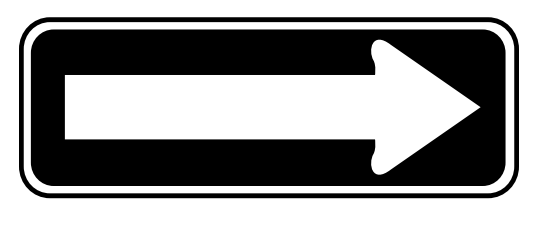
One-way traffic to the right.
Lane ends to the right.
Keep right side of the lane.
Right turn permitted only.
This regulatory sign indicates that the road is a one-way street, and all traffic must move only in the direction indicated by the arrow (to the right).
What does this sign indicate?
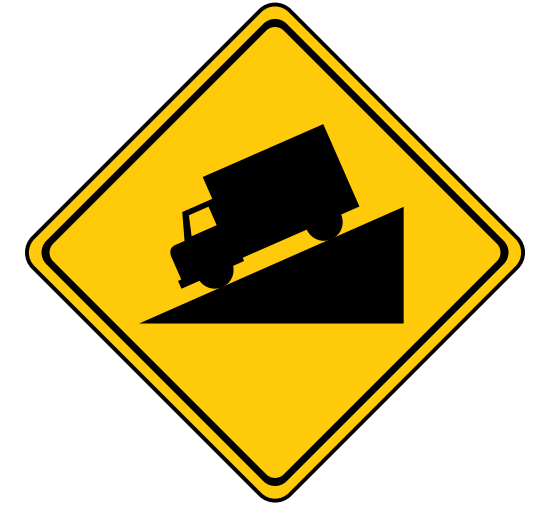
Truck climbing lane ahead.
Steep uphill ahead.
Steep downhill ahead.
Uneven grade ahead.
This warning sign alerts drivers to a steep downhill grade ahead where they should reduce speed or shift to a lower gear to maintain safe control.
When approaching an intersection, in what order should you check for hazards?
Left then right.
Right then left.
Straight then right.
Straight then left.
You should check left first because traffic from the left is closer to your lane and may present an immediate hazard, then check to the right.
What should you do at this sign?
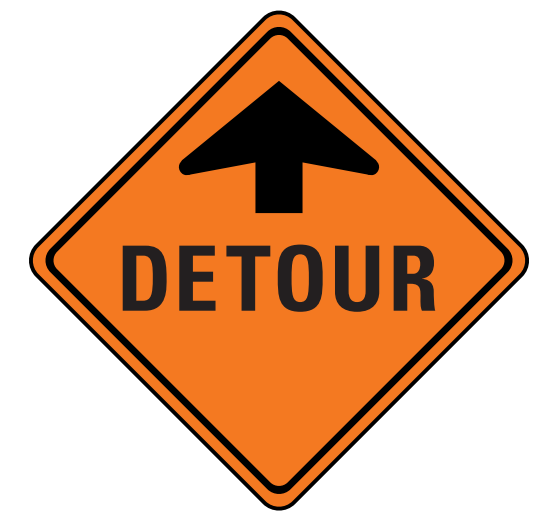
Turn around and go back.
Ignore it if you know a shortcut.
Follow the marked alternate route.
Stop and wait for instructions.
This construction sign indicates that the regular road ahead is closed. Drivers must follow the temporary designated alternate route to bypass the work zone.